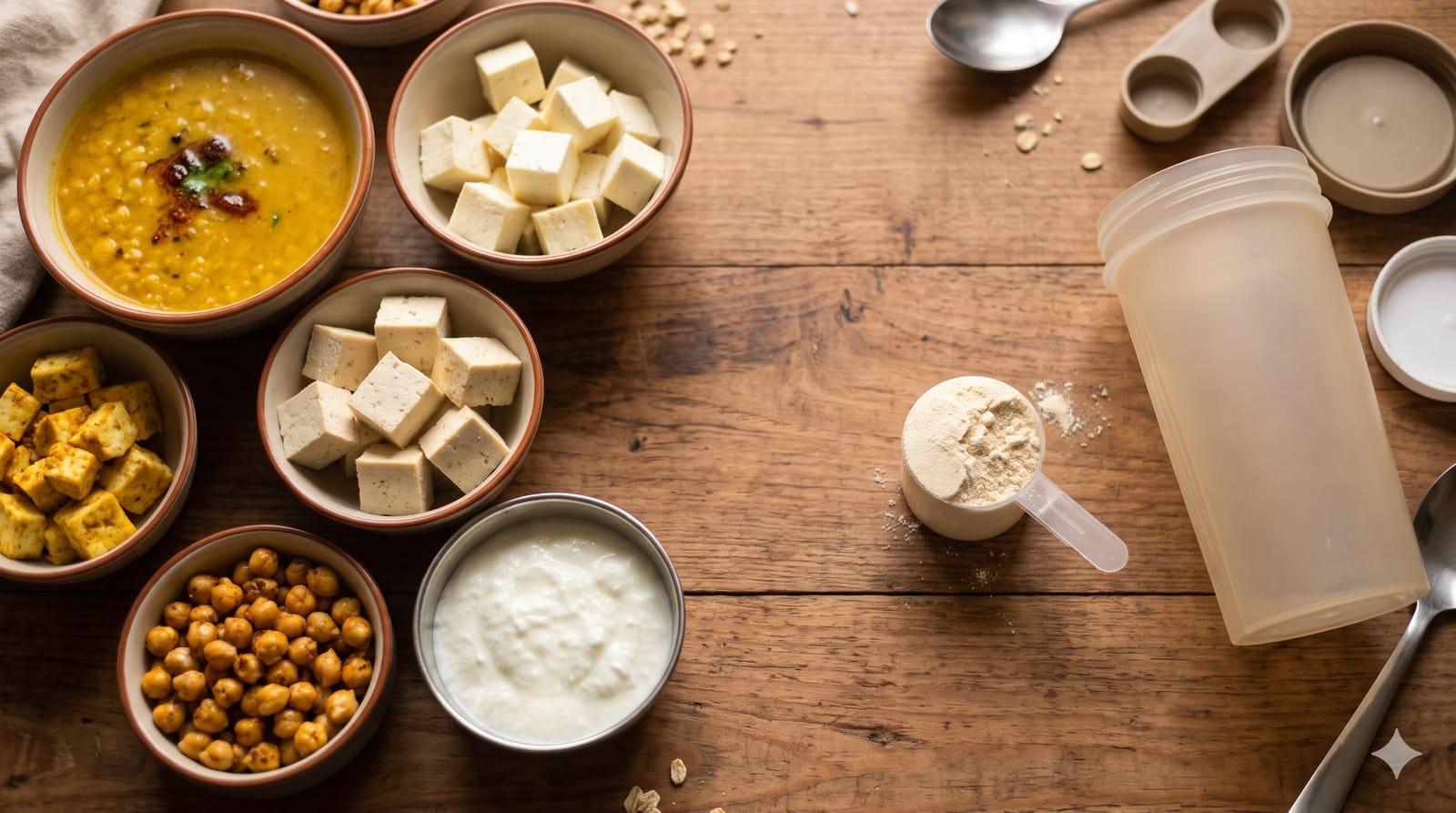
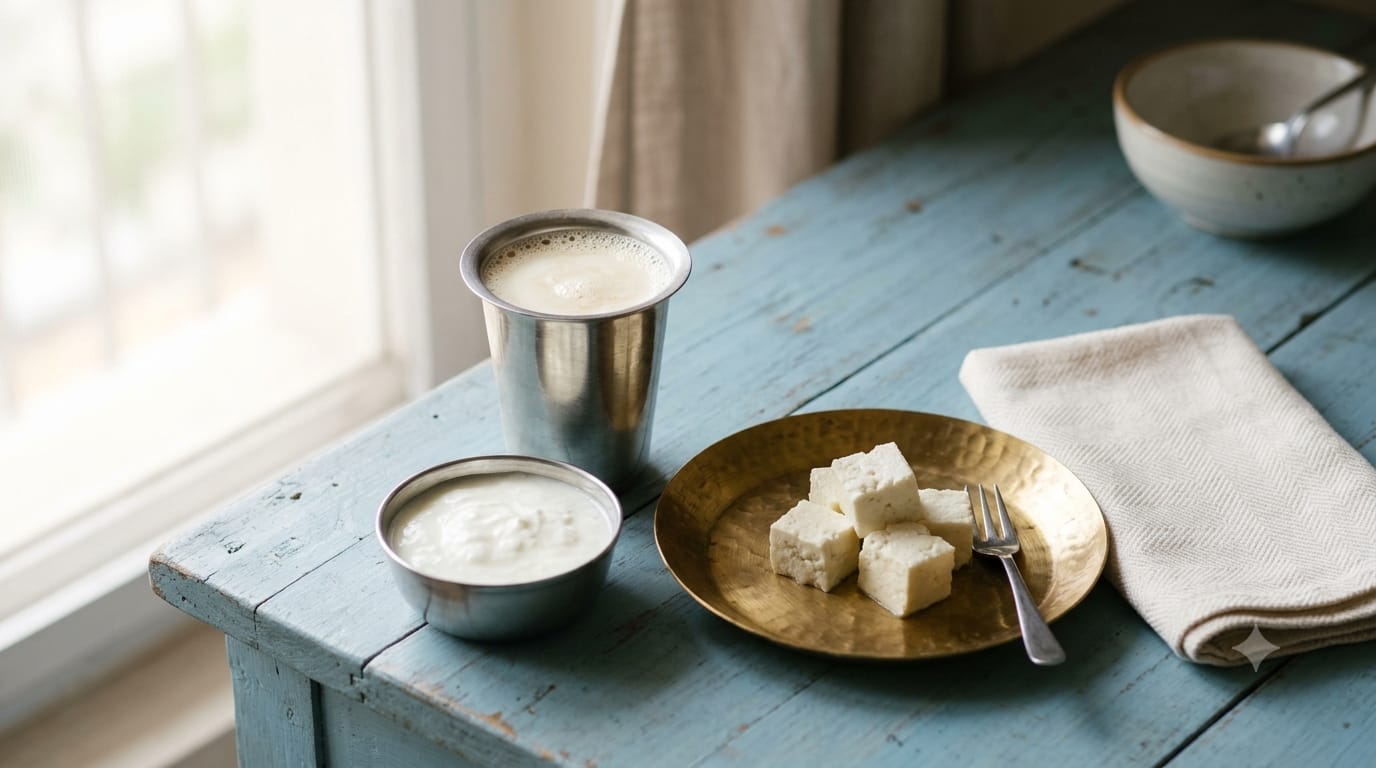
If you've been told to switch to skim milk to lose weight, a trial doing the rounds this month will make you raise an eyebrow. Adults with overweight who added three servings of full-fat dairy a day for 12 weeks didn't gain weight or body fat, and their cholesterol didn't budge. That's the good news. The fine print matters just as much: the "full-fat" milk was 3.25% fat, the trial was small, and the group that cut calories and skipped most dairy still lost a little more weight. Here's what the study actually tested, and what it means for the milk, dahi and paneer on your plate.
What the trial actually tested
The study, led by Harvey Anderson at the University of Toronto and published in The Journal of Nutrition, randomly split adults with overweight or obesity into three groups. Their average age was about 36 and average BMI about 29. Everyone was counselled to follow Canada's food guide.
Low dairy, calorie cut: 500 kcal a day less than they needed, with no more than one serving of low-fat dairy.
Three dairy, "energy neutral": the same 500 kcal cut, but filled back in with three servings of full-fat dairy.
Three dairy, eat freely: no calorie cut at all, plus the three servings.
According to the full paper, the three servings were specific: 250 ml of 3.25% milk at breakfast (about 160 kcal), a 100 g pot of 2% Greek yoghurt at lunch (about 90 kcal), and two 21 g cheese sticks at dinner (about 160 kcal). Add those up and the dairy alone came to roughly 410 kcal a day. Remember that number.
Of 107 people who enrolled, 74 finished.
The results, number by number
Weight
Over 12 weeks, the low-dairy calorie-cut group lost an average of 0.69 kg. The energy-neutral dairy group gained 0.35 kg and the eat-freely dairy group gained 0.14 kg. The paper reports a reduction in body weight and BMI only in the low-dairy group. Fat mass, lean mass and waist size didn't change in any group.
Read that honestly: three servings of full-fat dairy didn't make people fatter, even with no calorie limit. But they didn't help anyone lose weight either. The group that ate least lost the most, which is what you'd expect.
Cholesterol and blood fats
LDL ("bad") cholesterol barely moved. In the eat-freely dairy group it went from 3.24 to 3.17 mmol/L; in the low-dairy group from 2.96 to 2.85. The paper found no significant changes. Triglycerides rose in all three groups at week 4 and were back to baseline by week 12.
Blood pressure and nutrients
Systolic blood pressure dropped in the eat-freely dairy group (by about 2.7 mmHg) and also in the low-dairy calorie-cut group. Protein and calcium intake went up in both dairy groups. That's the point the researchers lean on: dairy brings useful nutrients without the damage people feared.
What the headlines leave out
A few things worth knowing before you pour yourself a glass of malai-topped milk:
It's small and short. 74 people for 12 weeks. The authors say themselves that "the short duration of the study may have masked longer-term changes" in lipids and body composition.
Plenty dropped out. Nearly a third of those who enrolled didn't finish, partly because of pandemic-era delays.
The funding came from dairy. The trial was supported by Dairy Research Cluster 3, funded by Dairy Farmers of Canada and Agriculture and Agri-Food Canada. The paper states the funders weren't involved in publication, and the authors declare no conflicts. That doesn't make the results wrong; it's a reason to wait for independent replication before treating them as settled.
"Full-fat" in Canada isn't full-cream in India. The trial milk was 3.25% fat. Under FSSAI standards, full cream milk must have at least 6% fat, toned milk 3% and double toned 1.5%. So the trial's milk sits closer to the toned milk many Indian households already buy.
It didn't test ghee, butter or malai. Milk, yoghurt and cheese only.
What this means for milk, dahi and paneer in India
India's own guidance already makes room for dairy. The ICMR-NIN "My Plate for the Day" includes 300 ml of milk or curd a day on a 2,000 kcal plate, which it counts as about 216 kcal, 10 g protein and 13 g fat. For a vegetarian trying to hit a protein target, that's a meaningful chunk, and it's why dahi and paneer show up so often when you compare plant protein, dairy and whey for vegetarians.
So here's the coach's version of the takeaway:
If you're happy with your weight
No need to swap your toned milk for skim out of fear. Two or three servings a day, say a cup of milk with breakfast, a katori of dahi with lunch and some paneer at dinner, is in line with both this trial and ICMR-NIN's plate.
If you're trying to lose fat
The fat in dairy isn't the enemy; the calories still count. The trial's three servings added up to around 410 kcal a day, and the only group that lost weight was the one that ate 500 kcal less. A simple swap that keeps the protein and trims calories: toned milk instead of full cream, plain dahi instead of sweetened, and a measured portion of paneer rather than a heaped plate of paneer tikka.
Watch the "dairy" that's really dessert
Flavoured milk, sweetened lassi and kulfi bring sugar along with the dairy. If you're reading packs, our guide to FSSAI's new high-sugar labels shows where to look.
Who should be more careful
This was a trial in healthy adults with overweight. If you've been diagnosed with high LDL cholesterol or heart disease, or your doctor has told you to limit saturated fat, a 12-week study of 74 Canadians is not a reason to change their advice. The same goes if you're managing blood sugar; the paper reports no rise in insulin resistance, but a short trial can't tell you about long-term risk. If that's you, what exercise and food changes actually do for prediabetes is a better place to start.
The bottom line
Three servings of full-fat milk, yoghurt and cheese a day didn't raise weight, body fat or cholesterol over three months, and blood pressure even dipped a little. It's a reassuring result for people who enjoy dairy, but it's small, short and dairy-funded, and it's no green light for unlimited malai. Keep dairy as a regular part of your plate if you like it, count its calories if fat loss is the goal, and treat sweetened versions as treats.
General information, not medical advice. If you have a heart condition, high cholesterol or diabetes, check with your doctor before changing your diet.