
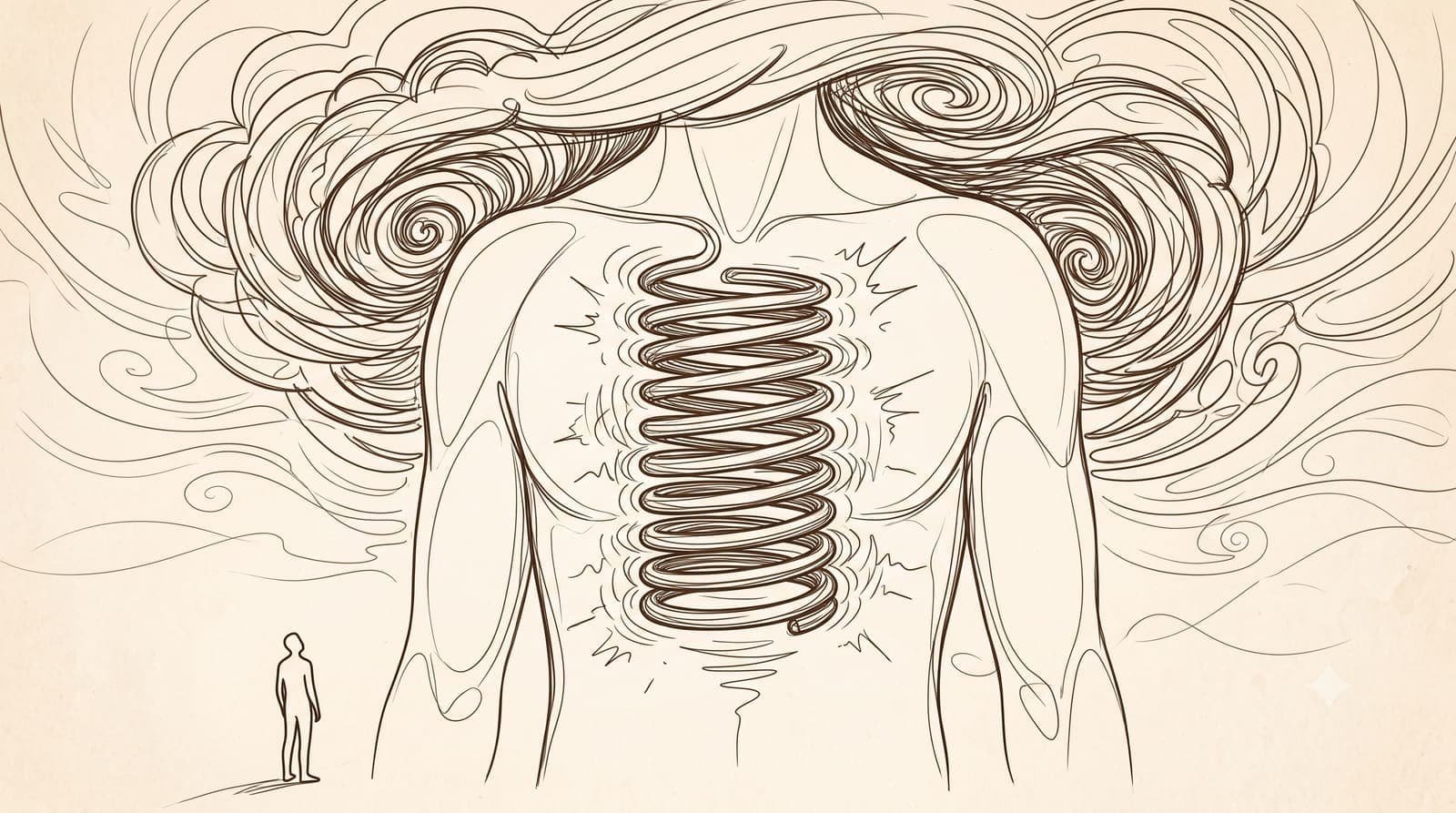
There’s a kind of anxiety that doesn’t come with a clear reason.
No big crisis. No obvious trigger.
Just a constant feeling in your chest… like something isn’t right.
You wake up tired. Your mind is already racing. Small things feel overwhelming. And even when nothing is wrong, your body doesn’t believe it.
If this feels familiar, you’re not alone—and more importantly, it’s not random.
Chronic anxiety usually isn’t about one problem. It’s a pattern built over time—through habits, thoughts, environment, and even the way your brain has learned to respond to life.
Let’s break it down honestly.
You’re Not Just “Overthinking”—Your Brain Is Stuck in Survival Mode
Most people blame themselves for anxiety.
“I think too much.”
“I worry for no reason.”
But that’s only part of the story.
What’s actually happening is this:
Your brain is trying to protect you.
When it senses uncertainty, pressure, or lack of control, it switches into survival mode. The problem is—it doesn’t know when to switch off.
So even small situations start to feel like threats.
A message left unread
A delay in work
A simple decision
Your brain treats them like danger signals.
That’s why anxiety feels constant. It’s not the situation—it’s the state you’re stuck in.
You’re Mentally “On” All the Time
Modern life doesn’t give your mind space to rest.
Think about your day:
Notifications
Social media
Work pressure
Constant comparison
Endless information
Your brain never gets a break.
Even when you’re physically resting, mentally you’re still active—scrolling, thinking, reacting.
Over time, this creates a baseline of anxiety.
Not intense panic.
Just a steady, uncomfortable tension.
You’ve Trained Yourself to Expect the Worst
This one is subtle but powerful.
If you’ve experienced stress, failure, or uncertainty repeatedly, your brain adapts by preparing for the worst outcome.
It thinks:
“If I expect the worst, I’ll be ready.”
But instead of protecting you, it keeps you anxious.
You start to:
Overanalyze simple situations
Assume negative outcomes
Feel uneasy even when things are fine
This becomes automatic.
You’re Avoiding Things That Actually Need Attention
Anxiety doesn’t always come from what you’re facing.
Sometimes it comes from what you’re avoiding.
Unfinished tasks, difficult conversations, unclear goals—these sit in the background of your mind, creating pressure.
You may not consciously think about them, but your brain does.
And it doesn’t like unresolved things.
That internal tension shows up as anxiety.
Your Body Is Carrying Stress You Haven’t Released
Anxiety is not just mental. It’s physical.
When stress builds up and isn’t released, your body holds onto it.
You might notice:
Tight chest
Shallow breathing
Restlessness
Fatigue
Even if your mind tries to relax, your body stays tense.
And your brain reads that tension as a signal that something is wrong.
So, How Do You Actually Fix It?
Not with quick hacks.
Not with “just relax.”
Real change comes from small, consistent shifts.
1. Create Mental Space (This Is Non-Negotiable)
You need moments where your brain is not consuming anything.
No phone. No noise. No input.
Even 10–15 minutes a day helps reset your system.
Walk. Sit quietly. Breathe.
It feels simple—but it’s powerful.
2. Stop Trying to Control Every Outcome
A lot of anxiety comes from needing certainty.
But life doesn’t work that way.
Instead of asking:
“What if something goes wrong?”
Shift to:
“I’ll handle it if it happens.”
That small shift reduces pressure instantly.
3. Take Action on What You’re Avoiding
Pick one thing you’ve been putting off.
Do it—even partially.
Action reduces anxiety more effectively than thinking ever will.
Clarity comes from movement, not overanalysis.
4. Regulate Your Body, Not Just Your Thoughts
You can’t think your way out of anxiety if your body is stressed.
Try:
Slow breathing
Light exercise
Stretching
Walking without distractions
Calm body = calm mind.
5. Reduce Mental Overload
You don’t need to consume everything.
Limit:
Social media
News
Constant information
Your brain needs less input, not more.
6. Accept That Some Anxiety Is Normal
Trying to eliminate anxiety completely often makes it worse.
Instead, learn to sit with it.
When you stop fighting it, it loses intensity.
What Most People Get Wrong
They look for a single cause.
A single solution.
But anxiety is layered.
It’s not one habit—it’s a combination of:
mental patterns
lifestyle
emotional buildup
lack of rest
That’s why quick fixes don’t work.
Final Thought
If you feel anxious all the time, it doesn’t mean something is wrong with you.
It usually means something in your life needs attention, adjustment, or space.
Start small. Stay consistent.
You don’t fix anxiety overnight—but you can absolutely reduce it over time.
And once you do, life starts to feel lighter again.
FAQs
Why do I feel anxious even when nothing is wrong?
Because your brain is reacting based on patterns, not just current reality. It stays in a heightened state even without clear threats.
Can anxiety go away completely?
It can be managed and significantly reduced, but some level of anxiety is a natural human response.
Is overthinking the main cause of anxiety?
It contributes, but deeper factors like stress, lifestyle, and emotional patterns also play a major role.
What helps reduce anxiety quickly?
Breathing exercises, movement, and taking action on pending tasks can help reduce anxiety in the moment.
When should I seek professional help?
If anxiety is affecting your daily life, sleep, or relationships consistently, it’s a good idea to consult a professional.