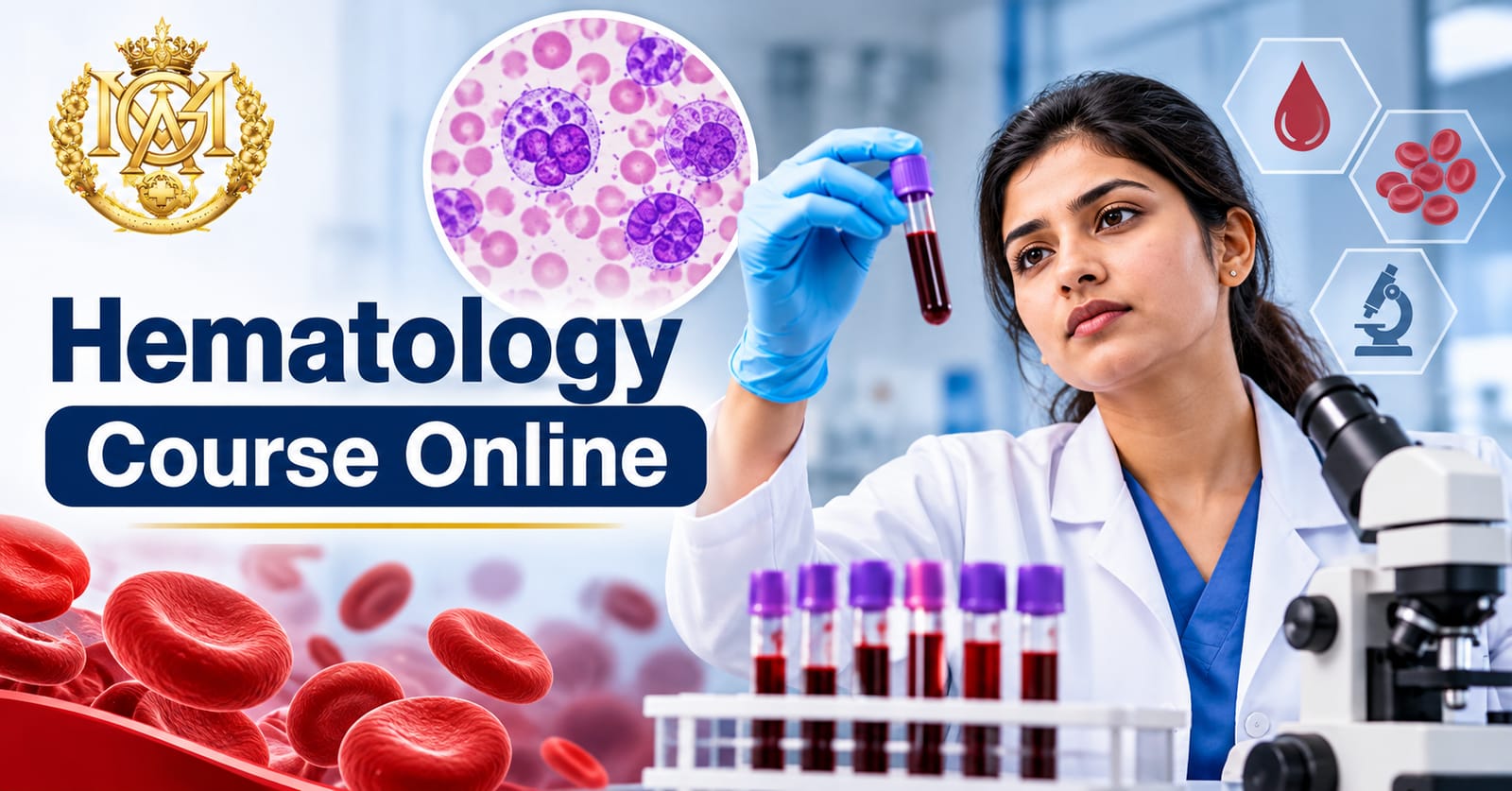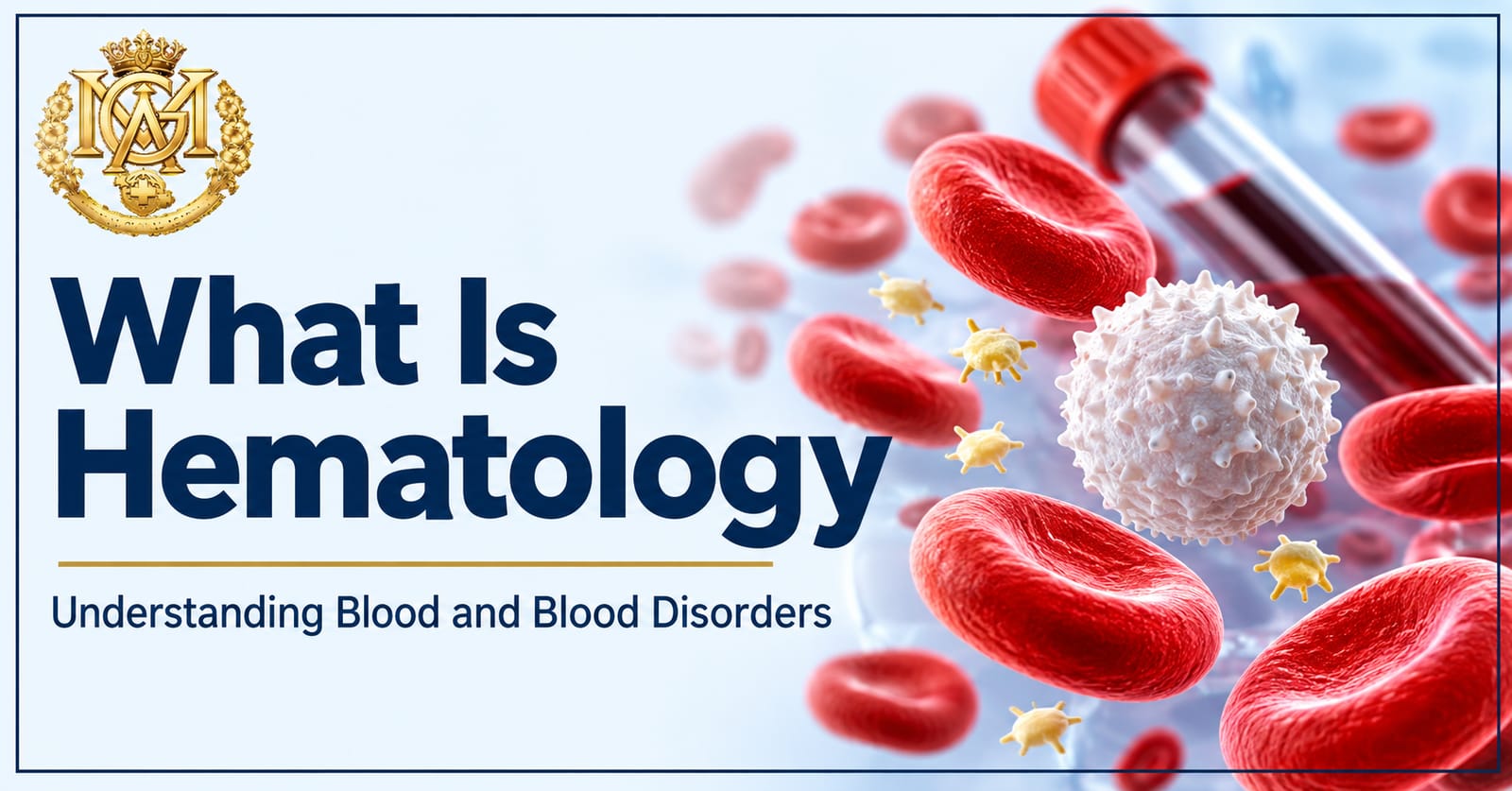
Hematology is the branch of medicine that studies blood, the bone marrow that produces it, and the diseases that affect both. Its reach is wider than most people expect. A routine blood test, a bruise that appears without cause, or a lab report with a value flagged as abnormal can all lead into the field. For students it is one of the first subjects where basic physiology becomes clinical, and for practicing doctors it is the discipline behind many everyday decisions.
This article explains the subject step by step: the meaning of the word, the components of blood, the conditions hematologists manage, how the field overlaps with oncology, and what the role of a hematologist involves. Doctors considering formal training can review the Fellowship in Hematology at Medical Global Academy as one option.
The Meaning of Hematology
Hematology comes from the Greek haima, meaning blood, and -logia, meaning the study of. The field is therefore the study of blood, the tissues that form it, and the disorders that affect them. British English uses the spelling haematology, but the subject is the same.
The scope is broad because blood reaches every organ. Red cells carry oxygen. White cells defend against infection. Platelets and clotting proteins control bleeding. Blood also moves hormones and nutrients around the body. When any of these functions is disturbed, the effects can appear in many parts of the body, which is why hematologists are often consulted by colleagues in other specialties.
The Components of Blood
Blood is a liquid called plasma, with cells suspended in it. Each cell type performs a distinct function.
Red blood cells carry oxygen from the lungs to the tissues and return carbon dioxide. They are produced using iron, vitamin B12 and folate, so a deficiency of any of these can lead to anemia.
White blood cells defend the body against infection and take part in immune responses. The main types are neutrophils, lymphocytes, monocytes, eosinophils and basophils. The proportion of each type can point towards infection, inflammation, immune disorders or blood cancers.
Platelets are small cell fragments that gather at a damaged blood vessel and begin the clotting process, with clotting proteins in the plasma strengthening the plug. A low platelet count increases the likelihood of bruising and bleeding.
All of these cells are made in the bone marrow, the soft tissue inside large bones. A large part of hematology involves studying how the marrow works and what goes wrong when it does not.
Conditions Hematologists Manage
The range of conditions is wide. The main groups are:
Anemia, a reduction in red cells or hemoglobin, with causes from iron deficiency to chronic illness and inherited conditions
Bleeding and clotting disorders, including hemophilia and von Willebrand disease, and conditions that cause unwanted clot formation
Blood cancers, such as leukemia, lymphoma and multiple myeloma, which arise from abnormal blood or lymph cells
Platelet disorders, covering low counts from many possible causes
Bone marrow disorders, where the marrow makes too few healthy cells or produces abnormal ones
Transfusion medicine, which covers matching blood products safely and managing reactions
Not every abnormal result is serious. Some count changes are benign and need only monitoring. Distinguishing these from findings that need prompt action is one of the core skills of the field.
How the Investigation Begins
A complete blood count is usually the first test. If the result needs more detail, a peripheral blood smear allows a specialist to examine cell shapes under a microscope and identify immature cells that should not normally be circulating. A bone marrow examination gives direct information about marrow function and is used when blood results alone do not reach a diagnosis.
A single abnormal value rarely tells the whole story. Results are interpreted together with the patient's history, examination and earlier tests. Hematopathology, the laboratory discipline in which specialists examine blood and marrow samples, works closely with clinical hematologists to reach a diagnosis.
Where Hematology Meets Oncology
Hematology and oncology share a large area. Many blood cancers are managed by specialists trained in both, and the term hematologist-oncologist is common in clinical practice.
The hematology oncology definition covers the diagnosis and treatment of cancers of the blood, marrow and lymph nodes, together with the supportive care patients need. Supportive care includes managing infections, bleeding, low blood counts and treatment side effects. Not every hematologist treats cancer, and not every oncologist works with blood cancers, but the overlap is substantial.
The Role of a Hematologist
A hematologist is a doctor who specializes in blood disorders. The work includes diagnosing conditions, planning investigations, making treatment decisions, monitoring patients over time, and coordinating with other specialists when a condition involves more than the blood.
Hematologists practice in hospitals, outpatient clinics and specialist centers. Some move into transfusion medicine, laboratory hematology or research. Many blood conditions require follow-up over months or years, so the relationship with patients is often long-term.
The usual route begins with a medical degree and general internal medicine training, followed by specialist hematology training. Requirements vary between countries, so the entry criteria for any specific programme should be confirmed with the institution offering it. Doctors looking for a focused postgraduate route can review the curriculum and eligibility on the PG Diploma in Hematology page.
Is Hematology the Right Field?
Hematology suits doctors who enjoy laboratory correlation, complex diagnosis and long-term patient care. It sits between clinical medicine and science, and it rewards curiosity about how cells behave. Because diagnostic tests and treatment approaches continue to develop, the field also remains active.
Before choosing any course, review its curriculum, delivery format and eligibility requirements in full. The course page is the most reliable place to confirm whether a program fits your qualifications and career plans.
Summary
Hematology studies blood, the marrow that produces it, and the diseases that affect both. It covers everything from common anemia to serious blood cancers, and it has close ties to oncology. To explore the postgraduate options offered at Medical Global Academy, visit the homepage.