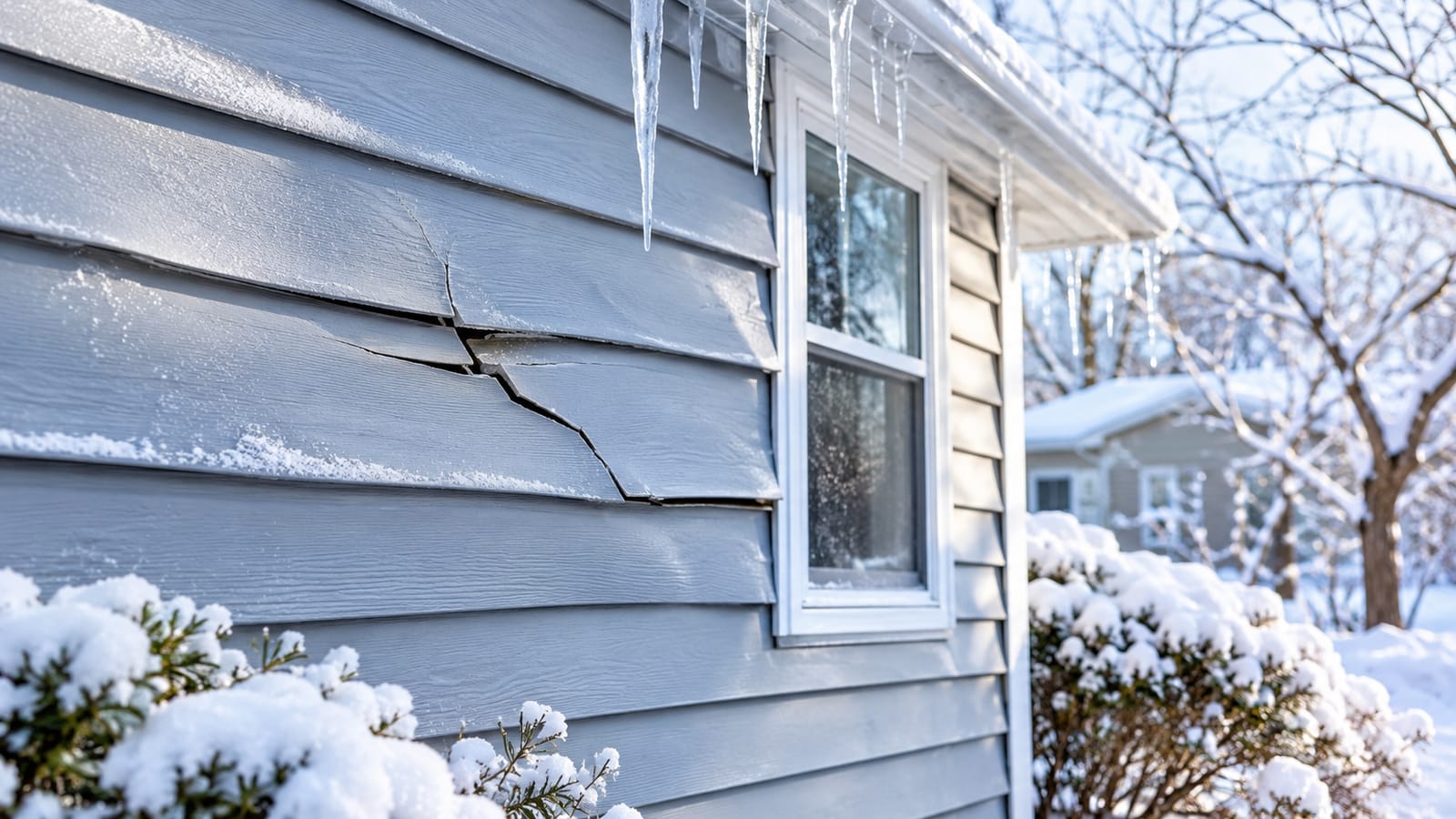
Vinyl siding is designed to withstand outdoor weather, but prolonged freezing temperatures can make it more vulnerable to certain types of damage. As temperatures fall, the material becomes less flexible, increasing the risk of cracks from sudden impacts. Snow accumulation, ice buildup, strong winds, and repeated temperature changes can also affect siding panels and their connections.
The biggest concern is not always visible damage. A cracked panel, loose section, or poorly fitted joint may allow moisture to reach the materials behind the exterior. If water enters the wall assembly and remains trapped, it can contribute to further problems during repeated freezing and thawing.
Some winter-related siding issues appear immediately, while others become noticeable only after snow melts and temperatures begin to rise. Understanding how cold weather affects vinyl siding can help homeowners recognize early warning signs, protect vulnerable exterior areas, and decide when repairs or a professional inspection are necessary.
This guide explains how freezing temperatures affect vinyl siding, what causes common winter problems, how to identify damage, and which maintenance steps can help protect your home's exterior.
1. Why Does Vinyl Siding React to Freezing Temperatures?
Vinyl siding is made primarily from polyvinyl chloride (PVC), a material that naturally expands and contracts as temperatures change. This movement is an important characteristic of vinyl siding and must be considered during installation.
When temperatures rise, vinyl panels expand. As the weather becomes colder, they contract. Freezing conditions can also make the material less flexible than it is during milder weather.
For example, a panel that can flex during a mild autumn afternoon may become more rigid on a particularly cold winter morning. If a hard object strikes it under those conditions, the panel may crack instead of bending.
However, freezing temperatures do not automatically cause vinyl siding to fail. Several factors influence its performance, including:
Product quality and cold-weather specifications.
Age and existing condition of the panels.
Correct installation and fastening.
Exposure to wind, snow, ice, and physical impacts.
Whether the panels have enough room to expand and contract.
The main consideration is not simply how cold the weather becomes, but whether the siding system is properly installed and maintained to handle changing temperatures.
2. Cold Weather Can Make Vinyl Siding More Brittle
One of the most noticeable effects of freezing weather is reduced flexibility. Vinyl siding is manufactured for outdoor use, but its physical properties change as temperatures decrease.
When the material becomes less flexible, it may be more vulnerable to cracking from sudden impacts. This is particularly relevant in areas where winter conditions include freezing winds, falling branches, hail, or frequent outdoor maintenance.
Several everyday situations can increase the risk of damage:
A snow shovel accidentally strikes a lower siding panel.
A ladder is placed against the exterior wall during freezing weather.
Ice-covered branches fall against the house.
Outdoor maintenance equipment contacts a cold siding surface.
An older or previously damaged panel experiences another impact.
The location of a crack can sometimes provide clues about what happened. Damage near the ground may be associated with snow removal or accidental contact, while cracks around exposed corners may be related to wind or falling debris.
Homeowners should avoid hitting, bending, or forcefully handling vinyl siding during very cold conditions. Even routine exterior work requires additional care when temperatures are low.
3. Temperature Changes Can Cause Vinyl Panels to Expand and Contract
Vinyl siding needs room to move. This is one of the most important considerations in a properly installed siding system.
As temperatures fall, panels contract. When temperatures rise, they expand again. If the siding has been installed too tightly, restricted movement can contribute to buckling, distortion, or stress around fastening points.
During winter, homeowners may notice sections that look uneven or appear to have shifted. These changes do not always indicate permanent damage, but unusual movement should be investigated.
Several installation details influence how panels respond to temperature changes:
Fasteners must follow the manufacturer's positioning and fastening requirements.
Panel ends need the specified clearance.
Overlapping sections should be installed according to product instructions.
Corner posts and trim components must accommodate the siding system's movement.
Openings around windows and doors need appropriate detailing.
A panel should not be fastened so tightly that it cannot move within its designed fastening system. The manufacturer's instructions determine the correct fastening method and clearances for each product.
Repeated expansion and contraction can make existing installation weaknesses more noticeable over time, particularly where panels were cut incorrectly or installed without sufficient movement allowances.
4. Freezing Weather Can Increase the Risk of Cracks Around Corners and Seams
Not every part of a vinyl siding exterior experiences the same conditions. Corners, panel edges, seams, and openings may be exposed to different levels of wind, temperature changes, and physical stress.
During freezing weather, these areas deserve particular attention.
Corner posts and connecting sections can experience movement as surrounding panels contract. If the siding is improperly fitted or its movement is restricted, stress may develop around the connections.
Panel overlaps and seams can also become more noticeable as temperatures change. Some gaps are part of the intended installation design. However, openings that appear unusually large, expose the underlying wall, or allow water to enter should be evaluated.
Pay attention to these exterior areas:
Outside and inside corners.
Horizontal panel overlaps.
Joints near windows and doors.
Areas around exterior utility openings.
Sections where siding meets rooflines or other materials.
One important precaution is to avoid sealing every visible gap with caulk. Vinyl siding systems are designed with specific movement and drainage features. Blocking those features can interfere with how the exterior manages moisture.
5. Snow and Ice Can Put Extra Pressure on Lower Siding Panels
Snow accumulation can create additional maintenance challenges for vinyl siding, particularly around the lower sections of exterior walls.
When snow builds up near the foundation, it may remain in contact with the siding for extended periods. Ice formation, repeated melting, and refreezing can also affect areas where water collects around the exterior.
Other vulnerable locations include gutters, downspouts, roof edges, and sections where drainage directs water toward the wall.
Vinyl siding helps shed water away from the structure, but it is not a completely waterproof barrier for the entire wall assembly. Problems can develop when moisture reaches damaged panels, exposed openings, or improperly detailed connections.
During winter, homeowners should watch for:
Snow piled against lower siding panels.
Ice buildup near foundation-level trim.
Water collecting around exterior corners.
Damaged panels close to snow removal areas.
Repeated freezing and thawing around wall openings.
Avoid using sharp metal tools to remove ice directly from vinyl siding. Scraping or striking the surface can scratch or crack the material, especially when it is cold.
A safer maintenance approach is to manage snow accumulation and improve drainage without putting unnecessary pressure on the exterior panels.
6. Strong Winter Winds Can Loosen or Damage Vinyl Siding
Winter weather often brings strong winds, storms, and sudden temperature changes. These conditions can place additional pressure on exterior siding.
Vinyl panels are designed to overlap and connect through a fastening system. If a panel is not properly secured, strong winds may cause it to rattle, lift, or partially disengage from the adjoining section.
Cold temperatures can make existing weaknesses more noticeable because the material is generally less flexible.
Homeowners may notice:
Panels moving during strong winds.
Rattling sounds coming from exterior walls.
Edges separating from adjoining sections.
Loose siding near rooflines or corners.
Sections that remain uneven after the wind stops.
A loose panel should not simply be forced back into place without checking its condition. The locking edge, fastening area, and surrounding panels may also need attention.
If wind damage affects several sections, a professional inspection can help determine whether the problem is limited to individual panels or involves a wider installation issue.
7. Moisture Behind Vinyl Siding Can Become a Bigger Winter Problem
One of the more important concerns during freezing weather is moisture entering behind damaged or poorly installed siding.
Vinyl siding is designed to shed most rainwater, but it should not be treated as a completely waterproof wall covering. Water can pass behind exterior cladding through joints, openings, and other connections.
A properly constructed wall assembly includes protective layers such as a water-resistive barrier, flashing, and suitable drainage details. These components help direct moisture back outside instead of allowing it to reach vulnerable wall materials.
Problems can develop when these protective layers are missing, damaged, or incorrectly installed.
During winter, moisture that enters behind siding may freeze when temperatures fall. When the weather becomes warmer, the ice can melt and allow water to move through the affected area. Repeated exposure to moisture can create problems for sheathing, wood framing, insulation, and other wall components.
Possible warning signs include:
Water stains near windows and exterior doors.
Discoloration around siding joints.
Soft or deteriorating exterior trim.
Peeling interior paint near exterior walls.
Persistent dampness around wall openings.
Unusual odors or visible signs of moisture inside the home.
These symptoms do not automatically mean the siding is responsible. Roof leaks, plumbing problems, condensation, and damaged flashing can produce similar signs.
Identifying the actual source of moisture is more important than simply covering the visible damage. A professional inspection can help determine whether the issue involves siding, flashing, drainage, or another part of the building envelope.
8. Repeated Freezing and Thawing Can Affect Siding Performance
Winter temperatures do not always remain consistently below freezing. In many parts of the United States, daytime temperatures may rise above freezing before dropping again at night.
These repeated changes create freeze-thaw cycles.
During warmer periods, accumulated snow and ice melt into water. That water may enter small openings around damaged panels, exterior trim, or poorly detailed joints. When temperatures fall again, the remaining moisture can freeze.
Repeated cycles can place additional stress on already vulnerable exterior areas.
For example, a small opening near a window may allow water to enter during a warmer afternoon. If moisture remains in that area overnight, freezing conditions can complicate an existing water-entry problem.
The extent of any damage depends on several factors, including the amount of moisture, the location of the opening, the condition of the underlying materials, and the effectiveness of the drainage system.
This is why winter maintenance should involve more than checking for cracked panels. Homeowners should also pay attention to gutters, flashing, roof edges, and areas where water repeatedly collects.
9. Improper Winter Installation Can Create Long-Term Siding Problems
Vinyl siding can be installed during colder months, but winter installation requires careful handling and attention to the manufacturer's instructions.
At low temperatures, panels are generally less flexible and may be more vulnerable to cracking during cutting, transportation, positioning, and fastening.
Installers must also account for the material's expansion and contraction. If panels are fastened too tightly or do not have the required clearance, they may develop visible distortion as temperatures change.
A qualified installer should pay attention to several important details.
Proper panel handling: Cold vinyl panels should be handled carefully to reduce the risk of cracking during transportation and installation.
Correct fastening: Fasteners should be positioned according to the manufacturer's instructions. They should not restrict the panel's natural movement.
Appropriate clearances: Openings around windows, doors, corners, and accessories need the recommended clearance for temperature-related movement.
Accurate cutting: Panels and accessories should be measured and cut carefully to avoid unnecessary stress at joints and connections.
Weather-appropriate installation products: Adhesives, tapes, sealants, and other installation products should be suitable for the actual working temperature.
Not every installation product performs in the same way during cold conditions. Contractors should check the technical requirements of the products they use instead of assuming that standard installation methods will work in every temperature.
If you are planning a siding project during winter, ask the contractor how they handle cold-weather installation and what precautions they follow.
10. How to Recognize Vinyl Siding Damage After a Winter Storm
Some winter-related siding problems become easier to identify after snow and ice have melted.
A visual inspection can help homeowners recognize areas that may need maintenance or professional attention. Whenever possible, inspect the exterior from the ground rather than climbing onto icy ladders or walking across slippery surfaces.
Here are some conditions to look for.
Cracked or split panels
Check for visible fractures, particularly near ground-level walls, corners, and areas exposed to falling branches or accidental impacts.
Buckled or wavy sections
Panels that appear uneven or distorted may indicate restricted thermal movement, fastening problems, or other installation issues.
Loose or disconnected panels
Look for sections that appear lifted, separated, or improperly connected to neighboring panels.
Damaged corner posts
Inspect exterior corners for visible separation, cracks, and unusual movement.
Moisture-related staining
Pay attention to discoloration around windows, doors, trim, and panel joints. These areas may require further investigation.
Changes around the foundation
Check whether snow accumulation, drainage problems, or ice buildup have affected the lowest siding sections.
Taking photographs of visible damage from different angles can help a siding professional understand the condition before visiting the property.
However, a visual inspection cannot confirm whether hidden moisture has reached the wall sheathing or framing. Those conditions may require a more detailed assessment.
11. Practical Ways to Protect Vinyl Siding During Freezing Weather
Preventive maintenance can help reduce unnecessary winter damage and keep the exterior in better condition.
Homeowners do not need complicated maintenance routines to improve winter protection. A few careful habits can help limit avoidable problems.
Keep snow away from vulnerable exterior areas
Avoid allowing large amounts of snow to remain piled against lower siding panels for extended periods. When clearing snow, work carefully around exterior walls and avoid striking the siding with shovels or other equipment.
Keep gutters and downspouts clear
Blocked gutters can cause water to overflow near exterior walls. Check that gutters and downspouts are clear and direct water away from the house before severe winter weather arrives.
Inspect exposed siding before winter
Look for existing cracks, loose panels, missing sections, and damaged trim. Addressing these conditions before freezing temperatures arrive may help prevent further deterioration.
Avoid striking frozen panels
Do not use hard tools to break ice from siding. Cold vinyl can be more vulnerable to impact, so aggressive scraping and forceful cleaning should be avoided.
Check areas around windows and doors
Inspect visible flashing, trim, and exterior connections. These areas deserve attention because they can become vulnerable to water entry when installation details are inadequate.
Trim branches near exterior walls
Remove hazardous or overhanging branches where appropriate. Heavy snow and ice can increase the risk of branches falling against the siding.
Arrange professional repairs when needed
If panels are cracked, displaced, or repeatedly becoming loose, have the affected section evaluated. Replacing a damaged panel may be more suitable than relying on a temporary cosmetic repair.
The goal is to keep water moving away from the house, avoid unnecessary impacts, and identify existing problems before they become more complicated.
12. Does Freezing Weather Mean You Should Replace Your Vinyl Siding?
Not necessarily. Freezing temperatures alone are not a reason to replace an otherwise healthy exterior.
Vinyl siding can continue performing well through cold seasons when it is properly selected, installed, and maintained. The decision to repair or replace it should depend on the actual condition of the panels and the extent of any damage.
For example, a single cracked panel may only require a localized repair. If several panels are loose because of incorrect fastening, the installation may need attention. However, widespread cracking, repeated moisture intrusion, or deterioration behind the exterior may require a more comprehensive assessment.
Before deciding what work is necessary, consider these questions:
How many panels are damaged?
Are the cracks limited to one area or spread across multiple walls?
Does the siding move or separate during strong winds?
Is there evidence of water entering behind the exterior?
Are the underlying wall materials still in good condition?
Can matching replacement panels be obtained?
Would repairing the existing material provide a suitable long-term result?
The age and availability of the existing siding profile can also influence the decision. Older products may be difficult to match, which can affect the appearance of localized repairs.
A professional assessment can help distinguish isolated winter damage from problems affecting the wider exterior system.
13. How Does Vinyl Siding Compare With Other Exterior Materials in Cold Climates?
Vinyl is not the only option for homeowners looking for an exterior material that can handle changing weather conditions. Other siding materials offer different appearances, maintenance requirements, and installation considerations.
However, choosing an alternative requires looking beyond cold-weather performance alone.
Cedar Shake Siding
Cedar shake siding creates a natural wood appearance that can complement traditional, rustic, and cottage-style homes. Its performance depends on the wood, finish, installation, and exposure to moisture.
Wood siding also requires appropriate maintenance and protection against weather-related deterioration.
Explore our guide to Cedar shake siding to learn more about this exterior option.
Stucco Siding
Stucco provides a textured exterior finish and is available in different colors and architectural styles. Its performance depends on the installation system, drainage details, and proper detailing around openings.
Cracks and moisture-related concerns should be evaluated to identify their underlying cause rather than simply covered.
Learn more about Stucco siding and the considerations involved in choosing this exterior finish.
Brick Veneer Siding
Brick veneer offers a distinctive masonry appearance and can provide a durable exterior finish when installed with suitable flashing and drainage details.
It is important to understand that brick veneer is different from a solid structural brick wall. The supporting wall assembly and moisture-management system are essential parts of its performance.
Read our guide to Brick veneer siding for more information.
Stone Veneer Siding
Stone veneer adds texture, depth, and a natural appearance to exterior walls. Its installation requires attention to moisture management, flashing, and the supporting wall system.
Climate suitability depends on the complete installation assembly rather than the appearance of the stone alone.
Explore Stone veneer siding to learn more about this exterior material.
Vinyl Siding
Vinyl remains a popular option because it is available in many colors, profiles, and styles. It generally does not require routine painting, although occasional cleaning and inspection are still important.
Its ability to accommodate temperature-related movement depends on the product specifications and correct installation.
For more information about available styles and material considerations, visit our Vinyl siding guide.
No single siding material is suitable for every property. Homeowners should compare appearance, maintenance, installation quality, local weather exposure, and the condition of the existing wall assembly before choosing an exterior.
14. When Should You Call a Siding Professional?
Some siding problems can be identified through a basic visual inspection, while others require professional evaluation.
If you notice extensive cracking, panels separating from the wall, repeated buckling, or signs of moisture around exterior openings, arranging an inspection is a sensible next step.
A siding professional can examine the affected sections, review installation details, and determine whether the problem requires a localized repair or a larger exterior improvement.
Consider requesting a professional inspection when:
Multiple panels have cracked during winter.
Siding repeatedly becomes loose during strong winds.
Water stains appear around windows or doors.
Sections of the exterior look uneven after temperature changes.
Previous repairs have not resolved recurring problems.
You suspect moisture has reached the underlying wall materials.
Early attention can help homeowners understand the condition of their exterior before additional repairs become necessary.
If you are unsure about the condition of your siding, explore professional options for siding inspection, siding repair, or siding replacement.
Frequently Asked Questions About Freezing Weather and Vinyl Siding
Can vinyl siding crack in freezing temperatures?
Yes. Vinyl siding generally becomes less flexible in very cold weather. An impact from a hard object, falling branch, or snow removal equipment can cause cracking, particularly if the panel is already damaged or aged.
Does vinyl siding shrink during winter?
Vinyl siding contracts as temperatures decrease and expands as temperatures rise. This is a normal material characteristic. Proper installation allows panels to move without being restricted by fasteners or surrounding components.
Can you install vinyl siding during winter?
Yes. Vinyl siding can be installed during colder months, but installers must follow the manufacturer's requirements for handling, fastening, cutting, clearances, and installation products. Cold panels require careful handling because they may be more vulnerable to impact damage.
Does snow damage vinyl siding?
Snow does not automatically damage vinyl siding. However, heavy accumulation, ice formation, poor drainage, and accidental impacts during snow removal can create problems. Avoid aggressively scraping or striking cold siding panels.
Why does vinyl siding look wavy after winter?
Wavy siding can be associated with restricted expansion and contraction, incorrect fastening, installation problems, or other exterior conditions. A professional should inspect the affected area to identify the actual cause.
Can water get behind vinyl siding during winter?
Yes. Vinyl siding is designed to shed water, but it is not a completely waterproof wall barrier. Water can enter through joints and openings. A properly installed water-resistive barrier and flashing system help direct moisture away from the wall structure.
Should cracked vinyl siding be repaired immediately?
Cracked siding should be assessed promptly, especially if the damage exposes vulnerable areas or allows water to reach the underlying wall. The appropriate repair depends on the location, size, and condition of the damaged panel.
How can I prevent winter damage to vinyl siding?
Inspect the exterior before winter, maintain gutters and downspouts, manage snow accumulation, trim hazardous branches, and avoid striking frozen panels. Address loose or damaged sections before they develop into larger problems.
Does vinyl siding need special maintenance during winter?
It does not necessarily require a separate maintenance routine, but homeowners should take extra care when clearing snow and ice. Checking for loose panels, drainage problems, and visible cracks can also help identify issues early.
Is vinyl siding suitable for homes in areas with harsh winters?
Vinyl siding is used in different climates, but suitability depends on the product's specifications, installation quality, and local weather exposure. Homeowners should compare product information and follow the manufacturer's recommendations when choosing siding for a cold climate.
Final Thoughts: Protect Your Vinyl Siding From Winter Damage
Freezing weather can affect vinyl siding through reduced flexibility, temperature-related movement, physical impacts, wind exposure, and moisture problems. Although vinyl is designed for outdoor use, its performance depends on product quality, correct installation, and the condition of the complete exterior wall system.
Homeowners should pay particular attention to cracked panels, loose sections, unusual gaps, and signs of moisture after winter storms. Regular inspections and timely repairs can help prevent minor exterior problems from becoming more extensive.
The best approach is to understand how your siding responds to local weather conditions, maintain proper drainage, and seek professional guidance when visible damage or moisture concerns appear.
Whether you are maintaining existing vinyl siding or considering a different exterior material, informed decisions can help protect your home and maintain its appearance through changing seasons.
Looking for better siding solutions? Explore Home Expert Siding for information about siding materials, installation, replacement, and repair options. Compare exterior styles and learn what to consider before planning your next home improvement project.