A new concrete walkway can make the area around a house look cleaner, more accessible, and easier to maintain. However, when the concrete is poured too close to the exterior wall, it can create an unexpected problem. The bottom edge of vinyl siding may become partially covered, leaving little or no visible space between the siding and the new walkway.
At first, the change might not seem serious. The concrete looks smooth, the siding appears intact, and the walkway provides a finished appearance around the home. But covering the bottom edge of vinyl siding can interfere with drainage, reduce the space needed for proper material clearance, and make it harder to identify moisture-related problems near the foundation.
Vinyl siding is designed as part of an exterior wall system that must accommodate water movement, drainage, and natural expansion and contraction. When concrete is installed against or over the lower edge, it can change how water moves around that area. Rainwater, melting snow, irrigation runoff, and moisture from wet concrete can contribute to conditions that deserve attention.
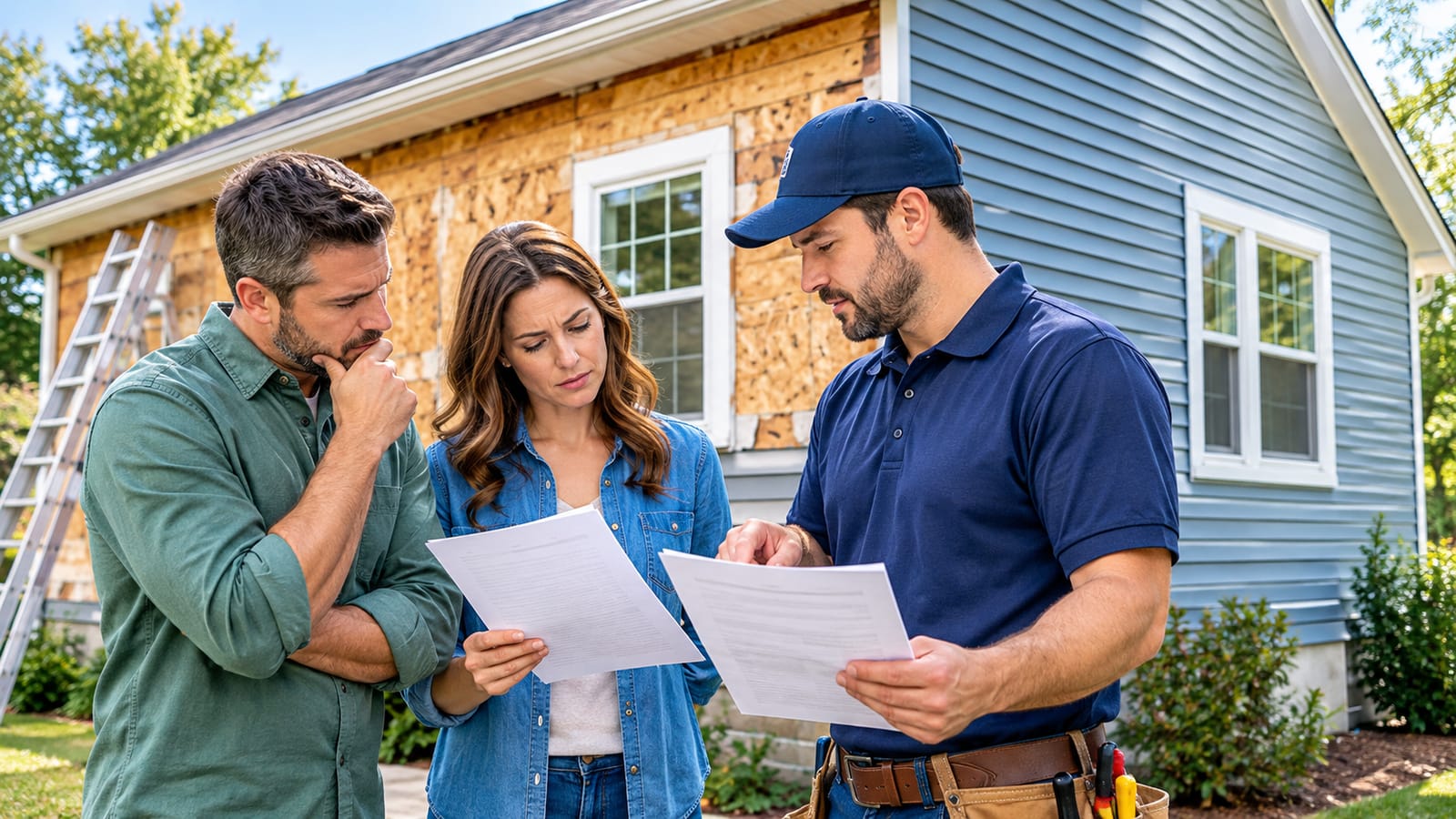
Understanding what happens when a concrete walkway covers the bottom edge of vinyl siding can help homeowners recognize potential problems early, evaluate the condition of their exterior walls, and decide whether an adjustment or professional inspection is necessary.
1. Why the Bottom Edge of Vinyl Siding Needs Proper Clearance
The bottom edge of vinyl siding is not simply a decorative finishing point. It is an important part of the exterior cladding system. Its position helps maintain the intended spacing between the siding and nearby surfaces, including concrete walkways, patios, driveways, and soil.
Vinyl siding is commonly installed with specific manufacturer-recommended clearances. These requirements can vary depending on the siding profile, installation system, and nearby surface. When a new walkway covers the lower edge, the original installation spacing may be reduced or eliminated.
This matters because vinyl siding is designed to move slightly as temperatures change. It expands in warmer conditions and contracts when temperatures fall. If the lower edge becomes trapped beneath concrete or is pressed tightly against it, the siding may have less room to move naturally.
The result can include:
Restricted movement of lower siding panels.
Buckling or visible distortion near the foundation.
Difficulty allowing water to drain as intended.
Damage to the lower siding edge.
Reduced access for inspecting the bottom portion of the wall.
Homeowners should not assume that every walkway installed close to siding automatically creates damage. The actual risk depends on how the siding was installed, whether its drainage details remain functional, and how the surrounding ground handles water.
2. How a New Concrete Walkway Can Change Water Drainage Around Your Home
One of the most important concerns is the way concrete changes the movement of water around the exterior wall.
Before a walkway is installed, the soil or existing surface may allow some rainwater to move through the ground. A new concrete walkway creates a relatively solid surface, which means water generally travels across it rather than soaking directly into the ground.
If the walkway is properly designed with suitable slope and drainage, this can help direct water away from the house. However, if it slopes toward the foundation or creates a low area near the siding, water may collect along the wall.
Water Can Collect Near the Bottom of the Siding
When concrete meets the bottom edge of vinyl siding, even small amounts of standing water can become a concern. Rainwater may remain against the lower siding area, especially when the walkway has an uneven surface or insufficient drainage.
Repeated exposure can increase the chance of moisture entering vulnerable areas around the wall assembly.
Runoff Can Reach Foundation Openings
Water flowing along the walkway may reach cracks, joints, or other vulnerable locations near the foundation. If the concrete directs runoff toward the house, moisture may accumulate where it should be moving away.
This can create problems beyond the siding itself, particularly when foundation drainage or exterior wall flashing is already inadequate.
Splashback Can Keep the Siding Dirty and Wet
During heavy rain, water can bounce off the concrete and strike the lower siding panels. This repeated splashback can leave dirt marks, encourage surface staining, and keep nearby materials wet for longer periods.
A walkway that appears properly finished may therefore need closer inspection to confirm that water moves away from the exterior wall.
3. Can Concrete Trap Moisture Behind Vinyl Siding?
Vinyl siding itself is not a waterproof wall barrier. It is an exterior cladding material that works with other components, including the water-resistive barrier, flashing, and properly detailed openings.
Many vinyl siding systems allow water that gets behind the panels to drain out through intended drainage paths. These details are important because some moisture can reach the area behind siding during normal weather exposure.
When concrete covers the lower edge, the intended drainage arrangement may become obstructed, depending on the installation.
For example, imagine a house where rainwater enters behind the siding near a window or wall joint. Normally, properly installed drainage details help move that water downward and out of the wall assembly. If the lower edge is buried or blocked, the water may not exit as intended.
Possible consequences include:
Moisture accumulation near the bottom of the wall.
Deterioration of wood sheathing or other moisture-sensitive materials.
Damage to trim and lower wall components.
Conditions that support mold growth when moisture persists.
Increased repair complexity if concealed damage develops.
It is important to understand that vinyl siding does not automatically cause hidden moisture damage when concrete is nearby. Problems are more likely when several conditions occur together, such as poor drainage, inadequate clearances, damaged flashing, or an improperly installed water-resistive barrier.
4. What Happens When Vinyl Siding Is Buried Below the Concrete Level?
When concrete is poured high enough to cover part of the vinyl siding, the lower panel edge can become physically trapped.
This is different from simply having a walkway close to the siding. Covering the actual edge changes the relationship between the siding and the surrounding surface.
Restricted Expansion and Contraction
Vinyl siding needs room to move with temperature changes. If concrete holds the lower edge in place, the panels may experience additional stress.
Over time, homeowners might notice:
Wavy or uneven siding surfaces.
Panels that appear pushed upward.
Visible gaps between connected panels.
Warping near the bottom of the exterior wall.
Damage During Concrete Installation
Concrete installation can also create direct physical damage.
Workers may accidentally press against siding, cover existing drainage openings, or allow concrete material to contact and harden around the lower panel edges.
If this happens, removing the obstruction may require careful work to avoid breaking or scratching the siding.
Difficulty Accessing the Siding for Future Repairs
When the bottom edge is buried, replacing individual panels or checking the condition of lower wall components becomes more difficult.
A contractor may need to evaluate whether the walkway must be modified before proper siding repairs can be completed.
5. Warning Signs That the New Walkway May Be Affecting Your Siding
Homeowners do not always notice problems immediately after a concrete walkway is installed. Some warning signs develop gradually as the area experiences rain, temperature changes, and regular exposure.
Knowing what to look for can help prevent a small installation concern from becoming a larger exterior repair.
Visible Siding Distortion
Look for lower siding panels that appear uneven, bowed, buckled, or pushed upward. These changes may indicate restricted movement or installation pressure.
Persistent Dampness Near the Foundation
If the lower siding or nearby foundation remains wet long after rainfall, investigate the walkway slope and drainage conditions.
Cracks or Separation Around the Concrete
Small cracks between the walkway and the foundation may allow water to enter the joint. These openings deserve attention, particularly when water collects nearby.
Unusual Staining or Discoloration
Dark marks, dirt buildup, algae, or persistent staining along the bottom siding panels can indicate repeated moisture exposure.
Soft or Deteriorating Exterior Materials
If accessible trim or exposed wood near the foundation feels soft or shows deterioration, professional assessment may be needed to determine whether moisture has affected concealed materials.
For additional guidance, homeowners can explore common Signs of Siding Damage and learn how different exterior problems may develop.
6. Why Walkway Slope and Foundation Drainage Matter
A concrete walkway should not only provide a stable walking surface. Its design should also consider how rainwater moves around the house.
The slope is especially important because water naturally follows the direction of the surface.
When the walkway slopes toward the home, rainwater can move directly toward the foundation and collect along the lower siding area. If drainage is inadequate, repeated exposure may increase moisture-related concerns.
Homeowners should pay attention to three important areas.
Surface slope: Check whether the walkway directs water away from the house instead of toward the foundation.
Drainage outlets: Look for nearby drains, downspout discharge points, and other areas where water may collect or flow toward the siding.
Foundation contact: Examine the joint between the walkway and the foundation for visible openings, separation, or signs of water accumulation.
A walkway may need adjustments if it directs water toward the house. Depending on the conditions, possible solutions include correcting the concrete slope, improving drainage, or addressing the surrounding grading.
Do not assume that sealing the joint between concrete and the foundation will solve every drainage problem. The source of water movement should be identified first.
7. Can You Fix Vinyl Siding That Is Covered by Concrete?
The right solution depends on how much siding is covered, whether the panels are damaged, and whether the walkway is interfering with drainage or movement.
In some situations, a small adjustment may be enough. In others, the concrete and siding installation may both require professional attention.
Remove Concrete That Is Covering the Siding
If concrete has physically covered the lower siding edge, a contractor may need to carefully remove the material that is obstructing it.
This work should be performed cautiously. Cutting or chipping concrete directly beside vinyl siding can cause additional damage if the panels are not protected.
Adjust the Walkway Height or Edge
If the walkway was installed too high, modifying the affected section may help restore appropriate clearance.
The necessary adjustment depends on the existing concrete thickness, foundation details, and local conditions.
Replace Damaged Siding Panels
If lower panels have cracked, warped, or become permanently distorted, replacement may be appropriate.
However, replacing the visible panels alone may not solve the issue if the underlying drainage problem remains.
Inspect the Wall Behind the Siding
If there are signs of persistent moisture, a qualified contractor may need to examine the water-resistive barrier, flashing, sheathing, and other concealed wall components.
This helps determine whether the problem is limited to the siding or extends deeper into the exterior wall assembly.
8. How to Prevent Concrete Walkway Problems Before Installation
Preventing clearance and drainage issues is generally easier than correcting them after concrete has hardened.
Before installing a new walkway, homeowners should discuss the siding details with the concrete contractor and, when necessary, a siding professional.
Consider these precautions:
Check the existing siding clearance. Identify the lower edge of the siding before determining the final concrete height.
Review manufacturer instructions. Confirm the recommended clearance for the specific siding product and installation conditions.
Plan the walkway slope. Make sure the finished surface directs water away from the house.
Protect drainage details. Do not cover drainage openings, flashing details, or other components intended to manage moisture.
Check downspout locations. Avoid directing roof runoff toward the new walkway or foundation.
Inspect the finished installation. Once the concrete has cured, confirm that the siding remains unobstructed and that water can drain properly.
Document existing conditions. Photographs taken before construction can help identify whether any damage occurred during installation.
The most important step is coordinating the concrete and siding work rather than treating them as completely separate projects.
9. Does the Type of Exterior Siding Change the Risk?
Different siding materials have different installation requirements, maintenance needs, and responses to moisture.
Understanding the available Exterior Siding Options can help homeowners evaluate whether their current material is suitable for their home and environmental conditions.
Vinyl Siding
Vinyl siding is popular because it is relatively low-maintenance, available in numerous colors, and does not require routine painting.
However, it must be installed with appropriate movement allowances and drainage details. Covering its bottom edge with concrete can interfere with these requirements.
Fiber Cement Siding
One alternative homeowners sometimes consider is Fiber Cement Siding.
Fiber Cement Siding Benefits include its dimensional stability, resistance to many common exterior threats, and ability to provide different architectural appearances.
However, fiber cement is not designed to remain in direct contact with concrete or soil unless the specific product installation instructions explicitly permit that condition. Proper ground clearance, flashing, and water management remain important.
Engineered Wood Siding
Another option is Engineered Wood Siding.
Engineered Wood Siding Benefits include its wood-like appearance, design flexibility, and availability in different profiles.
Because it contains wood-based materials, correct moisture protection and installation clearances are particularly important. Contact with concrete or repeated moisture exposure can contribute to deterioration if the product is not installed according to manufacturer requirements.
Choosing another siding material does not eliminate the need for proper walkway design. Every exterior cladding system needs installation details suited to its material.
10. What Homeowners Should Check After a New Concrete Walkway Is Installed
A simple post-installation inspection can help homeowners identify concerns before they become more difficult to address.
Use this checklist after the concrete work is complete.
Walkway and siding inspection checklist
Is the bottom edge of vinyl siding still visible?
Does the siding have the manufacturer-required clearance?
Is any concrete touching or covering the siding?
Are the lower siding panels straight and undamaged?
Does the walkway slope away from the house?
Is water collecting near the foundation?
Are drainage outlets and downspouts working properly?
Are there visible cracks or gaps near the concrete joint?
Are there signs of persistent dampness or staining?
Can the lower siding area still be inspected and maintained?
If you identify an issue, photograph the affected area and arrange an assessment if necessary.
Avoid digging, cutting, or forcing the siding away from hardened concrete without understanding how the panels are attached. Doing so may damage the siding or the underlying moisture-management components.
11. Home Exterior Design Ideas That Combine Walkways and Siding Properly
A concrete walkway can complement the appearance of a house when its design works with the exterior materials.
Homeowners planning an exterior renovation can consider several combinations without sacrificing important installation details.
Modern Gray Concrete With White Vinyl Siding
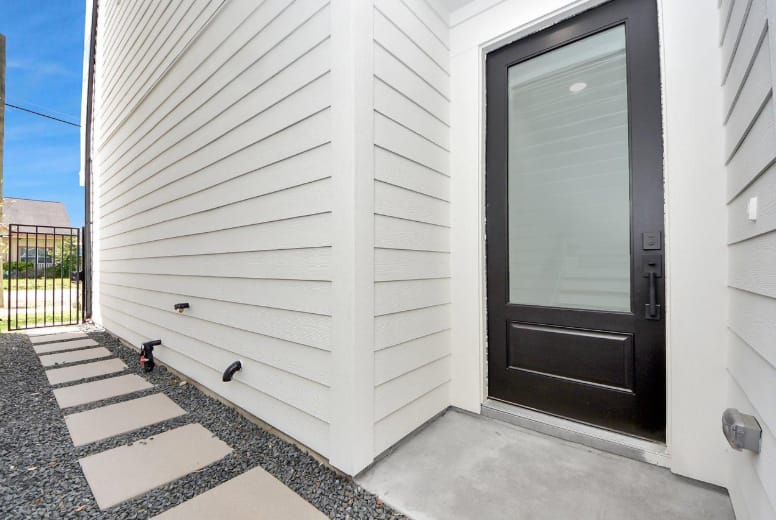
Gray concrete creates a clean contrast with white siding. Dark window frames and simple landscaping can give the exterior a more contemporary appearance.
Warm Concrete With Beige or Cream Siding
Warm-toned concrete works well with neutral exterior colors. This combination can create a welcoming appearance without making the walkway look disconnected from the home.
Charcoal Siding With Light Concrete
A lighter walkway can provide contrast against darker siding. Proper edge detailing helps maintain a neat appearance while preserving the required siding clearance.
Board and Batten With a Structured Walkway
Vertical siding profiles can create an attractive architectural appearance, particularly when combined with a simple concrete pathway and carefully planned landscaping.
These are useful Home Exterior Siding Ideas for homeowners planning an upgrade. Regardless of the chosen style, the walkway should be designed around the siding's installation requirements rather than covering its lower edge for a cleaner finish.
12. When Should You Contact a Siding Professional?
Not every walkway installed near vinyl siding requires immediate repairs. However, certain conditions deserve professional attention.
Consider contacting a qualified siding contractor when:
Concrete has covered a significant portion of the lower siding panels.
Siding appears buckled or permanently distorted.
Water repeatedly collects along the exterior wall.
The lower wall has visible signs of moisture damage.
Concrete installation has blocked drainage or flashing details.
You suspect damage behind the siding.
You are planning to replace the walkway and want to protect the existing exterior wall system.
A professional can assess the siding installation, identify potential moisture pathways, and determine whether the concrete needs adjustment.
If the problem involves both the walkway and the foundation, a concrete or drainage specialist may also be needed. Having the right professional evaluate each part of the issue can help avoid unnecessary siding replacement.
13. Common Mistakes to Avoid When Concrete Meets Vinyl Siding
Some problems develop because homeowners or contractors focus only on the finished appearance instead of the complete exterior wall system.
Here are several mistakes worth avoiding.
Covering the siding to create a seamless finish: Concrete should not be used to hide the lower siding edge. Proper clearance is more important than creating a perfectly flush appearance.
Ignoring manufacturer clearance requirements: Different siding products have different installation instructions. A clearance suitable for one product may not be suitable for another.
Assuming vinyl siding is waterproof: Vinyl siding sheds much of the rainwater that reaches its surface, but it does not replace the water-resistive barrier or flashing system behind it.
Ignoring the walkway slope: A new concrete surface that directs water toward the foundation can create drainage concerns even if the siding itself is installed correctly.
Replacing siding without correcting drainage: New panels will not solve an underlying water-management problem if the concrete continues directing moisture toward the house.
Waiting until visible damage becomes severe: Moisture-related issues can develop behind exterior materials before obvious surface damage appears.
Avoiding these mistakes can help protect both the appearance and performance of the exterior wall.
Conclusion: Protect the Bottom Edge Before Concrete Creates a Bigger Siding Problem
When a new concrete walkway covers the bottom edge of vinyl siding, the concern goes beyond appearance. The installation may interfere with the siding's movement, obstruct intended drainage details, and create conditions that allow moisture to remain near the exterior wall.
The actual level of risk depends on the walkway height, drainage slope, siding installation, and condition of the underlying wall system. Some situations may require only a minor adjustment, while others may need siding repairs, concrete modifications, or a more detailed moisture inspection.
For homeowners, the best approach is to check the lower siding edge before and after walkway installation, follow the manufacturer's clearance requirements, and make sure water moves away from the foundation.
A well-designed exterior should look attractive while also protecting the home from unnecessary moisture exposure. Whether you are maintaining existing vinyl siding or exploring other materials, proper installation details should always come before appearance.
If your new walkway has covered the bottom edge of your siding, do not ignore the condition. Identifying the issue early can make it easier to determine the right solution and protect the long-term performance of your home's exterior.