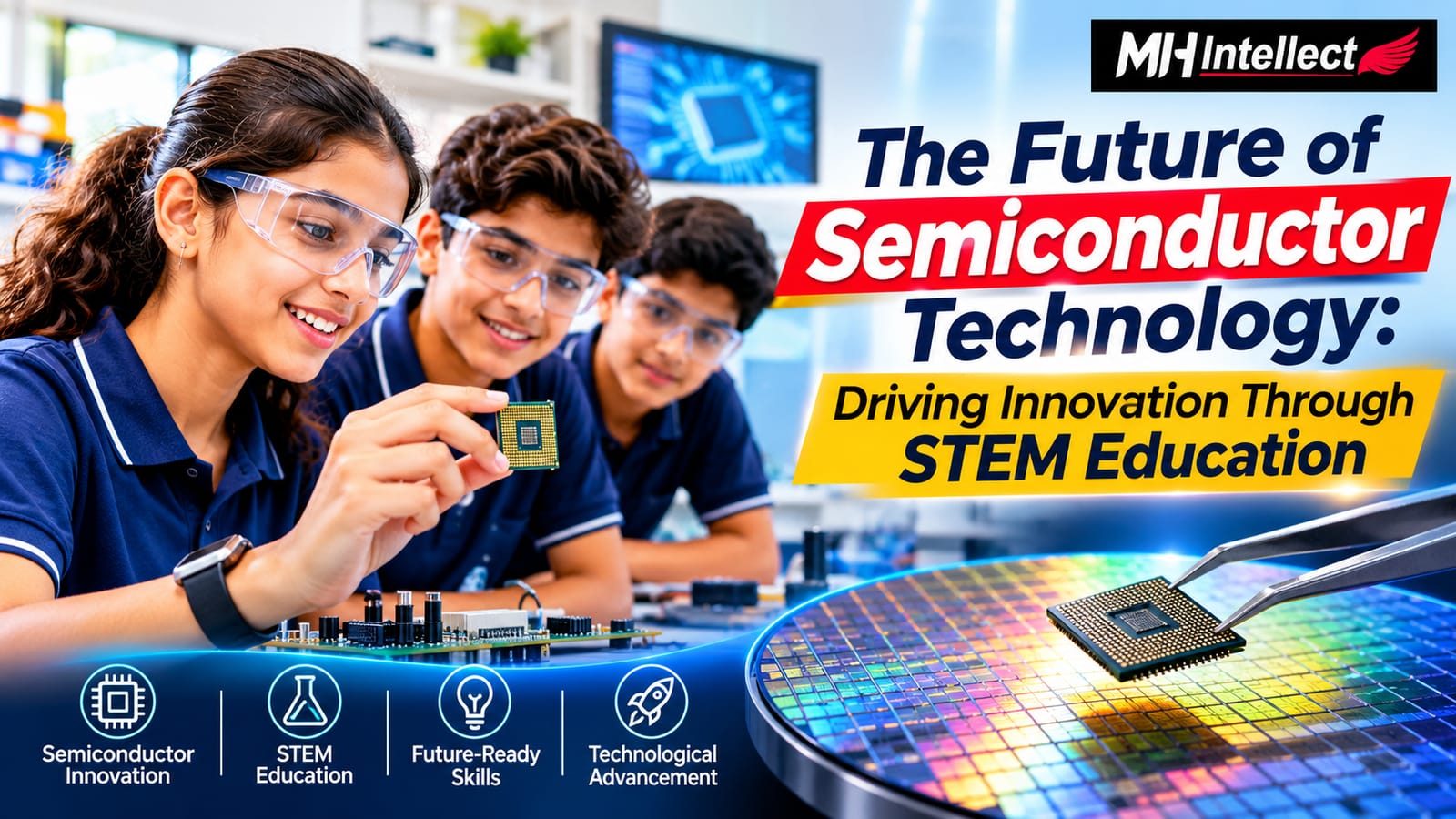
Semiconductors are the foundation of modern technology, powering everything from smartphones and computers to electric vehicles, renewable energy systems, and artificial intelligence. As technology continues to evolve, the semiconductor industry is becoming increasingly important in shaping the future of innovation. Understanding semiconductor developments and building technical knowledge among students are essential for preparing the next generation of technology professionals.
Understanding the Future of Semiconductors
Semiconductors are materials that control the flow of electrical current and form the building blocks of electronic devices. Their ability to support advanced computing, communication, and automation makes them essential to modern industries.
The Future of Semiconductors is closely connected to innovations in chip design, advanced manufacturing, artificial intelligence, and energy-efficient electronics. Emerging technologies are making semiconductor devices smaller, faster, and more powerful, creating new opportunities across different sectors.
Future of Semiconductor Technology and Emerging Innovations
The Future of Semiconductor Technology will be influenced by advanced materials, next-generation chip architectures, and improved manufacturing processes. Innovations such as silicon carbide (SiC), gallium nitride (GaN), and advanced packaging are helping manufacturers develop efficient and high-performance electronic components.
These developments are particularly important for electric vehicles, renewable energy systems, robotics, telecommunications, and artificial intelligence. As industries increasingly depend on intelligent electronic systems, semiconductor innovation will continue to drive technological progress.
Important Semiconductor Technology Trends
Several Semiconductor Technology Trends are transforming the electronics industry. Artificial intelligence is increasing the demand for specialised processors, while the Internet of Things (IoT) requires compact and energy-efficient chips for connected devices.
Other important developments include advanced chip packaging, semiconductor miniaturisation, power-efficient processors, and the use of new semiconductor materials. These innovations are helping industries improve performance, reduce energy consumption, and develop smarter products.
The Future of the Semiconductor Industry
The Future of Semiconductor Industry depends not only on technological advancements but also on skilled professionals who can design, develop, and maintain advanced electronic systems.
As global demand for semiconductors increases, education and practical technical training will become increasingly valuable. Students need opportunities to understand electronics, coding, robotics, circuit design, and engineering concepts from an early stage.
Semiconductor Education in STEM: Preparing Future Innovators
STEM education plays an important role in introducing students to the principles behind modern technologies. Through practical activities and project-based learning, students can explore how electronic components work and how semiconductor devices contribute to everyday applications.
Semiconductor Education in STEM helps connect classroom learning with real-world technological developments. Activities involving circuits, sensors, microcontrollers, and robotics encourage students to develop problem-solving, creativity, critical thinking, and engineering skills.
By introducing these concepts through hands-on experiences, schools can help students build a strong foundation in science, technology, engineering, and mathematics.
Building a Technology-Ready Generation with MH Intellect
Preparing students for a technology-driven future requires engaging learning experiences that connect theoretical knowledge with practical applications. Quality STEM programmes help learners explore emerging technologies, experiment with engineering concepts, and develop confidence in solving real-world problems.
MH Intellect supports STEM learning by encouraging innovation, practical exploration, and technology-focused education. By introducing students to important areas such as electronics, robotics, and engineering, STEM education can help develop the skills required for future industries.
Conclusion
Semiconductor technology will continue to shape the future of electronics, artificial intelligence, communication, and sustainable energy. Understanding emerging semiconductor innovations while developing practical STEM skills can help students prepare for future technological opportunities.
Combining semiconductor awareness with hands-on STEM education creates a pathway towards innovation, creativity, and a skilled future workforce.