Energy plays an important role in economic development, industrial growth and everyday life. From household electricity to large manufacturing facilities, every sector depends on a reliable energy supply. However, increasing energy demand and environmental concerns have made the choice of energy sources more important than ever. Understanding renewable and non-renewable energy helps individuals, businesses and industries make better decisions about their future power requirements.
Why Are Energy Sources Important?
Energy sources are the natural resources and technologies used to generate electricity, produce heat and power different activities. They are broadly classified into two categories: renewable and non-renewable energy.
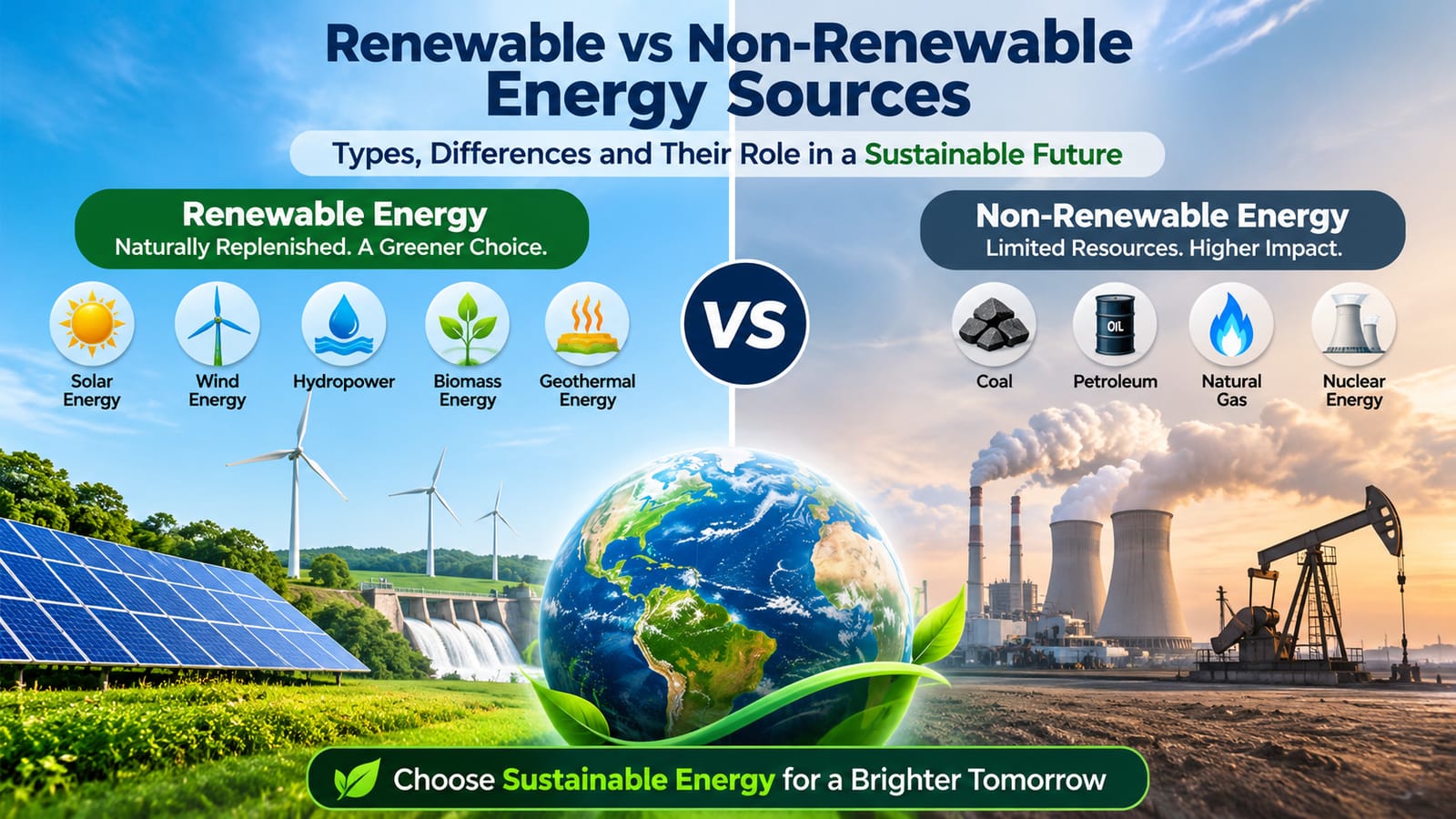
Renewable energy comes from naturally replenished resources, while non-renewable energy depends on limited resources that take millions of years to form. Both have contributed significantly to modern development, but their availability, environmental impact and long-term sustainability are different.
What Are the Different Types of Renewable Energy?
Renewable energy is becoming an important part of the global transition towards cleaner power generation. Its main types include:
1. Solar Energy: Solar power uses sunlight to generate electricity through photovoltaic panels. Rooftop solar installations and large solar parks are common applications.
2. Wind Energy: Wind turbines convert the movement of air into electricity. Wind farms can generate substantial power when suitable wind conditions are available.
3. Hydropower: Hydroelectricity uses flowing or falling water to operate turbines and generate electricity.
4. Biomass Energy: Organic materials such as agricultural residues, wood waste and other biodegradable matter can be used to produce energy.
5. Geothermal Energy: This source uses heat from beneath the Earth's surface for electricity generation and heating applications.
A major advantage of renewable energy is that its natural resources are replenished. Solar and wind power also produce no direct greenhouse gas emissions during electricity generation, although manufacturing, installation and maintenance have environmental impacts.
What Are the Main Types of Non-Renewable Energy?
Non-renewable energy sources are available in limited quantities and cannot be replenished within a human timescale. They have supported electricity generation, transportation and industrial development for decades.
The major types include:
Coal: Widely used in thermal power plants to generate electricity.
Petroleum: An important fuel for transportation and several industrial applications.
Natural Gas: Used for electricity generation, heating and manufacturing processes.
Nuclear Fuels: Uranium is used in nuclear power plants to generate electricity.
These sources benefit from established infrastructure and, in many cases, controllable power generation. However, fossil fuels contribute to greenhouse gas emissions, air pollution and resource depletion.
Renewable vs Non-Renewable Energy: What Is the Difference?
The key difference between renewable and non-renewable energy is how quickly their resources can be replenished.
Renewable sources such as sunlight, wind and flowing water are naturally replenished. Non-renewable resources such as coal, petroleum and natural gas are finite and require extraction.
Renewable energy generally offers lower operational emissions, while fossil-fuel-based energy systems produce emissions when fuel is burned. Renewable generation can also vary with weather conditions, making energy storage, grid connectivity and effective power management important.
How Can India Build a More Balanced Energy Future?
India's growing population, expanding infrastructure and industrial development are increasing the need for dependable electricity. A balanced energy strategy can combine renewable generation, existing power infrastructure, energy storage and efficient electricity management.
Solar energy offers opportunities for residential, commercial and industrial users to generate electricity closer to where it is consumed. Wind, hydropower and other renewable technologies can further diversify the energy mix.
Battery Energy Storage Systems (BESS) can help store available electricity for use when generation and demand do not match. Such solutions, combined with suitable grid infrastructure, can support a more flexible and reliable energy system.
How Is Jakson Supporting the Evolving Energy Landscape?
The transition towards sustainable energy requires technology, infrastructure and practical energy solutions. Jakson is an energy and infrastructure company with businesses spanning solar modules and cells, distributed energy, infrastructure, and green energy solutions.
For readers interested in understanding energy classifications in greater detail, the guide Renewable and Non-Renewable Energy Sources: Types and Differences explains the major energy categories, their characteristics, advantages and limitations.
Frequently Asked Questions
1. What are the two main categories of energy sources?
The two main categories are renewable energy and non-renewable energy, classified according to whether their natural resources can be replenished.
2. Is solar energy renewable or non-renewable?
Solar energy is renewable because sunlight is naturally replenished and can be converted into electricity using solar panels.
3. Why is non-renewable energy still used?
Non-renewable energy continues to be used because established infrastructure, fuel availability and controllable electricity generation support existing energy requirements.
4. Can renewable energy provide reliable electricity?
Yes. Renewable energy can contribute to reliable electricity supply when supported by suitable storage, grid infrastructure, hybrid systems and effective energy management.
Conclusion
The future of energy depends on making informed choices about available resources and technologies. Renewable energy offers opportunities for cleaner power generation, while existing non-renewable sources continue to support many current energy systems. Understanding their differences is an important step towards building a balanced, efficient and sustainable energy future.
https://www.jakson.com/blogs/renewable-and-non-renewable-energy-sources-types-guide/