The growing demand for clean energy and sustainable technologies is transforming the global energy industry. As countries invest in renewable energy sources, advanced electronic technologies are becoming essential for improving energy generation, conversion, and distribution. Power electronics plays a significant role in this transformation by helping electrical systems operate more efficiently and reliably.
Innovations in semiconductor technology and energy conversion systems are creating new opportunities for renewable energy applications. Understanding these developments is important for students, engineers, and technology enthusiasts interested in the future of sustainable innovation.
The Role of Power Electronics in Renewable Energy
Power electronics involves controlling and converting electrical power using advanced electronic components and semiconductor devices. It helps renewable energy systems manage electricity efficiently while maintaining stable performance.
Solar panels and wind turbines generate electricity that often requires conversion before it can be used by electrical equipment or supplied to the power grid. Power electronic systems help regulate voltage, current, and frequency, improving energy utilisation and system performance.
These technologies are essential for developing reliable renewable energy infrastructure and supporting the transition towards cleaner energy solutions.
Solar Inverters: Improving Solar Energy Efficiency
Solar inverters are essential components of solar power systems. Solar panels generate direct current (DC) electricity, while most household appliances and electrical grids operate using alternating current (AC).
Solar inverters convert DC electricity into AC electricity, making solar energy suitable for everyday applications. Modern inverters also support energy monitoring, system protection, and improved power management.
With increasing adoption of solar energy, advanced inverter technologies are helping improve the efficiency and reliability of photovoltaic installations.
Wind Energy Converters: Supporting Clean Power Generation
Wind energy converters help transform electricity generated by wind turbines into a form suitable for electrical systems and grid integration.
Wind turbines produce variable electrical output depending on wind speed and operating conditions. Power electronic converters help regulate this output, manage electrical characteristics, and support stable energy delivery.
These technologies are important for developing efficient wind power systems and expanding renewable electricity generation.
SiC Power Electronics: Advancing Energy Conversion
SiC power electronics uses silicon carbide semiconductor technology to improve the performance of high-power electrical systems.
Compared with conventional silicon-based devices, silicon carbide components can operate at higher temperatures, voltages, and switching frequencies. These properties can help reduce energy losses and improve power density in suitable applications.
SiC technology is increasingly relevant to electric vehicles, renewable energy inverters, industrial power supplies, and energy storage systems.
GaN Semiconductors: Enabling Compact Electronic Systems
GaN semiconductors are based on gallium nitride, a wide-bandgap semiconductor material used in advanced power conversion applications.
GaN devices offer fast switching capabilities and can support compact, efficient electronic designs. They are particularly useful in applications such as fast chargers, power adapters, data centre power supplies, and selected renewable energy systems.
As semiconductor research advances, GaN technology continues to create opportunities for developing smaller and more energy-efficient electronic devices.
The Future of Semiconductors and Sustainable Innovation
Semiconductors are the foundation of modern electronics, supporting everything from renewable energy systems to artificial intelligence and communication technologies.
Exploring The Future of Semiconductors highlights how advanced materials, miniaturisation, and improved manufacturing processes are shaping next-generation electronic applications.
Understanding semiconductor technologies also creates valuable learning opportunities for students interested in electronics, engineering, and scientific innovation.
Why Choose MH Intellect for Technology-Focused Learning?
Developing future-ready skills requires an understanding of emerging technologies and their practical applications. MH Intellect supports educational institutions in exploring STEM learning through technology-focused educational initiatives.
By introducing students to science, engineering, electronics, robotics, and coding, schools can encourage curiosity and practical problem-solving. These learning experiences help students build a foundation for understanding the technologies shaping tomorrow's industries.
Conclusion
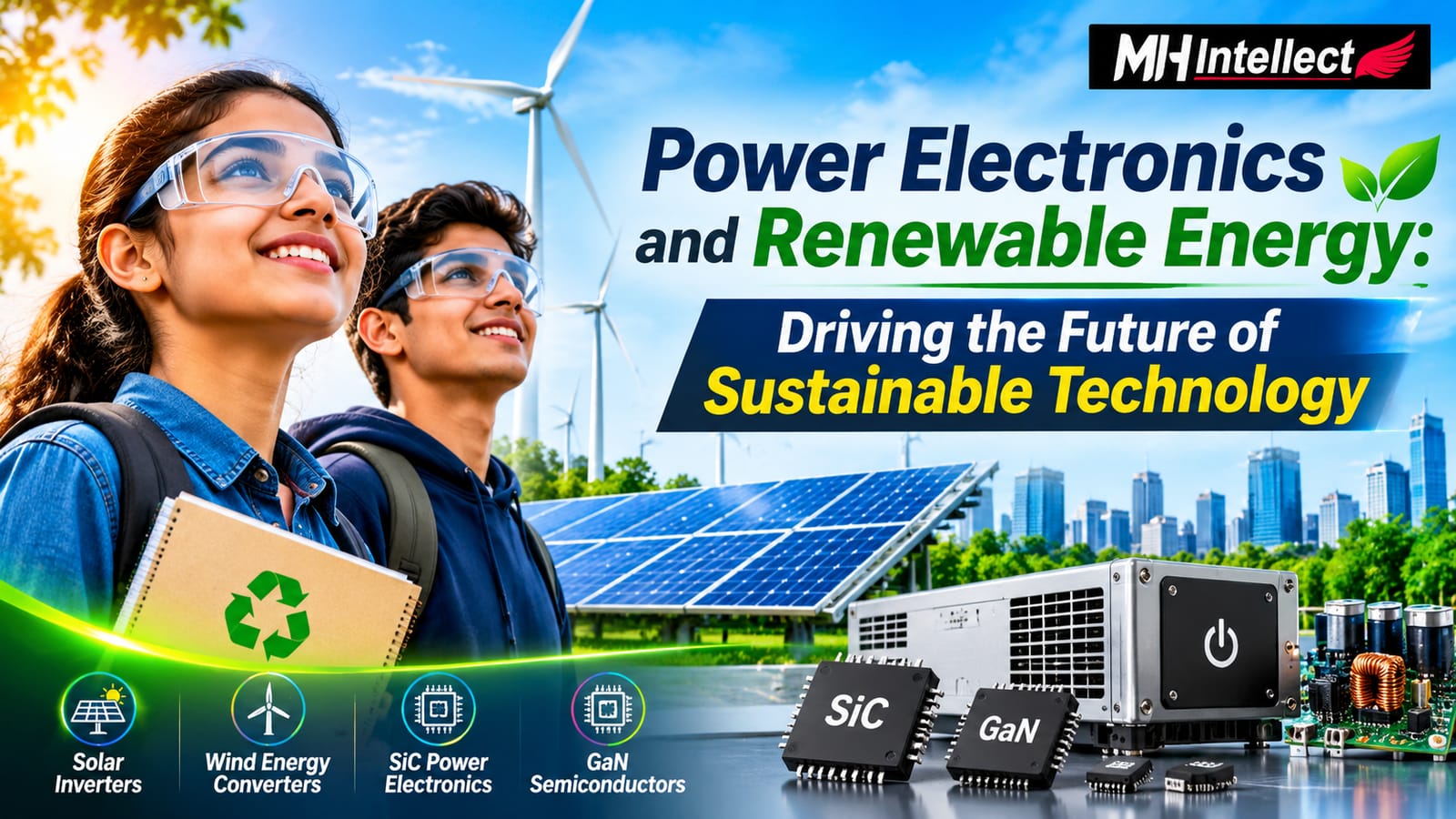
Power electronics and semiconductor innovations are playing an important role in the global transition towards sustainable energy. From solar inverters and wind energy converters to SiC power electronics and GaN semiconductors, advanced technologies are improving the way electricity is generated, converted, and utilised.
Developing awareness of these technologies through STEM education can inspire students to explore engineering, electronics, and renewable energy. With practical learning opportunities, MH Intellect aims to support the next generation of creative thinkers and technology innovators.