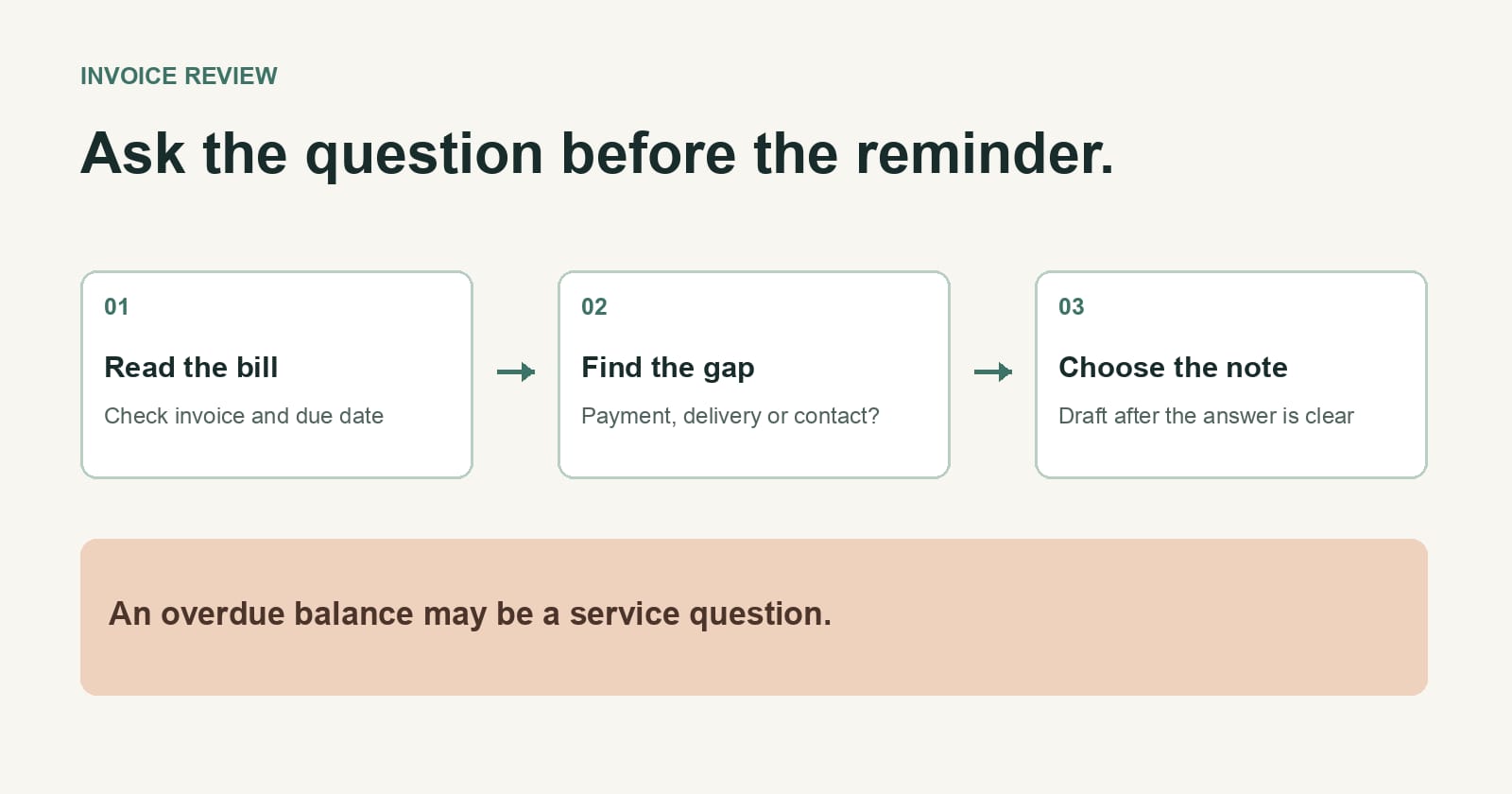
An assistant can help with overdue invoices by finding what needs an answer before anyone drafts a reminder. A list sorted by age is easy to make. It can put a disputed bill next to one that simply slipped through the cracks.
Imagine a fictional two-person design studio with eight unpaid invoices. One client says a revision wasn't delivered. Another paid by bank transfer yesterday, but the payment hasn't been matched. A third never received the invoice because the contact address changed. Sending the same "payment overdue" note to all three would make the studio look as if it hadn't read its own records.
The useful first output is an exception list. For each invoice, ask the assistant to show the invoice number, amount and due date from the ledger, the latest relevant customer message, any recorded payment, and the next question. In the example, those questions are different: Was the revision delivered? Has the transfer cleared? Which address should receive the invoice?
Keep what the records say separate from what you infer
An assistant may see a bank line that resembles an invoice amount. That is a possible match, not proof. It may find a customer reply saying "we're waiting for the final file." That doesn't establish whether the work was delivered. Ask it to label these as possible matches or open questions.
You can use this instruction with a spreadsheet and an inbox export:
Review these unpaid invoices and related messages. Don't send reminders or change invoice status. For each invoice, give me the ledger facts, the latest customer statement, any possible payment match, and one question I need to resolve. Mark missing or conflicting information plainly. Group invoices by next action: check payment, check delivery, correct contact, or ready for a routine reminder.
The groups aren't verdicts about the customer. They're work for your own team. "Check delivery" means opening the project record and seeing what was agreed and sent. It doesn't mean treating the customer as wrong.
Make the reminder the last step
Once the owner answers the question, the assistant can draft a note that fits the situation. The transfer case may need no reminder at all. The wrong-address case may need the invoice resent with a short explanation. The disputed revision may need a project conversation before anyone mentions payment.
For routine reminders, you can set an approved template and a clear sending boundary. But keep exceptions out of that lane. A small business has fewer invoices than a bank; it can afford to notice when one of them is actually a service problem.
The job isn't to make the overdue list look shorter. It's to stop the wrong message from going out while the right person finds the missing fact.
Alek Perak is a Tokenrip co-founder. Tokenrip is a shared workspace for files, tasks, and decisions; agents run in the tools people already use. It doesn't reconcile payments or resolve disputes on its own.