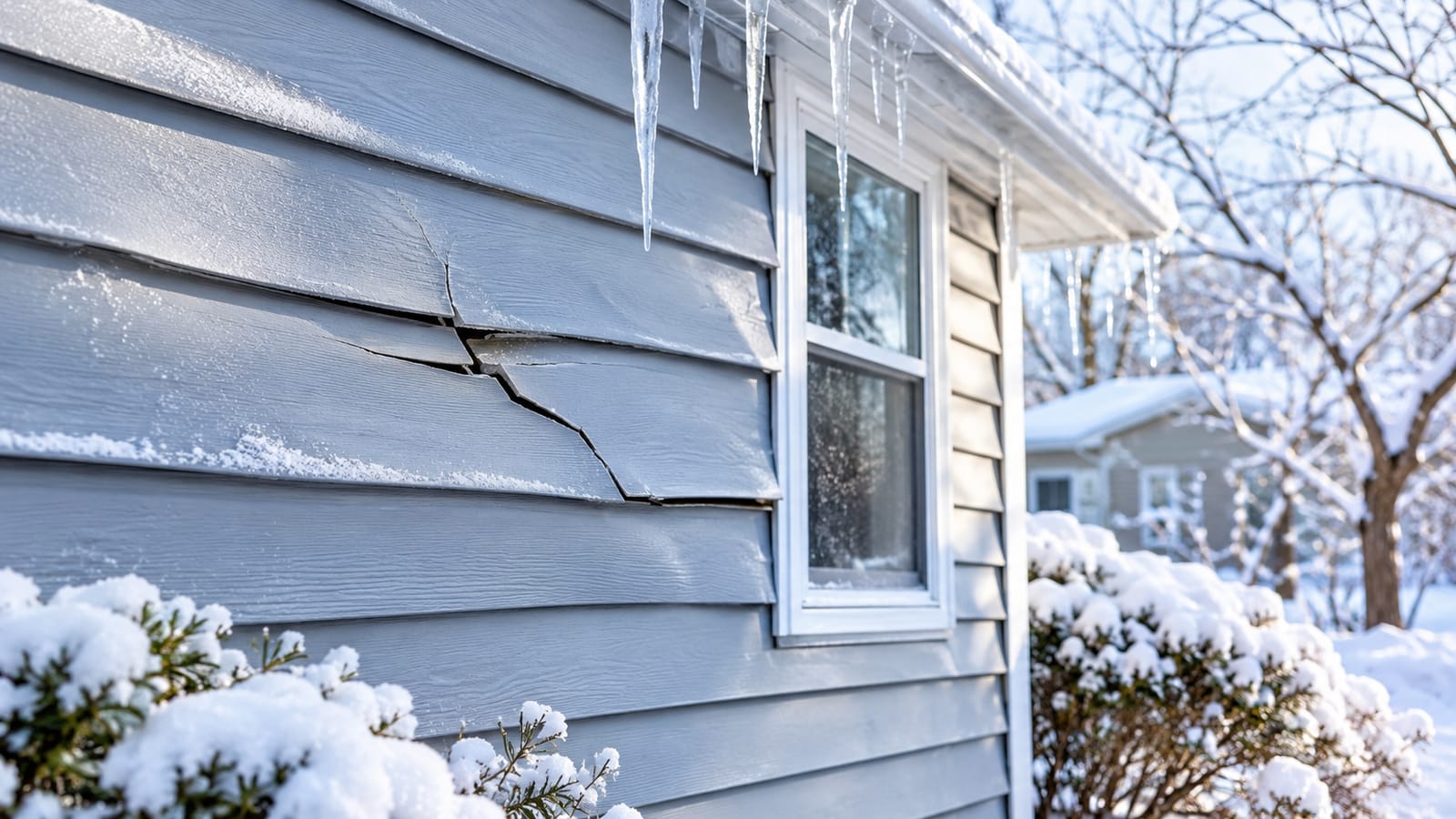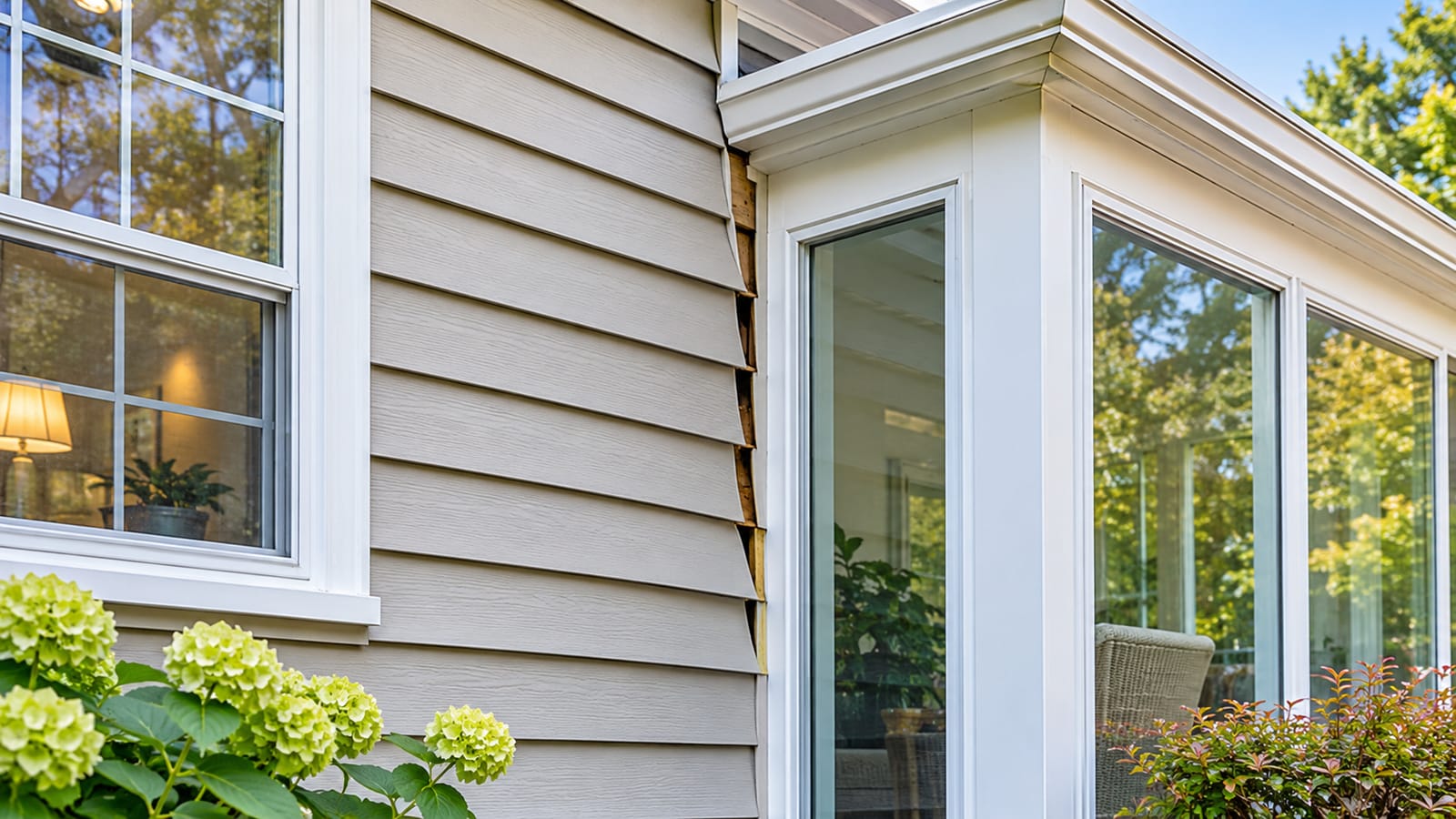
Siding near an attached sunroom usually separates because of thermal movement, shifting between the two structures, poor installation clearance, loose fasteners, failing trim, or water getting behind the siding. Pushing the panels back into place only hides the gap. If the cause isn’t fixed, the problem returns and often spreads.
This guide covers the most common causes, how to inspect the area, how to repair it, and when to call a professional.
Why the House-to-Sunroom Connection Is a Weak Point
A sunroom often differs from the main house in several ways. It may have its own foundation, lightweight framing, large glass areas, or aluminum components. It may also have been built years after the house.
Because of this, the two structures heat, cool, move, and handle moisture differently. Siding at the joint has to allow for that movement while still keeping water out of the wall.
A single gap isn’t necessarily a sign of structural trouble. Widening gaps, repeated separation, and water stains deserve a closer look.
9 Common Causes of Siding Separation Near a Sunroom
1. Different Expansion and Contraction Rates
A glass-heavy sunroom can absorb a lot of solar heat while the insulated house wall next to it stays cooler. Siding without enough expansion clearance can press against trim or shift out of position.
What you may notice:
Gaps that open in cold weather and tighten in heat
Bowed or uneven panels
Separation where siding meets trim
Vinyl, for example, must be able to move within its fastening system. Don’t force a panel into place without checking the manufacturer’s instructions.
2. The Sunroom Moves Differently Than the House
A separate foundation or support system can respond differently to soil moisture, drainage, and freeze-thaw cycles. Even a well-attached addition may move slightly at the joint.
Warning signs:
A gap that keeps widening
Cracks around the connection
Trim pulling away from the wall
Doors or windows that stick
New cracks in nearby interior walls
Siding separation alone doesn’t prove foundation movement. If several of these signs appear together, have a qualified building professional assess the connection before doing cosmetic repairs.
3. Improper Installation at the Transition
Siding cut too tightly against trim can’t move freely, which leads to buckling, distorted edges, and open joints. Other common mistakes include:
Misplaced starter strips
Missing or unsuitable transition trim
Overdriven or poorly spaced fasteners
Unsupported cut edges
Incorrect panel overlap
4. Missing or Damaged Flashing
Flashing directs water away from roof-to-wall intersections, windows, and trim. When it fails, water reaches the sheathing and framing behind the siding. This can cause:
Rotting sheathing and trim
Corroded fasteners
Siding that loses its hold on the wall
Check for: staining, peeling paint, swollen trim, soft wood, and discoloration around the joint.
Caulk is not a substitute for flashing. In some siding systems, sealing drainage openings can make moisture problems worse.
5. Loose or Incorrectly Placed Fasteners
Nails driven too tight restrict movement. Nails too loose, badly spaced, or outside the recommended fastening zone let panels shift.
Signs of fastener problems:
Panels that move when touched
Uneven horizontal lines
Gaps between overlapping sections
Rattling in wind
Avoid adding nails or screws through the face of the siding. This restricts movement, creates leak points, and can damage the panel.
6. Deteriorating Trim
Corner boards, J-channel, and transition trim keep siding aligned at the joint. Wood trim rots, metal corrodes, and some plastic trim turns brittle in sun. If trim pulls away from the wall, the siding appears to separate even when the panels are fine. Replacing only the panel won’t solve it.
7. Siding Material Differences
Different materials behave differently at a transition:
Material
What to watch for
Vinyl
Insufficient clearance or tight fastening causes buckling and separation
Fiber cement
More stable, but still needs correct joint spacing, fastening, and moisture protection; cracked panels should be evaluated, not forced back
Composite
Requirements vary by product; follow specific installation and flashing guidelines. See Composite Siding Options for Home Exteriors
Engineered wood
Cut edges and finish damage are vulnerable to moisture
Metal
Restricted movement or wrong fasteners can cause gaps and noise
Two different siding products shouldn’t automatically be joined with the same method. Each needs a compatible, manufacturer-approved transition.
8. Earlier Repairs or Remodeling
Adding the sunroom may have involved removing siding, altering trim, or creating new openings. If the siding wasn’t reinstalled correctly, the joint can stay vulnerable. The same applies to small spot repairs where a replacement panel has the wrong overlap or an incompatible trim connection. If the gap appeared after remodeling or a repair, review that work first.
9. Wind Pressure
Sunroom shapes and large windows can change airflow around corners and rooflines. Wind rarely causes the original defect, but it exposes loose or poorly secured siding. After storms, check the whole area, not just the missing section, for damaged panels and trim. See also Common Causes of Cracked House Siding.
How to Find the Cause: 7-Step Inspection
Locate the gap. Is it at a horizontal joint, vertical trim, a corner, or the structural connection?
Check panel alignment. Look for bowed, cracked, or displaced sections.
Inspect trim. Check corner boards, J-channel, and transition pieces for looseness or decay.
Look for moisture. Note stains, swelling, and peeling finishes.
Consider timing. Did it follow a storm, heavy rain, or a sharp temperature swing?
Review past work. Was the sunroom recently added or the siding replaced?
Track changes. Photograph the gap over time to see whether it’s stable or widening.
Don’t pull siding away from the wall unless you have the right tools and experience, since you can damage the panels or the moisture barrier.
How to Fix Siding Separation Near a Sunroom
Fix the cause first, then restore the appearance.
Correct the underlying problem. Adjust panels to the manufacturer’s clearance specs for thermal issues, and find and stop any water source before closing up the wall.
Repair or replace transition trim. Use exterior-rated material compatible with your siding, and check flashing and drainage at the same time.
Reposition loose panels. This works only if panels and fastening areas are intact. See How to Fix Loose Siding Panels on a House.
Replace damaged sections. Cracked or broken panels, or panels with failed fastening edges, should be replaced with a close match in material, profile, size, and finish. See Replacing Missing or Broken Siding Panels.
Verify the result. Confirm alignment, secure trim, allowed movement, and intact water management.
When to Call a Professional
Get an inspection if:
The gap keeps widening after repairs
Multiple panels are separating
Water stains appear on interior walls near the joint
Trim is soft or visibly deteriorated
Panels repeatedly loosen in wind
The house and sunroom visibly move relative to each other
Flashing is damaged or wall materials are deteriorating
A professional can tell you whether the problem is limited to the siding or involves the wall assembly beneath it. Ask the contractor to explain the proposed repair, any suspected moisture or structural concerns, and whether flashing and transition details are included.
How to Prevent Future Separation
Use compatible transition components designed for your siding.
Follow manufacturer instructions for clearances, fastening, and joint spacing.
Protect the joint from water with proper flashing and drainage.
Inspect after severe weather for loose panels, damaged trim, and new gaps.
Maintain finishes by repairing coatings, exposed edges, and aging trim early.
Keep gutters and downspouts working so water doesn’t pool near the sunroom.
Hire qualified installers and coordinate trades on complex additions.
Does Separation Mean Replacing All the Siding?
No. A small problem with otherwise healthy siding often needs only a targeted repair. Replacing several connected sections makes sense when multiple panels are damaged, fastening areas have failed, or trim has deteriorated. Full replacement is reserved for widespread deterioration or recurring moisture damage. Have the extent of damage confirmed before committing to a larger project.
Frequently Asked Questions
Why does siding separate where a sunroom connects to the house?
Common causes are different expansion rates, movement between structures, improper installation, loose fasteners, damaged trim, or moisture intrusion. The exact cause depends on the siding material and construction details.
Can temperature changes cause gaps between siding panels?
Yes. If panels lack movement clearance or are incorrectly fastened, expansion and contraction can cause gaps, buckling, or separation.
Is a small gap between siding and sunroom trim dangerous?
Not necessarily. But investigate gaps that let water behind the siding, keep widening, or appear with other damage.
Should I caulk separated siding?
Not automatically. Caulk in the wrong place can block drainage or restrict movement. Follow the manufacturer’s recommendations.
Can a sunroom addition cause siding problems on an older house?
Yes. Additions create new transitions between materials and structures. Improper flashing, trim, or siding connections can lead to separation over time.
Can I repair loose siding without replacing the whole wall?
Often, yes, if panels are intact and the underlying support is sound. Damaged fastening areas or hidden moisture may require more work.
How do I know if the siding or the structure is moving?
Look for widening gaps, interior cracks, displaced trim, and sticking doors or windows. These don’t prove structural movement, but they justify a professional assessment.
Which siding works well around a sunroom?
Vinyl, fiber cement, engineered wood, composite, and metal can all work. Compatible transition details and manufacturer-approved installation matter most.
How often should I inspect the connection?
At least once a year, and after severe storms, water intrusion, or exterior remodeling.
Can separation return after repair?
Yes, if the root cause isn’t fixed. Repositioning a panel won’t solve ongoing structural movement, bad flashing, or restricted thermal expansion.
Final Thoughts
A small gap near your sunroom may look cosmetic, but it’s worth understanding before you repair it. Temperature swings, structural movement, installation errors, failing trim, loose fasteners, and moisture can all be behind it. Watch for recurring gaps, damaged trim, water stains, and panels that keep coming loose, and address them early to prevent wider damage.
Planning an upgrade or dealing with damaged panels? Explore your siding options and common exterior problems with Home Expert Siding, and start with a clear picture of your wall’s current condition.