Metal is taking on a more visible role in contemporary home design. What was once mainly associated with industrial buildings, commercial structures, and roofing is now being used to create distinctive residential exteriors. Homeowners and designers are exploring metal panels, textured surfaces, darker finishes, and warmer metallic tones to give houses a more defined architectural appearance.
Matte black siding, charcoal steel panels, brushed aluminum, bronze accents, and weathered metal effects offer different ways to introduce character to an exterior. These finishes can complement modern farmhouses, minimalist homes, industrial-inspired properties, and contemporary suburban designs.
The appeal goes beyond appearance. Homeowners are also considering how exterior materials respond to weather, how much maintenance they require, and how well they work with other parts of the building. Depending on the material, coating, and installation system, metal siding can offer useful benefits in durability, design flexibility, and routine maintenance.
However, not all metal products perform in the same way. Steel, aluminum, zinc, and copper have different characteristics, while protective coatings and installation details can influence how well each option performs over time.
Understanding the available finishes, materials, and practical considerations can help homeowners choose a metal exterior that suits both their design preferences and property requirements.
1. Why Metal Finishes Are Becoming Popular in Modern Home Design
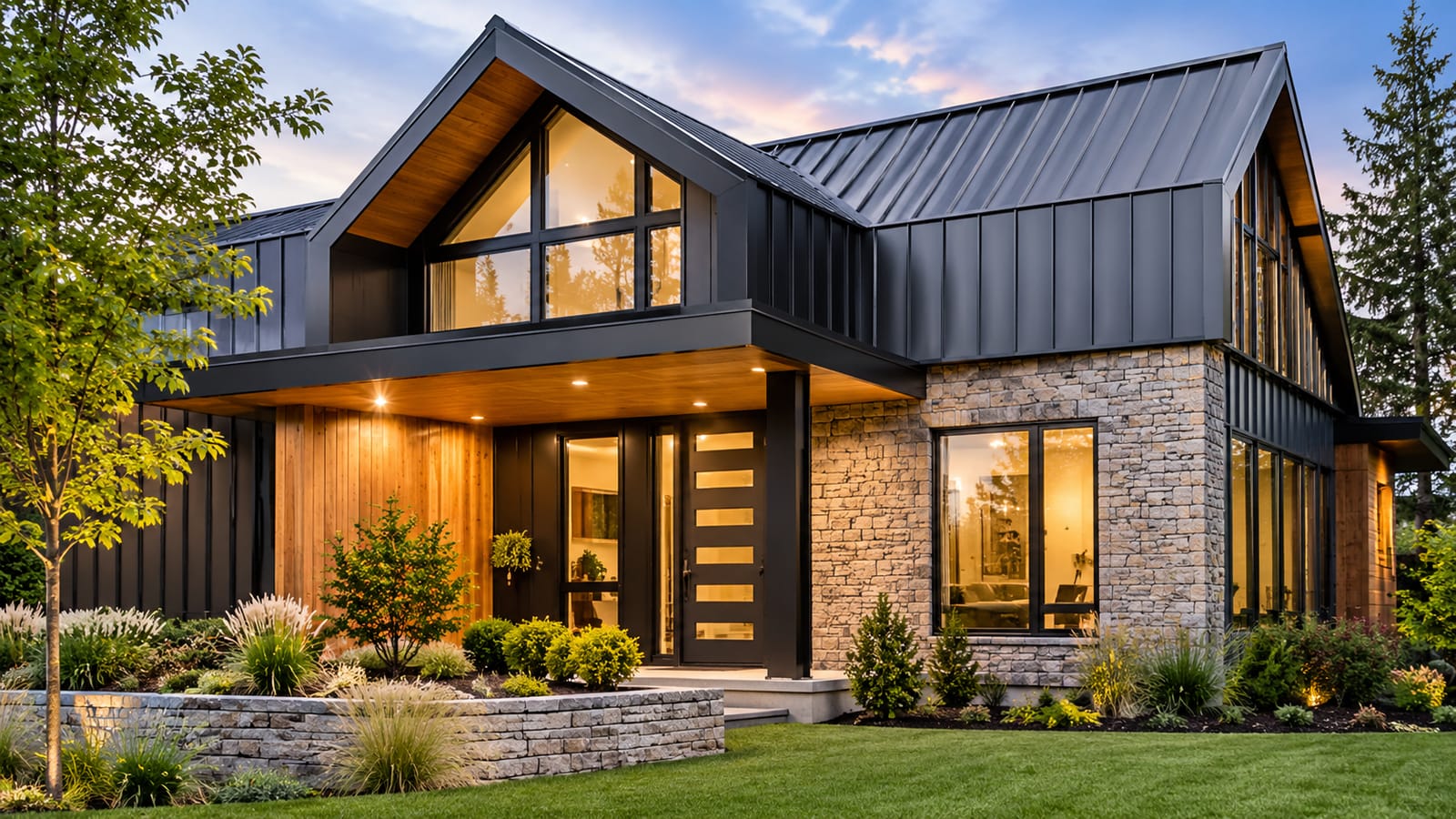
Contemporary exterior design often focuses on clean lines, simple forms, and carefully selected materials. Metal finishes fit naturally into this approach because they can create a defined architectural appearance without requiring elaborate decorative details.
Metal panels are available in different orientations and profiles, including vertical panels, horizontal panels, and standing-seam systems. These arrangements can highlight particular sections of a house or create a consistent appearance across larger wall surfaces.
Several design preferences are contributing to the growing interest in metal finishes.
Clean architectural lines: Metal panels can create consistent patterns across exterior walls. Standing-seam profiles, for example, introduce raised lines that can emphasize the height and shape of a building.
Contemporary color choices: Matte black, charcoal gray, bronze, muted silver, and earthy metallic tones offer alternatives to conventional exterior colors.
Contrasting materials: Metal works alongside natural wood, stone veneer, brick, and fiber cement. These combinations can add depth and texture without making the exterior overly complicated.
Practical maintenance expectations: Many factory-finished metal products are designed to retain their appearance with appropriate cleaning and periodic inspection. Their maintenance requirements depend on the material and protective coating.
Flexible applications: Metal does not have to cover every exterior wall. It can be used on an entrance, garage, upper-level extension, accent wall, or selected architectural feature.
For homeowners planning an exterior renovation, metal finishes offer an opportunity to combine a distinctive appearance with practical material considerations.
2. Popular Metal Siding Finishes for Contemporary Homes
Metal siding is available in a range of finishes, and each creates a different visual effect. Some blend into the exterior, while others become a noticeable architectural feature.
The right selection depends on the home's design, surrounding materials, lighting conditions, and personal preferences.
Matte Black Metal Siding
Matte black has become a recognizable choice in contemporary exterior design. Its subdued surface creates a strong visual statement without the high reflection of a glossy finish.
It can work particularly well with:
Natural wood entry doors and soffits.
Light-colored stone accents.
Large windows with dark frames.
White or warm beige exterior details.
Vertical and board-and-batten-inspired profiles.
Dark metal finishes can absorb more solar radiation than lighter colors. Homeowners should therefore consider the product's thermal characteristics, the wall assembly, and local climate conditions before choosing a dark exterior.
Brushed and Satin Metal Finishes
Brushed and satin finishes provide a softer metallic appearance than highly reflective surfaces. They introduce texture and subtle variation while keeping the exterior relatively understated.
These finishes can be used on accent walls, entrance areas, garage surrounds, and selected architectural sections.
Their appearance may change with sunlight and viewing angles. This can be particularly noticeable on homes with large exterior surfaces or distinctive architectural shapes.
Weathered and Aged Metal Finishes
Weathered metal finishes bring a warmer, more textured appearance to contemporary architecture. Corten-style surfaces, for example, create a rust-like effect that contrasts with concrete, glass, timber, and neutral siding.
Homeowners should distinguish between genuine weathering steel and decorative coatings that imitate its appearance. Genuine weathering steel develops a protective surface under suitable conditions, but it still requires appropriate detailing and drainage. Rust-colored runoff can stain nearby walls, paving, and other materials.
Before selecting this finish, consider how water will move across the panels and whether adjacent surfaces could be affected.
Metallic Bronze and Champagne Finishes
Bronze and champagne tones offer an alternative to common black, gray, and silver finishes. Their warmer appearance can complement natural stone, cream-colored walls, wood accents, and earthy landscaping.
These colors are worth considering when homeowners want a contemporary exterior that feels warm rather than strongly industrial.
They can be used across selected wall sections or as smaller details around entrances, windows, and roof edges.
3. Metal Siding Materials: Understanding Your Options
The finish determines how metal siding looks, but the underlying material influences its weight, corrosion resistance, maintenance requirements, and suitability for different environments.
Common options include steel, aluminum, zinc, copper, and factory-coated metal panels.
Steel Siding for Contemporary Architecture
Steel siding is often considered for modern homes because it provides a strong panel system and a range of architectural profiles.
Manufacturers offer steel products with protective coatings designed to help resist corrosion and maintain the finish. The actual performance depends on the steel specification, coating system, panel construction, and installation quality.
Before choosing a product, homeowners should review its panel thickness, protective finish, fastening requirements, and manufacturer warranty. Appearance alone is not enough to determine whether a particular steel siding system is suitable.
Aluminum Siding for Lightweight Exterior Applications
Aluminum is another option for residential exterior projects. Its relatively low weight can make it suitable for different cladding applications.
Aluminum naturally forms an oxide layer that helps protect the underlying metal from corrosion. However, it can dent under impact, and its surface finish may require attention as the exterior ages.
Homeowners should compare panel thickness, coating quality, impact resistance, and installation specifications when evaluating aluminum products.
Zinc and Copper for Distinctive Exterior Details
Zinc and copper are often selected for specialized architectural applications where the appearance of the material is an important part of the design.
Both can develop distinctive surface changes over time. Zinc forms a natural patina, while copper gradually changes from its original metallic appearance as it reacts with the surrounding environment.
These materials may be used for roof edges, wall accents, entrance features, and selected exterior sections.
Their initial cost, installation requirements, compatibility with adjacent materials, and runoff characteristics should be considered before installation.
4. Combining Metal Finishes With Other Exterior Materials
Metal finishes can be particularly effective when combined with other exterior materials. Rather than covering every wall with metal, homeowners can use panels strategically to highlight specific architectural sections.
Metal and Natural Wood
Wood introduces warmth, while metal adds a more structured contemporary appearance.
This combination works well around entrances, upper-level walls, covered patios, and garage sections. Natural wood can soften the appearance of dark metal panels, creating a balance between modern and organic materials.
Homeowners who prefer the appearance of wood but want to compare different maintenance requirements can also explore wood-look siding options.
Metal and Stone Veneer
Stone creates a textured, natural foundation for a house, while metal panels introduce clean architectural lines.
This combination can work well when stone is used around the lower exterior, porch columns, or entrance, while metal appears on upper sections or selected accent walls.
Explore our guide to stone veneer siding to understand another option for adding texture to a residential exterior.
Metal and Fiber Cement
Fiber cement offers several exterior profiles, including lap siding, panels, and board-and-batten designs.
Pairing fiber cement with metal accents can create a balanced appearance without making the design feel overly decorative. For example, a home might use horizontal fiber cement siding across its main walls and darker metal panels around the garage or entrance.
Metal and Brick
Brick provides a traditional exterior appearance that can contrast with contemporary metal finishes.
A renovation might retain an existing brick lower level while introducing dark metal cladding around an entrance, garage, or upper-story extension.
The important detail is how the materials meet. Colors, textures, flashing, and transitions should be coordinated so the exterior looks intentional rather than like a collection of unrelated finishes.
5. How Metal Finishes Perform in Different Weather Conditions
An attractive finish must also be suitable for the environment in which it is installed. Different parts of the United States experience different combinations of sunlight, rainfall, humidity, snow, wind, and temperature changes.
These conditions can influence material selection, protective coatings, and installation requirements.
Hot and sunny climates: Dark metal finishes can become warmer under direct sunlight. Homeowners should consider product-specific solar reflectance, ventilation, insulation, and wall assembly details.
Coastal environments: Salt exposure can accelerate corrosion in susceptible metals and affect protective coatings. Material selection and appropriate corrosion protection are especially important near the ocean.
Cold and snowy regions: Metal expands and contracts as temperatures change. Proper fastening, movement allowances, flashing, and moisture management help support the performance of the exterior system.
Areas with heavy rainfall: Water should drain away from panel joints, windows, doors, and wall transitions. Correct flashing and installation details help prevent unwanted moisture entry.
Hail-prone locations: Metal products vary in impact resistance. Homeowners should check product-specific impact ratings and understand that even durable panels can dent under certain conditions.
The most suitable metal siding is not necessarily the one with the most attractive finish. It is the product whose material, coating, and installation system match the property's local exposure conditions.
6. Do Metal Finishes Require Less Maintenance?
Metal siding is often considered a relatively low-maintenance exterior option, but it should not be treated as maintenance-free.
Its maintenance requirements depend on the metal type, protective finish, installation quality, and environmental exposure.
Routine care generally includes:
Removing dirt, dust, and organic buildup using suitable cleaning methods.
Checking visible panels for scratches, dents, and coating damage.
Inspecting fasteners and joints for signs of movement or deterioration.
Checking areas around windows, doors, and roof intersections.
Looking for water stains or corrosion around vulnerable details.
Following the manufacturer's cleaning and maintenance instructions.
Aggressive cleaning products and abrasive methods should be avoided unless the manufacturer specifically approves them for the selected finish.
Small areas of coating damage should also be investigated. If the protective surface is compromised, the exposed metal may become more vulnerable to corrosion, particularly in locations with persistent moisture or salt exposure.
Regular inspection can help identify these concerns before they affect larger sections of the exterior.
7. Important Installation Details That Influence Long-Term Performance
Even a high-quality metal siding product can experience problems when it is installed incorrectly. A successful project requires more than attaching panels to an exterior wall. The complete wall assembly and the manufacturer's installation requirements must be considered.
Proper Wall Preparation
Before installation begins, the existing wall should be checked for damage, uneven surfaces, moisture concerns, and structural issues.
The substrate must be suitable for the selected siding system and its fastening requirements. Any necessary repairs should be completed before the new panels are installed.
Weather Barriers and Drainage
A suitable water-resistive barrier helps manage moisture that passes behind the exterior cladding.
Flashing around windows, doors, roof intersections, and other openings should be properly integrated with the wall's water-management system to direct water away from vulnerable areas.
Expansion and Contraction
Metal changes dimensions as temperatures rise and fall.
The installation system must accommodate this movement through appropriate fastening methods, panel connections, and manufacturer-specified clearances.
Ventilation and Insulation
The wall assembly should be designed with suitable insulation, air control, and moisture management.
Metal siding itself should not automatically be considered an insulating material. The overall thermal performance of the home depends on the complete building envelope, including insulation and air-sealing details.
Homeowners planning a major exterior project should compare professional siding installation services and confirm that the contractor understands the requirements of the selected metal panel system.
8. When Should Homeowners Consider Replacing Existing Siding?
Metal finishes may become part of a larger exterior renovation when the existing siding has deteriorated or no longer meets the homeowner's design and maintenance expectations.
However, an aging exterior does not always require complete replacement. Some problems may be resolved through localized repairs, while others need a more comprehensive assessment.
Common signs that deserve attention include:
Multiple cracked, loose, or damaged siding sections.
Visible corrosion or deteriorating protective finishes.
Water stains around windows or exterior walls.
Repeated moisture-related problems.
Extensive fading or surface deterioration.
Damage following severe storms.
Separation around exterior joints and trim.
When damage affects a large portion of the exterior, homeowners may want to explore siding replacement as part of a broader renovation plan.
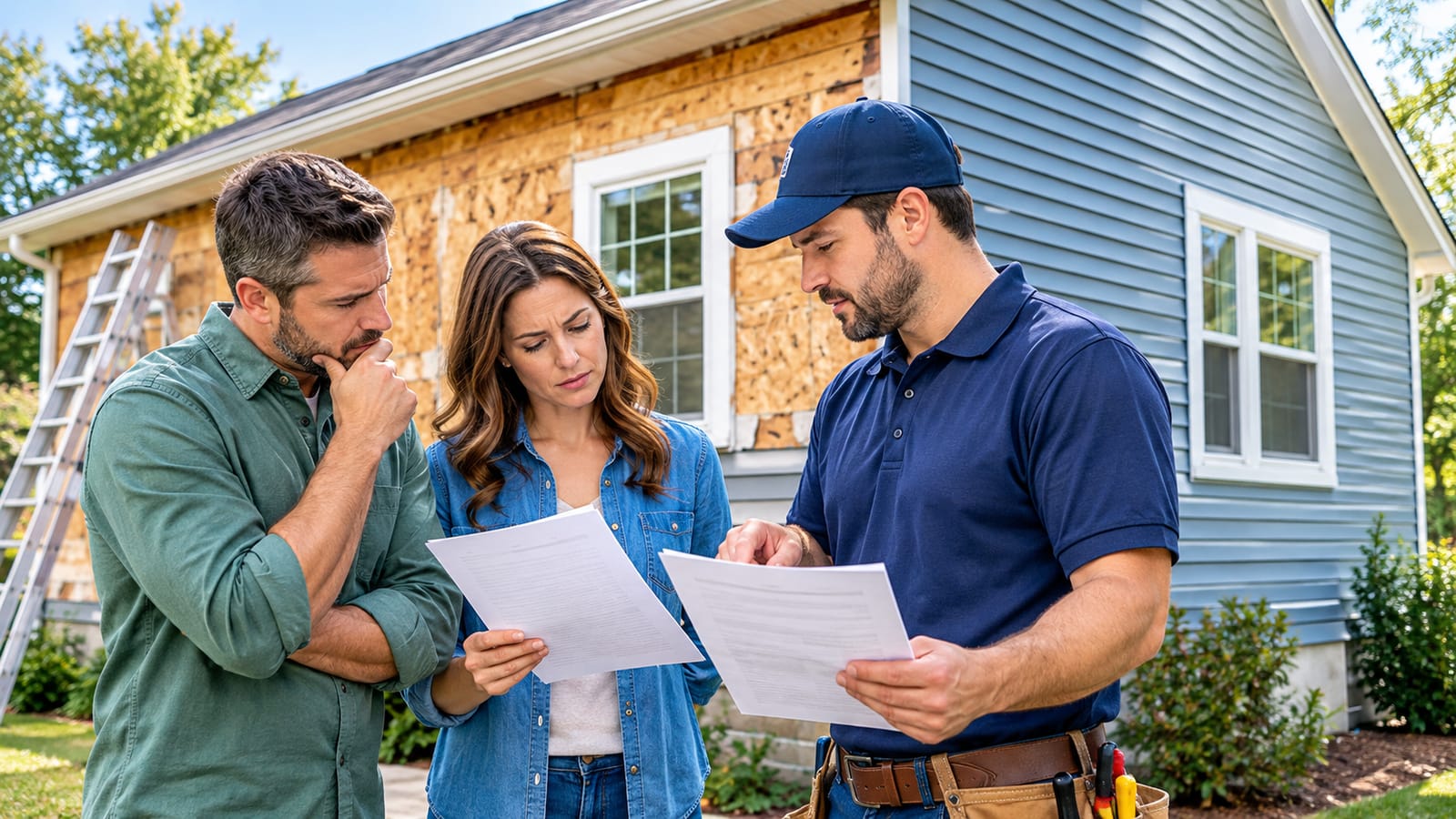
A professional assessment can help determine whether replacing one section, updating an entire wall, or installing a new exterior system is the most appropriate solution.
9. What Factors Influence Metal Siding Replacement Cost?
The cost of updating a home's exterior depends on several project-specific factors. There is no single price that applies to every residential property.
Understanding these factors can help homeowners compare estimates more effectively.
Material selection: Steel, aluminum, zinc, and copper have different material costs and installation requirements.
Exterior wall area: Larger homes generally require more materials and labor. Architectural complexity can also influence the amount of work involved.
Existing siding removal: Removing old cladding, disposing of waste, and preparing the underlying wall can add to project expenses.
Surface repairs: Damaged sheathing, moisture-related deterioration, and other concealed issues may need attention before new siding is installed.
Trim and flashing: Corners, windows, doors, roof edges, and material transitions require suitable finishing components.
Installation complexity: Multi-story walls, unusual architectural shapes, and difficult site access can increase labor requirements.
Protective finishes: Specialized colors, textures, coatings, and custom panel profiles can affect material pricing.
When researching siding replacement costs, homeowners should request detailed estimates that separate materials, labor, removal, preparation, flashing, and additional repairs.
Comparing estimates based only on the final price may overlook important differences in the materials and work included.
10. How to Recognize and Address Metal Siding Damage
Metal siding is designed for exterior use, but it can still experience damage over time. Identifying problems early can help homeowners determine whether a localized repair or a more extensive solution is necessary.
Scratches and Surface Coating Damage
Scratches can expose the underlying metal, depending on their depth.
If the protective coating has been compromised, the affected area should be assessed and repaired according to the manufacturer's recommendations.
Dents and Impact Damage
Hail, falling branches, and accidental impacts can leave dents in metal panels.
Minor cosmetic damage may not affect the entire wall system, but deeper dents, damaged edges, or affected panel connections should be evaluated.
Corrosion Around Fasteners
Fasteners and connection points can become vulnerable when incompatible metals, damaged coatings, or persistent moisture are involved.
Corrosion should be investigated rather than simply covered with paint, as the visible area may not show the full extent of the problem.
Loose or Misaligned Panels
Panels that move, rattle, or appear separated may indicate fastening or installation problems.
Homeowners should avoid forcing panels back into place without understanding the underlying issue.
For localized problems, professional siding repair services can help identify the source of damage and determine whether the affected components can be repaired.
11. Why Regular Siding Inspections Matter Before an Exterior Upgrade
Before investing in a new metal exterior, homeowners should understand the condition of the existing wall system.
A visual inspection can reveal problems that might otherwise be overlooked during renovation planning.
Homeowners should pay attention to:
Panel movement and separation.
Corrosion and visible coating deterioration.
Cracks or gaps around openings.
Water staining and damaged sealant.
Loose trim and flashing.
Signs of moisture near the foundation or roofline.
A thorough assessment should also consider areas that are not immediately visible from the ground.
For example, water entering through a poorly detailed window opening may cause damage behind the siding without producing obvious exterior symptoms.
Arranging a house siding inspection can help identify existing concerns and establish whether repairs or additional investigation are needed before installing new cladding.
12. Choosing the Right Metal Finish for Your Home's Architectural Style
The best metal finish should complement the property's architecture rather than compete with it. Different homes can benefit from different combinations of colors, profiles, and materials.
Home style
Metal finish to consider
Complementary materials
Modern farmhouse
Matte black or charcoal
White siding and natural wood
Minimalist contemporary
Satin silver or dark gray
Concrete and glass
Industrial-inspired
Weathered metal appearance
Brick and exposed wood
Luxury modern
Bronze or champagne
Stone and warm timber
Traditional renovation
Subtle dark metal accents
Brick and fiber cement
Before selecting a finish, consider the roof color, window frames, exterior lighting, landscaping, and surrounding homes.
Ordering physical samples can also help. Metallic finishes may look different in direct sunlight, shade, and artificial lighting. A finish that appears neutral in a showroom might look darker or more reflective once installed outdoors.
It is also worth comparing how the selected metal looks beside the other exterior materials. A finish should work with the entire color palette rather than being chosen in isolation.
13. Questions to Ask Before Starting a Metal Siding Project
Making an informed decision involves understanding both the product and the installation process. Before hiring a contractor, homeowners should ask questions about the material, protective finish, wall preparation, and project scope.
Which metal material and protective coating are included in the estimate?
Is the selected finish suitable for the local climate?
What impact and corrosion-resistance information does the manufacturer provide?
How will existing siding and underlying wall damage be addressed?
What weather barrier and flashing details will be used?
How does the installation system accommodate thermal movement?
What routine maintenance does the manufacturer recommend?
What does the product warranty cover?
Are labor and material costs listed separately?
How will the contractor handle panel transitions, corners, and exterior trim?
Clear answers make it easier to compare contractors and understand what the completed project will include.
Frequently Asked Questions About Metal Finishes in Home Exteriors
1. Is metal siding a good choice for modern homes?
Metal siding can be a suitable option for modern homes because it offers clean panel profiles, different colors, and several finish options. Its suitability depends on the selected product, climate, installation system, and homeowner preferences.
2. Which metal siding finish is easiest to maintain?
Maintenance depends more on the material, protective coating, and environmental exposure than on the color alone. Factory-finished steel and aluminum products may require relatively little routine care when properly installed and maintained according to manufacturer instructions.
3. Does metal siding resist harsh weather?
Many metal siding products are designed for exterior exposure, but their performance varies. Wind resistance, hail impact performance, corrosion protection, and thermal movement should be evaluated using product-specific specifications.
4. Can metal siding be combined with traditional siding materials?
Yes. Metal panels can be combined with brick, stone veneer, fiber cement, and wood-look siding. Proper flashing, drainage, and material transitions are important for a successful installation.
5. Is metal siding more expensive than vinyl siding?
Metal siding can have a higher initial material and installation cost than some vinyl siding products. However, actual project expenses depend on the metal type, panel system, labor, existing wall condition, and project complexity.
6. How can I tell if my existing siding needs replacement?
Widespread damage, repeated moisture concerns, deteriorating panels, corrosion, and recurring repair problems may indicate that replacement should be considered. A professional assessment can help determine whether localized repairs or a complete replacement is more appropriate.
7. Can damaged metal siding be repaired instead of replaced?
Yes, depending on the type and extent of damage. Individual panels may sometimes be repaired or replaced without updating the entire exterior. The availability of matching profiles and finishes can influence the repair approach.
8. Do dark metal siding finishes make a house hotter?
Dark finishes can absorb more solar radiation than lighter finishes. The actual effect on a home's indoor temperature depends on the complete wall assembly, insulation, ventilation, and other building-envelope details.
9. Does metal siding rust?
Some metals, particularly certain steel products, can corrode if their protective coatings are damaged or unsuitable for the environment. Aluminum, zinc, and copper have different corrosion characteristics. Material selection, protective finishes, and correct installation all matter.
10. How often should metal siding be inspected?
Inspection frequency depends on the product, local climate, and exposure conditions. Homeowners should follow manufacturer recommendations and check for visible scratches, dents, loose panels, coating damage, and corrosion during routine exterior maintenance.
Final Thoughts: Metal Finishes Offer a Fresh Direction for Modern Home Exteriors
Metal finishes are becoming an appealing option for homeowners who want a contemporary exterior with distinctive textures, clean architectural lines, and practical material choices.
From matte black steel panels to brushed aluminum, bronze accents, and weathered metal appearances, these finishes offer several ways to update residential architecture. They can cover larger wall sections or serve as carefully selected details alongside wood, brick, stone, and fiber cement.
However, the success of a metal exterior depends on more than its visual appeal. Material quality, protective coatings, climate suitability, wall preparation, flashing, and professional installation all influence long-term performance.
Before starting a renovation, homeowners should evaluate the condition of their existing siding, compare suitable materials, and consider how different finishes will work with the rest of the property.
Explore your home's exterior options with Home Expert Siding. Compare siding materials, understand common exterior concerns, and learn what to consider before your next project.
Looking for siding installation, replacement, or repair help? Call (844) 578-3077 to explore available siding service options for your home.