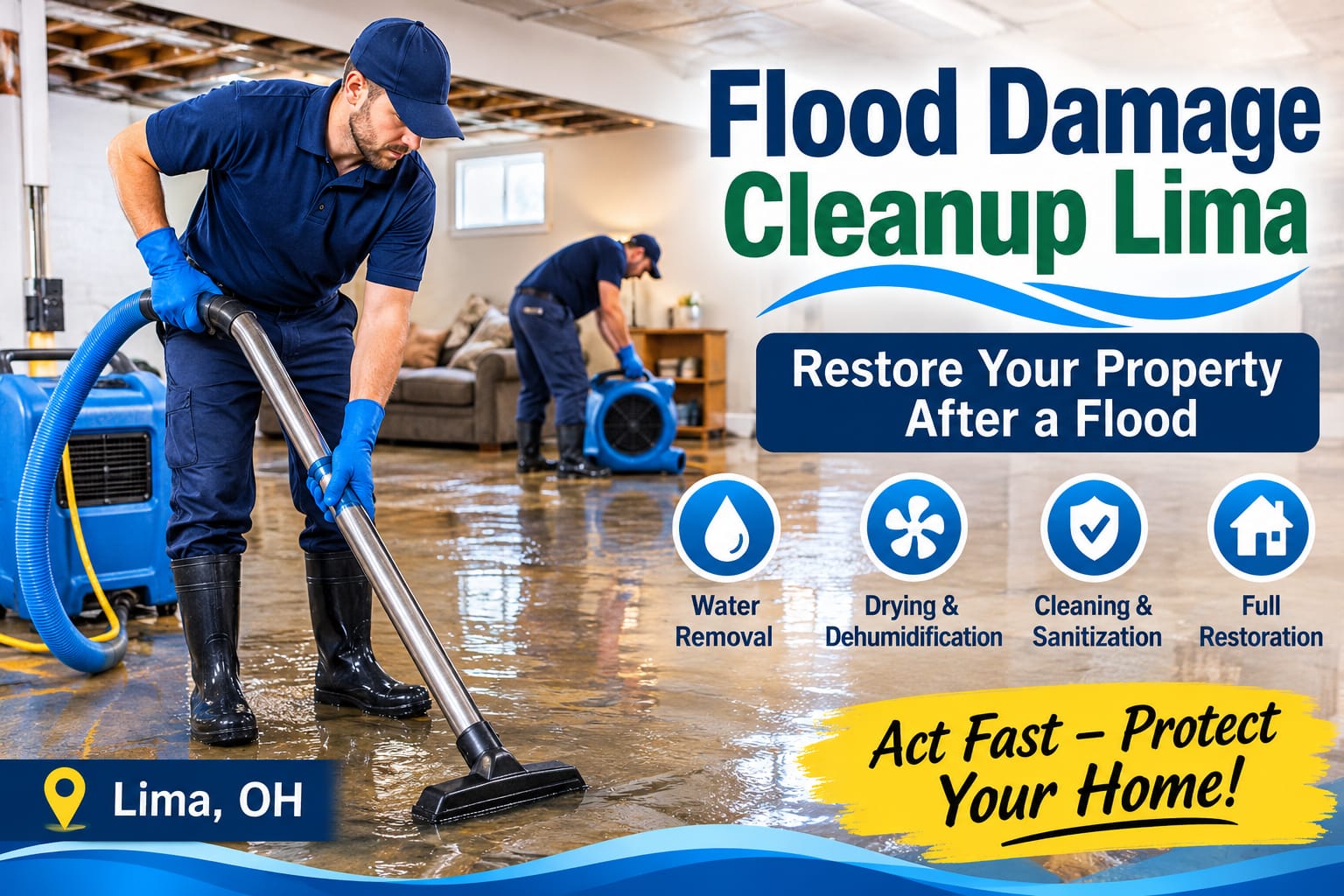
Flood damage can happen unexpectedly due to heavy rainfall, overflowing rivers, plumbing failures, or drainage problems. Even a small amount of standing water can cause serious damage to floors, walls, furniture, and personal belongings. For homeowners and business owners in Lima, Ohio, taking quick action after flooding is essential to protect the property and prevent further complications.
Professional flood cleanup involves more than simply removing visible water. It includes inspecting the affected areas, extracting water, drying damp materials, cleaning contaminated surfaces, and restoring damaged sections of the property. Understanding these steps can help property owners make better decisions during an emergency.
If your property has experienced flooding, professional Flood Damage Cleanup Lima services can help manage the recovery process. You can also explore Water Damage Restoration Lima services for additional information about protecting your home or business from water-related damage.
Common Causes of Flood Damage in Lima, Ohio
Flooding can affect properties in different ways. Sometimes it happens gradually, while in other situations, water enters a building within minutes. Knowing the common causes can help property owners identify potential risks.
1. Heavy Rainfall
Heavy rainfall can overwhelm drainage systems and cause water to collect around buildings. When the ground becomes saturated, water may enter basements, crawl spaces, and ground-level rooms through small openings or foundation cracks.
2. Basement Flooding
Basements are particularly vulnerable because they are located below ground level. Poor drainage, sump pump failures, and foundation leaks can allow water to accumulate quickly. Even a small basement flood can damage stored belongings, flooring, and electrical equipment.
3. Burst or Leaking Pipes
A burst water pipe can release a significant amount of water inside a property. Damaged plumbing connections, frozen pipes, and aging supply lines are common reasons for unexpected indoor flooding.
4. Sewer and Drainage Problems
Blocked drains and sewer backups can introduce contaminated water into homes and businesses. This type of flooding requires careful cleaning and appropriate safety precautions.
5. Appliance Malfunctions
Washing machines, dishwashers, refrigerators, and water heaters can sometimes leak or malfunction. If these problems remain unnoticed, water can spread beneath cabinets, behind walls, and across floors.
Why Immediate Flood Damage Cleanup Is Important
After a flood, time plays an important role in limiting property damage. Water can spread into building materials and hidden spaces, making restoration more complicated if cleanup is delayed.
Here are some reasons why immediate action matters.
Prevents Further Structural Damage: Water can weaken drywall, wooden flooring, insulation, and other building materials. Prompt water removal helps reduce the amount of moisture absorbed by these materials.
Reduces Mold Risk: Damp environments can encourage mold growth. Removing standing water and thoroughly drying affected areas helps reduce the conditions that support mold development.
Protects Personal Belongings: Furniture, documents, clothing, electronics, and other household items may become damaged when exposed to water. Early recovery efforts can help identify which belongings may be saved.
Improves Indoor Conditions: Floodwater can carry dirt, debris, and other contaminants. Proper cleaning and drying help make affected indoor spaces safer and more comfortable.
Steps Involved in Professional Flood Damage Cleanup
A complete flood cleanup process follows several important stages. Each stage helps address a different part of the damage and prepares the property for restoration.
1. Initial Property Inspection
The first step is assessing the affected property. Professionals inspect visible water damage and look for moisture behind walls, beneath flooring, and inside other concealed spaces.
The inspection helps determine how far the water has spread and which areas require immediate attention. It also helps identify possible safety concerns, such as electrical hazards or contaminated water.
2. Water Removal and Extraction
Standing water should be removed as quickly as possible. Depending on the amount of water, professionals may use specialized pumps, wet vacuums, and extraction equipment.
Removing water from floors, basements, and other affected areas helps prevent additional absorption into building materials.
3. Drying and Dehumidification
Once standing water has been removed, the property must be dried thoroughly. Moisture can remain trapped inside walls, carpets, flooring, and insulation even when surfaces appear dry.
Air movers and commercial dehumidifiers help circulate air and remove excess moisture. Moisture detection equipment can also help identify damp areas that are not easily visible.
4. Cleaning and Sanitization
Floodwater may contain dirt, bacteria, sewage, or other unwanted substances. Affected surfaces should be cleaned using appropriate methods based on the type of water involved.
Items that have been exposed to contaminated water may require specialized treatment. Some heavily damaged materials may need to be removed and replaced.
5. Damaged Material Removal
Certain materials cannot always be restored after flooding. Water-damaged drywall, insulation, carpet padding, and other porous materials may need removal when they cannot be properly cleaned or dried.
Removing damaged materials can help prepare the property for safe and effective repairs.
6. Restoration and Repairs
The final stage involves repairing the damaged areas and returning the property to a usable condition. This may include replacing drywall, installing new flooring, repairing baseboards, painting walls, and addressing other structural issues.
The exact restoration work depends on the severity of the flooding and the materials affected.
Signs Your Property May Have Hidden Water Damage
Not all flood damage is immediately visible. Sometimes water enters areas that are difficult to inspect without specialized equipment.
Watch for these warning signs:
Musty or unpleasant odors inside rooms.
Discoloration or stains on walls and ceilings.
Peeling paint or bubbling wallpaper.
Soft or swollen wooden flooring.
Damp carpets and rugs.
Warped baseboards or cabinets.
Moisture around windows and doors.
Persistent humidity inside the property.
If you notice any of these signs after flooding, consider arranging a professional inspection. Hidden moisture can remain inside building materials even after visible water has disappeared.
Health and Safety Precautions After Flooding
Flooded properties can contain several hazards. Property owners should avoid entering unsafe areas until the necessary precautions have been taken.
Keep these safety tips in mind:
Avoid Electrical Hazards: Do not touch electrical equipment or switches while standing in water. If it is safe to do so, have the electricity shut off by a qualified professional.
Stay Away from Contaminated Water: Floodwater may contain sewage, chemicals, and harmful microorganisms. Avoid direct contact and use appropriate protective equipment when necessary.
Wear Protective Clothing: Gloves, waterproof footwear, and other protective items can help reduce exposure to dirt and contaminants.
Check for Structural Problems: Flooding can weaken certain building materials. Avoid entering rooms with sagging ceilings, damaged floors, or visible structural concerns until they have been inspected.
Keep Children and Pets Away: Restrict access to flooded areas until cleanup and safety checks are complete.
How to Protect Your Home From Future Flooding
Although flooding cannot always be prevented, property owners can take several steps to reduce the risk of future water damage.
Maintain Gutters and Downspouts
Clean gutters regularly so rainwater can flow away from the roof and foundation. Make sure downspouts direct water away from the building.
Inspect Your Foundation
Check the foundation for visible cracks, gaps, or signs of moisture. Addressing these problems early may help reduce the chances of water entering the basement.
Maintain Your Sump Pump
If your property has a sump pump, inspect it regularly to ensure it is working correctly. Consider discussing a backup system with a qualified professional.
Check Plumbing Connections
Inspect visible pipes, water supply lines, and appliance connections for leaks. Replacing damaged hoses and repairing plumbing problems can help prevent unexpected indoor flooding.
Improve Outdoor Drainage
Make sure the ground around your property slopes away from the foundation. Poor grading can allow rainwater to collect near exterior walls.
Store Important Belongings Safely
Keep important documents, electronics, and valuable belongings away from basement floors. Use waterproof containers or elevated storage wherever possible.
Why Professional Flood Cleanup Can Be Helpful
Flood cleanup can be a complicated process, especially when water has spread into multiple rooms or entered hidden building spaces. Professional restoration teams have access to equipment designed for water extraction, moisture detection, drying, and cleaning.
They can also help identify areas that may require additional attention. This is important because surface-level cleaning alone may not address moisture trapped beneath flooring or behind walls.
For property owners in Lima, Ohio, choosing an experienced restoration provider can make the recovery process more organized. Professional assistance may also help reduce delays between water removal, drying, and necessary repairs.
What to Do Immediately After Discovering Flood Damage
Taking the right steps after discovering flooding can help limit additional damage.
Make sure everyone is safe and stay away from hazardous areas.
Identify the source of water if it can be done safely.
Turn off electricity in affected areas only when it is safe to do so.
Move unaffected belongings away from the flooded area.
Take photographs and videos of visible damage for insurance documentation.
Contact your insurance provider and ask about the claims process.
Arrange professional water removal and cleanup.
Keep records of repair estimates, receipts, and restoration work.
Avoid attempting to remove large amounts of water or handle contaminated materials without proper equipment and safety precautions.
Conclusion
Flood damage can create serious challenges for homeowners and businesses in Lima, Ohio. From damaged flooring and wet drywall to hidden moisture and contamination, flooding can affect many parts of a property. Quick action, proper water extraction, thorough drying, and suitable repairs are important for a successful recovery.
Understanding the cleanup process also helps property owners recognize potential problems before they become more complicated. Regular maintenance, proper drainage, and plumbing inspections can further reduce the risk of future water damage.
When flooding occurs, professional Flood Damage Cleanup Lima services can help address the damage and guide the property toward recovery. Taking action early can protect your belongings, support a safer indoor environment, and help restore your property.