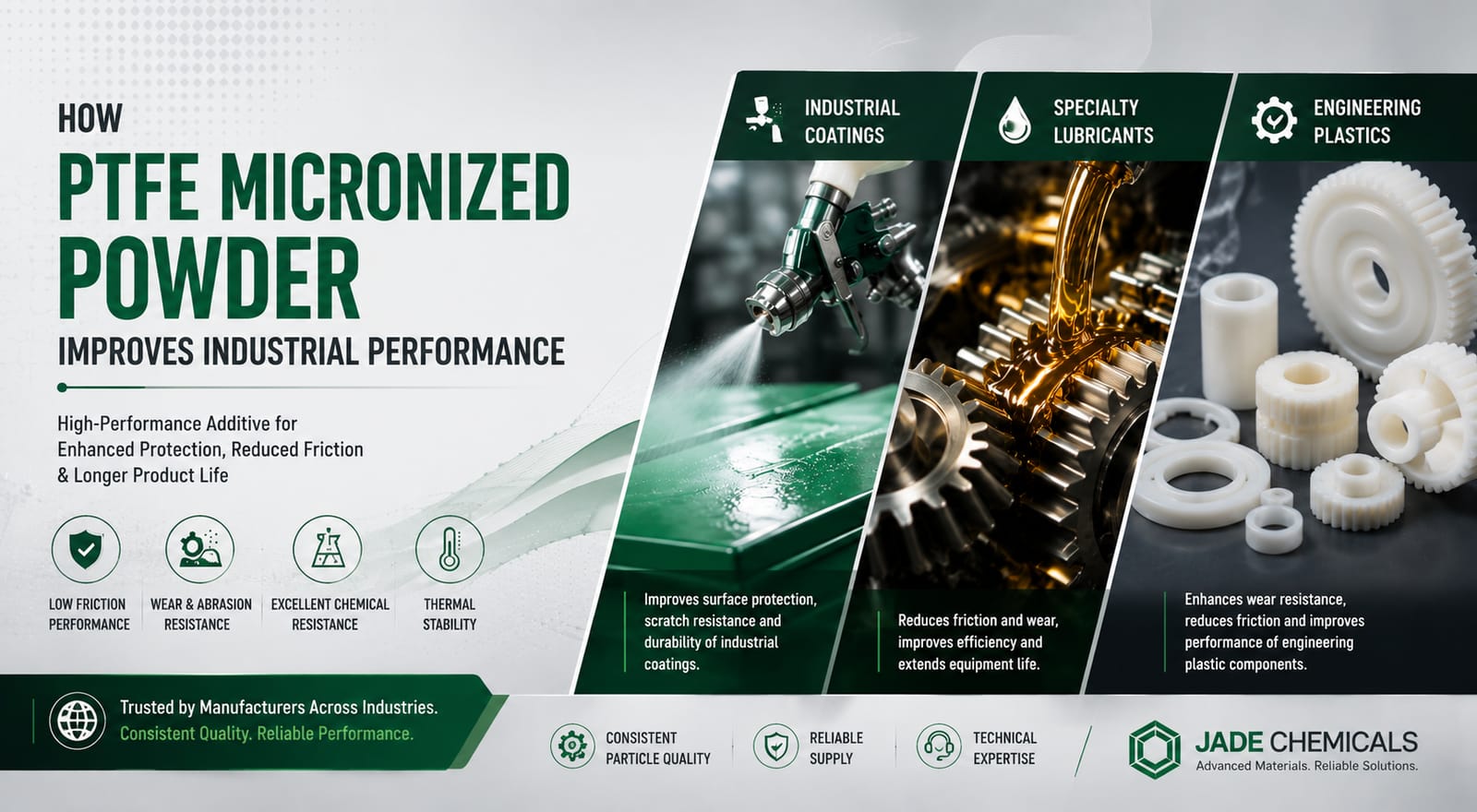
Developing an industrial formulation usually involves balancing several properties at once. A coating may need a different surface feel without losing adhesion. A lubricant may need suitable friction behaviour while remaining compatible with its other ingredients. A plastic compound must meet processing and mechanical requirements alongside its intended sliding performance.
PTFE micronized powder is one additive considered in these situations. Its value depends on selecting an appropriate grade and evaluating the finished formulation.
Start With a Specific Development Goal
Before requesting a sample, identify the property that needs attention. Surface slip, rubbing behaviour, friction and wear are related topics, but they require different observations and tests.
Describe the existing formulation and the conditions under which it will be used. A clear objective helps the supplier understand the enquiry and gives the development team a basis for judging the result.
Avoid changing several ingredients at the same time during an initial comparison. Keeping other factors consistent makes it easier to identify the effect of the proposed additive.
PTFE Powder in Coating Formulations
PTFE micropowders can be evaluated in selected coatings where surface characteristics are important. The result depends on the binder, particle characteristics, additive concentration and application process.
Assess the coating throughout preparation and use. Note mixing behaviour, application consistency and the condition of the finished film.
Any improvement should be reviewed against the full specification. A change that helps surface slip still needs to be checked for its effect on appearance, adhesion and other required properties.
Considerations for Lubricant Formulators
PTFE is also used as a solid lubricant ingredient in certain formulations. Selecting it requires consideration of the base lubricant, existing additives and intended contact conditions.
Businesses researching Industrial Machinery Lubrication in India should distinguish between purchasing a raw additive and buying a finished product. A powder requires development work before its suitability for equipment can be established.
Information about dry lubricant types and applications provides useful background when comparing PTFE with other solid lubrication materials.
Evaluation in Engineering Plastics
In selected plastic compounds, PTFE additives may be assessed where sliding and wear behaviour matter. Possible component applications include bushings, guides and gears, subject to the requirements of the finished design.
The compound must still meet its mechanical, dimensional and processing specifications. Material selection therefore needs to include more than a single friction measurement.
Test representative parts where appropriate and record the conditions. Differences in load, speed and mating surfaces can affect how results should be interpreted.
Build a Useful Supplier Enquiry
Include the base material, preparation method, desired properties and required quantity when sourcing specialty lubrication chemicals. Request the proposed grade designation and relevant technical documents before beginning an evaluation.
Clarify particle specifications, packaging and any recommended storage or handling requirements. Keep sample identification connected to the formulation and test records.
For PTFE micronized powder enquiries, share these details with Jade Chemicals. A documented brief and controlled trial provide a practical route from an initial sample to a repeatable purchasing specification.