
Finish a workout, and there is often a small rush to the shaker bottle. The idea is that a "window" of about thirty minutes exists after training, and that if you miss it, the session is partly wasted. It is one of the most repeated beliefs in gyms, and it is worth checking against what research actually shows.
The short version: the exact minute you eat protein matters far less than most people think. What matters is how much you eat across the day, and whether you keep training.
What a 2025 review found about timing
A systematic review and meta-analysis published in Nutrients in June 2025 looked at exactly this question. It pooled five randomised trials with 193 participants, and compared protein taken before exercise with protein taken after, with total energy and total protein kept the same between groups. That last point matters, because many older comparisons were protein against nothing.
The findings:
Lean body mass: timing did not importantly change the gains.
Chest press strength: no difference between groups.
Leg press strength: a possible edge for taking protein before training, though the follow-up analysis only showed a trend, not a clear result.
The authors also rate the certainty of the evidence as low to very low, because the trials were small and only two of the five were of good quality. So the fair reading is not "timing never matters". It is "there is no solid evidence that a few minutes either way makes a meaningful difference for most people".
What matters more: the whole day
If timing is a minor detail, total intake and food quality are the main event. India's national guidelines are useful here. The ICMR-NIN Dietary Guidelines for Indians 2024 say healthy adults should get 10 to 15% of their daily energy from protein. The guidelines also note that most adults already eat 60 to 70 grams of protein a day, which is more than the requirement.
On supplements, the position is firm. As Outlook India reports, the guidelines advise against protein supplements to build muscle mass. They point to prolonged high intake of protein powders being linked to kidney damage or loss of bone mineral, and to some products containing sugars, sweeteners and flavourings. They also cite research that intakes above about 1.6 grams per kilogram of body weight per day do not add to muscle gains from resistance training.
Put that in numbers. For a 70 kg person, 1.6 g/kg is 112 grams a day, and that is a ceiling for extra benefit, not a target everyone should hit. Many people building muscle will be well within it just by eating properly.
Note that this is one authoritative body's view. Some sports dietitians see supplements as a convenient tool for people who struggle to eat enough, and individual needs vary. If you have kidney problems, are pregnant, or manage a medical condition, ask your doctor or a registered dietitian before changing your protein intake.
What this looks like on an Indian plate
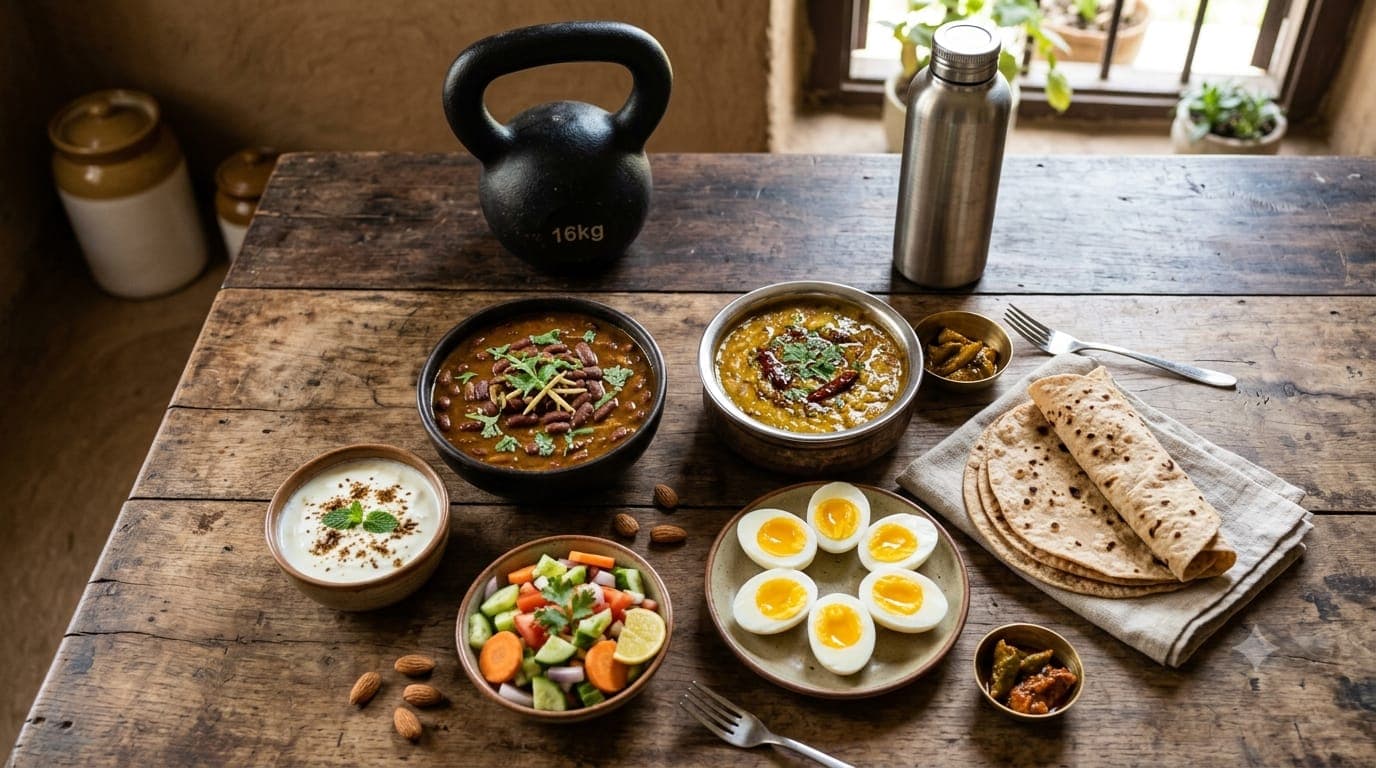
The guidelines lean on legumes and a mix of foods. Their example 2,000-calorie day includes about 85 grams of pulses, eggs or flesh foods, alongside cereals, vegetables, fruit, and nuts and seeds, according to the same summary. In practice that means:
Dal, chana, rajma or other legumes at lunch and dinner.
Curd, milk, paneer or eggs, depending on your diet.
Fish, chicken or soy foods if you eat them.
A handful of nuts or seeds as a snack.
The ICMR summary also stresses that protein alone does not build muscle; the rest of the diet, including carbohydrates and fats, has to support it.
Habits that will do more than a timer
Train consistently. Two or three sessions a week that you repeat for months beat a perfect post-workout routine you keep abandoning.
Add load gradually. More weight or repetitions over time is what tells the body to adapt.
Eat protein-containing food at each meal. It is a simple way to reach your daily amount without thinking about a window.
Sleep. Recovery happens between sessions, not during them.
If you like a post-workout snack, have one. A banana with curd or a glass of milk is fine. It just is not urgent.
The takeaway
You do not need to sprint to the locker room with a shaker. Enough protein across the day from real food, regular training and enough sleep will do most of the work. If you want a supplement for convenience, that is your choice, but the evidence does not show that the timing is critical.
This is general information, not medical advice. Speak to a doctor or registered dietitian for advice specific to your health.