Compressed Natural Gas (CNG) has become a popular alternative fuel for vehicles in India because of its cost-effectiveness, lower emissions and convenient availability. However, CNG cylinders operate under high pressure, making regular inspection and testing essential for vehicle safety. Over time, cylinders may develop corrosion, physical damage, leakage or structural weaknesses that can affect their ability to store compressed gas safely. Choosing a PESO approved CNG cylinder testing station is therefore an important step in maintaining vehicle safety and ensuring that cylinders meet the applicable testing requirements.
The Petroleum and Explosives Safety Organisation (PESO) is the regulatory authority responsible for administering safety requirements related to petroleum, explosives and compressed gases in India. Its approval and regulatory framework help ensure that cylinder testing facilities follow the prescribed safety standards, procedures and technical requirements. Understanding the importance of selecting an authorised testing facility can help vehicle owners make informed decisions about CNG cylinder inspection and maintenance.
Understanding the Importance of PESO Approval
PESO approval plays an important role in maintaining safety standards across facilities involved in testing and handling gas cylinders. CNG cylinders are designed to withstand high internal pressure and their condition must be assessed through appropriate testing procedures at the required intervals.
A properly approved testing facility operates within the applicable regulatory framework and uses suitable equipment and testing methods. This helps ensure that cylinders are examined according to established technical requirements rather than relying on basic visual inspection alone.
When selecting a testing centre, vehicle owners should verify its current approval status and confirm that it is authorised to perform the relevant type of CNG cylinder testing. This provides greater confidence that the inspection and testing process is being conducted under the appropriate safety requirements.
Ensuring Reliable CNG Cylinder Hydrostatic Testing
Hydrostatic testing is one of the essential procedures used to assess the strength and pressure-bearing condition of CNG cylinders. During this process, the cylinder is subjected to controlled water pressure using specialised testing equipment. The procedure helps evaluate how the cylinder responds to pressure and whether it maintains the required structural integrity.
A professional testing station follows the prescribed testing procedure and examines the cylinder for signs of expansion, deformation or other abnormalities. Depending on the applicable testing requirements, hydrostatic or hydrostatic stretch testing may be performed.
Selecting a suitable testing facility is important because incorrect testing procedures or inadequate equipment can affect the reliability of the results. A properly equipped centre helps ensure that the testing process is carried out systematically and that cylinders requiring further attention are identified.
Early Detection of Cylinder Damage and Leakage
CNG cylinders are exposed to different environmental and operating conditions throughout their service life. Moisture, road debris, improper handling and external impact can contribute to corrosion or physical deterioration. Even damage that appears minor from the outside may require professional examination.
An authorised testing facility can help identify potential issues that may not be easily noticed during routine vehicle maintenance. These include surface corrosion, dents, cracks, valve-related problems and other signs of deterioration.
Early identification of such issues helps vehicle owners take appropriate action before a damaged cylinder becomes a serious safety concern. Professional inspection also helps determine whether a cylinder can continue to be used under the applicable requirements or requires rejection or further action.
Compliance with CNG Cylinder Testing Regulations
CNG cylinders must undergo periodic testing to maintain their safe operating condition. Under India's applicable gas cylinder regulations, CNG cylinders generally require hydrostatic or hydrostatic stretch testing at prescribed intervals, including the three-year testing interval specified in the Gas Cylinders Rules.
Vehicle owners should not ignore testing dates or wait until visible damage appears. Following the prescribed inspection schedule helps maintain compliance and reduces the risks associated with using cylinders beyond their required testing period.
A recognised testing facility can guide customers through the relevant testing requirements and help them understand the documentation associated with the inspection. Keeping testing records and certificates properly maintained is also useful for future inspections and vehicle maintenance.
Importance of Professional Equipment and Skilled Technicians
CNG cylinder testing requires specialised equipment, technical knowledge and careful handling procedures. Since these cylinders contain compressed gas at high pressure, the testing process must be managed with appropriate safety precautions.
A professional testing station uses suitable equipment for inspection, pressure testing and evaluation. Trained personnel follow established procedures to examine cylinder conditions and record the results accurately.
The availability of proper testing facilities also helps reduce the possibility of errors caused by unsuitable equipment or incorrect handling. Vehicle owners should therefore consider the testing centre's authorisation, technical facilities and experience before choosing a service provider.
Maintaining Proper Testing Records and Certification
Testing documentation is another important part of CNG cylinder safety. After completing the required testing procedure, the testing facility provides relevant records or certification according to the applicable requirements.
These documents help establish when the cylinder was tested and provide information about the testing outcome. Vehicle owners should keep these records safely and check the next testing due date to avoid missing scheduled inspections.
Before selecting a testing centre, customers should also ask about the documentation provided after testing and ensure that the facility follows the prescribed certification process. Proper records support responsible vehicle maintenance and help demonstrate compliance with applicable safety requirements.
How to Choose the Right CNG Cylinder Testing Station?
Selecting the right testing centre requires more than comparing service charges or distance. Vehicle owners should verify whether the facility has the necessary PESO approval for the relevant testing activity. They should also check the availability of appropriate hydrostatic testing equipment, qualified technical personnel and proper inspection procedures.
It is equally important to confirm whether the testing station provides clear information about the process, testing results and required documentation. A reliable facility should be transparent about its procedures and should not recommend the continued use of a cylinder that fails the applicable safety requirements.
Choosing a suitable testing station helps ensure that vehicle owners receive dependable testing services while prioritising safety and regulatory compliance.
RIDHI CNG CYLINDER TESTING STATION
KASNA-SIKANDRABAD MAIN ROAD, Ladpura, Greater Noida, Uttar Pradesh 203202
Phone: 098714 88436
Google Business Profile:https://g.page/r/CSvjNSP3xSMPEBM
Services offered:
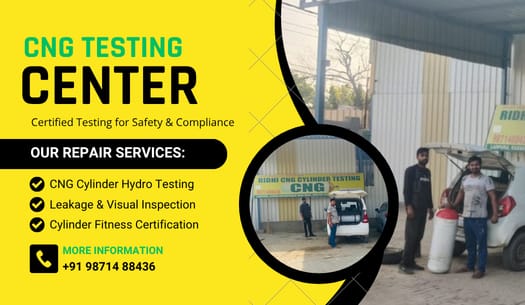
CNG cylinder hydro testing
CNG cylinder leakage testing
CNG cylinder inspection
CNG cylinder retesting
With modern equipment and skilled technicians, the station provides accurate and reliable testing services.
Conclusion
CNG cylinder safety should never be overlooked because these cylinders operate under high pressure and require proper inspection throughout their service life. Choosing a PESO approved testing facility helps vehicle owners ensure that the relevant inspection and hydrostatic testing procedures are performed according to applicable regulatory requirements.
Ridhi CNG Cylinder Testing Station provides CNG cylinder testing services in Greater Noida, helping vehicle owners address their cylinder inspection and retesting requirements. By prioritising authorised testing facilities, following prescribed testing schedules and maintaining proper certification records, vehicle owners can take important steps towards safer CNG vehicle operation.