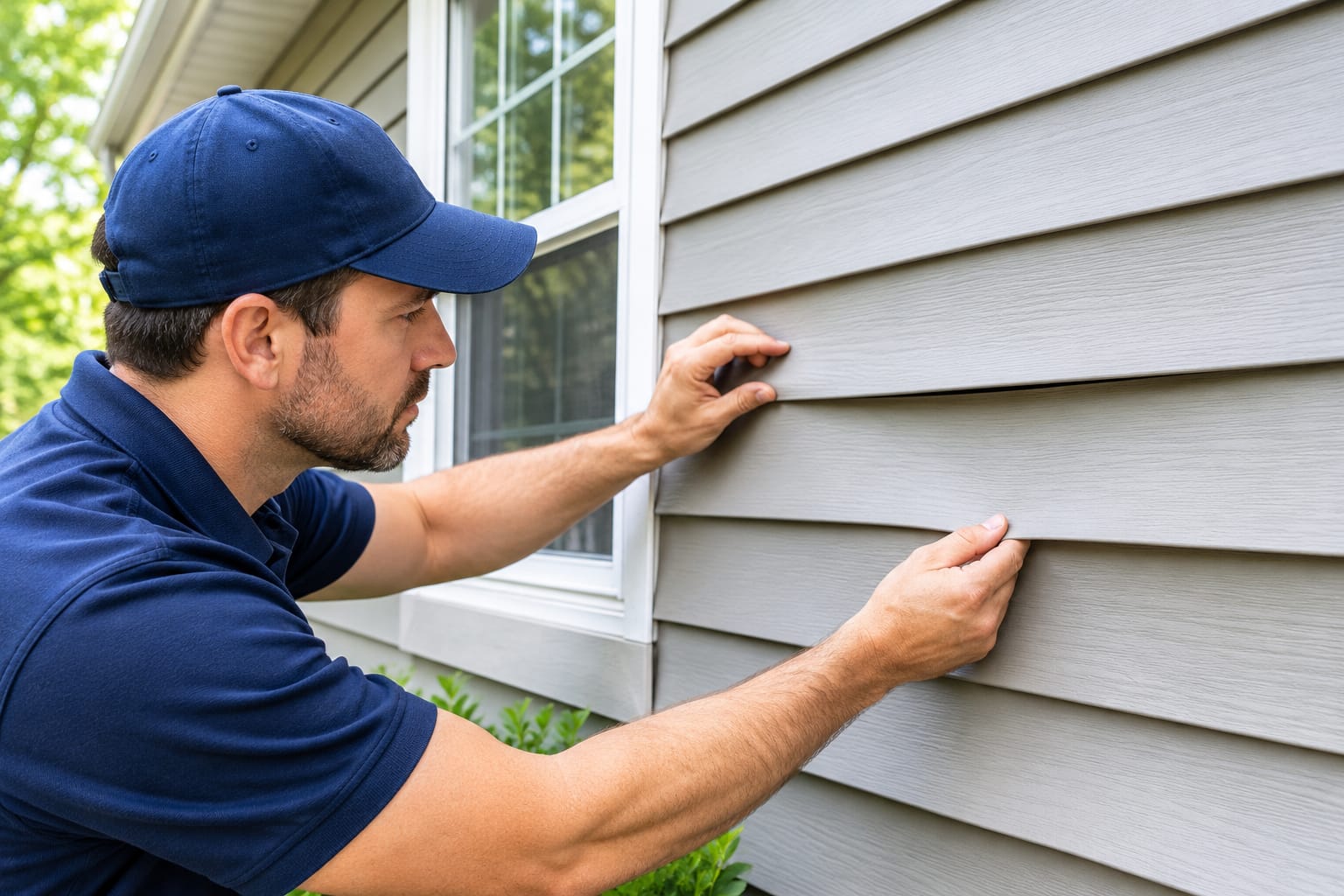
Siding that sits higher than its neighbor, seams that wander off a straight line, or edges that pull away from the wall can make a well-built exterior look uneven or damaged. Sometimes the shift is subtle and only shows when sunlight hits the wall at an angle.
Misaligned siding doesn't always mean the material needs replacing. Temperature swings, tight fasteners, moisture, building movement, damaged locking edges, and installation mistakes can all move panels out of position. Find the cause before pushing anything back into place, because a quick adjustment won't last if the real problem is restricted movement or moisture behind the wall.
This guide covers how to spot misaligned siding, what causes it, how to inspect it, which repairs fit which situations, and when to bring in a professional.
What Does Misaligned Siding Look Like?
Common signs include:
Horizontal courses that rise or dip along the wall
Vertical joints that have shifted from their original position
Uneven gaps or overlaps between panels
Edges that separate from neighboring panels
Sections that look twisted, tilted, or rotated
Trim that no longer meets the siding properly
Fastener heads that are exposed or sit unusually tight
Not every variation is damage. Some products have intentional staggered joints or design spacing. The concern is a panel that has changed position, developed a new gap, or no longer follows the manufacturer's installation pattern.
For example, a vinyl course that is straight at the corner but drifts uneven near a window may point to an installation issue, movement around the opening, or a failed locking connection. Pinpointing where and how the alignment changes is the first step.
Why Siding Panels Become Misaligned
1. Thermal expansion and contraction
Vinyl siding expands in heat and contracts in cold. It's designed to move, but only if nails aren't driven too tight and panels have proper end clearance. When movement is restricted, you may see buckling, shifting, disconnected locking edges, or changing gaps. If the problem appeared after a very hot summer or cold winter, check fasteners and panel connections before blaming the material.
2. Incorrect fastener placement
Siding fasteners shouldn't clamp panels rigidly to the wall. On most vinyl systems, nails belong in the center of the slots and should not be driven tight. Warning signs include panels that can't slide horizontally, distortion between fastening points, and the same problem recurring along one wall. Don't add nails to a loose-looking panel, since extra fasteners often make things worse.
3. Moisture behind the siding
Water can enter through damaged flashing, poorly sealed penetrations, failed caulk, roof-wall intersections, or poorly detailed windows. Once it reaches the sheathing or framing, the wall can become uneven or deteriorate. Look for:
Discoloration near seams
Soft or rotting trim
Peeling interior paint on exterior walls
Persistent dampness around windows
Musty odors indoors
Staining below openings
Realigning panels won't fix a moisture problem behind them.
4. Building movement
Homes shift slightly with temperature, moisture, and soil conditions. But several uneven courses around one window or door, new cracks around openings, sticking doors, widening trim gaps, or cracked masonry nearby suggest the issue involves the opening or wall, not just the siding. This doesn't automatically mean structural damage, but recurring or widespread misalignment isn't a simple cosmetic repair.
5. Mismatched previous repairs
A replacement panel installed at a slightly different height, with a different profile, or next to a damaged locking edge can throw off an entire wall. Before replacing anything, verify the profile, dimensions, exposure, fastening requirements, and compatibility with the existing system.
How to Inspect Misaligned Siding
You don't need to remove siding to start. Begin with a visual check from a safe position.
Step 1: Find where the alignment changes. Look at the whole wall, not just the worst panel. Follow each horizontal course end to end and note corners, windows, doors, rooflines, gables, the foundation line, and spots where materials meet. A level or straightedge can reveal irregularities, but don't use it to force panels into place. Photograph the wall from the same angle and distance so you can track changes over time.
Step 2: Check panel connections. Look for panels that have unlocked from the row below, separated at the ends, or developed gaps. On vinyl, inspect the lower locking edge and check whether the upper nailing hem looks distorted. For fiber cement, engineered wood, and other rigid products, check joints, overlaps, and clearances against the manufacturer's instructions. Not every material can simply be snapped back.
Step 3: Inspect fasteners and trim. Look for exposed nail heads, distorted slots, rust stains, or trim pulling away from the wall, especially at corners and window surrounds. Damaged trim can change how siding terminates. See our guide to Siding Trim Damage.
Step 4: Look for water entry. Pay extra attention below windows, near roof edges, and around penetrations. Check for staining, soft wood, failed caulk, and damaged flashing. A visual inspection can't confirm what's inside the wall cavity, so if you suspect hidden moisture, get a closer assessment before covering the area with new siding.
Step 5: Decide whether it's isolated or widespread. One panel usually means a damaged lock or fastening issue. Several courses on one wall, or the same pattern on multiple sides, points to installation, movement, or moisture on a larger scale.
How to Fix Siding That Isn't Lining Up
The right repair depends on the material, the condition of its connections, and the cause. Always follow the manufacturer's instructions for your specific product.
Reconnect disengaged vinyl panels
If a panel is undamaged and the surrounding installation is sound, a siding unlocking tool can release and re-engage it:
Identify the disconnected section.
Check the panel for cracks, warping, and damaged locking edges.
Inspect nearby fasteners for restricted movement.
Release the panel with the proper tool.
Reconnect the locking edges per the manufacturer's instructions.
Check alignment with adjoining sections.
Don't pull or bend cold, brittle vinyl aggressively, and don't force a damaged lock back together. If a panel keeps disconnecting, find the underlying cause.
Correct fastening that restricts movement
Overtight or misplaced fasteners may need repositioning. Support the panel while removing them to avoid further damage. A qualified installer can tell whether slots are damaged and whether the original clearances were followed. Other materials, such as fiber cement and engineered wood, use different fastening rules, so never apply vinyl guidelines to them.
Replace panels with damaged locking edges
If a lock has cracked, stretched, or broken, reconnecting it only helps temporarily. Match the replacement to the existing system on:
Manufacturer and profile
Dimensions and exposure
Color and finish
Locking design
Installation requirements
Inspect the wall behind the damaged panel for moisture first, or the problem may return.
Fix alignment around windows and doors
Problems here often involve trim, J-channel or other accessory channels, flashing, or how the siding was cut. Confirm the siding edges sit correctly in their receiving channels and the opening has proper flashing and drainage. Don't just fill gaps with caulk. Some joints are designed for movement or drainage, and sealing them can trap water.
Repair transitions between siding materials
Where lap siding meets board-and-batten, brick, or stone, check the transition trim, installation depth, flashing, and backing. Adjusting only one siding section rarely solves it. A proper fix restores the intended transition while preserving drainage and movement allowances.
Address wall problems before reinstalling siding
If the wall behind the siding is uneven, wet, or deteriorated, exterior repairs won't last. Depending on what's found, the work may include correcting water entry, replacing sheathing, repairing framing, or restoring the water-resistive barrier and flashing. Have qualified professionals handle this, then reinstall compatible siding.
How Seasons Affect Siding Alignment
Winter: Cold contraction can stress siding installed without proper clearance, and freeze-thaw cycles expose weak points around openings. See Winter Siding Damage.
Summer: Vinyl expands in heat, and sun-exposed walls can behave differently from shaded ones. Panels that can't move freely may distort.
Heavy rain: Rain reveals weaknesses in flashing, joints, and trim. If misalignment appears after repeated rain, check nearby openings and transitions first. See Siding Damage After Heavy Rain.
When Misalignment Signals Bulging or Serious Damage
A panel that is out of line may be part of a larger distortion. Warning signs include:
Panels that look pushed outward
Uneven shadows across the wall
Several courses that no longer sit flat
Distortion around windows
Repeated separation after repairs
Sections that move noticeably in wind
If the wall looks swollen or the distortion is spreading, don't push siding back into place until you know what's happening behind it. Learn more in our guide to Bulging Siding.
Can You Repair Misaligned Siding Without Replacing the Whole Wall?
Often, yes. What matters is the extent of the damage, not the number of visibly uneven panels.
Localized repair may work when:
One or two panels are disconnected
Locking edges are intact
Fastening issues are confined to a small area
There's no sign of moisture damage
The existing profile is still available
A larger repair may be needed when:
Multiple courses have shifted
Fastening is compromised across the wall
Several panels are warped or cracked
Water has affected the sheathing
Trim and flashing are deteriorated
Earlier repairs keep failing
Partial replacement is a practical middle ground, and a professional assessment can help you choose.
Common Mistakes to Avoid
Forcing panels into position. A panel that looks straight isn't necessarily properly locked, and force can crack brittle material.
Adding extra nails. More fasteners can restrict movement and create stress points.
Caulking every gap. Some joints must stay open for movement or drainage.
Ignoring damaged trim. Trim and siding work as a system.
Replacing panels without checking the wall. Hidden moisture damage will outlast a cosmetic fix.
Mixing incompatible profiles. Similar-looking panels can differ in dimensions, exposure, or locking design.
How to Prevent Siding From Misaligning Again
Inspect exterior walls periodically for gaps, shifting seams, loose panels, and changes around openings.
Keep gutters and downspouts working so walls aren't repeatedly soaked.
Maintain manufacturer-recommended clearances near roofs, decks, and walkways.
Repair damaged trim promptly.
Use compatible replacement materials that match the original profile and installation requirements.
Check siding after storms, hail, strong wind, and temperature extremes.
Hire qualified installers who follow correct fastening, flashing, spacing, and transition details.
Questions to Ask Before Hiring a Siding Contractor
If the problem is widespread or the cause is unclear, ask:
What is causing the panels to lose alignment?
Are locking connections or fastening points damaged?
Is there evidence of moisture behind the siding?
Does the sheathing need further inspection?
Can the affected panels be repaired individually?
Will replacement materials match my existing profile?
Are the flashing and trim in good condition?
What will prevent this from happening again?
A reliable proposal separates the visible siding repair from any underlying work, and explains how suspected moisture or structural issues will be evaluated.
Frequently Asked Questions
Why are my horizontal siding panels no longer straight?
Common causes are restricted thermal movement, incorrect fastening, damaged locking connections, moisture-related deterioration, or installation errors. Inspect the area and nearby connections to see whether the issue is isolated or widespread.
Can vinyl siding be realigned without removing the whole panel?
Sometimes. If the lock is intact and a section has simply disconnected, a siding tool may let you re-engage it. Damaged panels, restricted fasteners, and wall problems need more work.
Is uneven siding always a sign of water damage?
No. Temperature changes, fastening problems, and installation mistakes can also cause it. But if the issue is near windows, doors, roof intersections, or damaged trim, check for moisture entry.
Can I install a new panel between existing ones?
In many systems, individual sections can be replaced. Confirm that the profile, dimensions, locking system, and installation method are compatible first.
Why does my siding only look uneven in certain seasons?
Vinyl in particular changes dimension with temperature. If the installation doesn't allow for that movement, seasonal swings can make alignment problems more visible.
Should I replace all my siding if a few panels are misaligned?
Not necessarily. Isolated problems with otherwise healthy siding often need only a localized repair. Widespread damage, recurring movement, or deterioration behind the siding may justify a larger assessment.
How do I know if it's a structural problem?
Watch for new cracks around openings, wall distortion, deteriorating sheathing, or recurring movement. These don't prove structural damage but do warrant a professional evaluation.
Can damaged trim make siding stop lining up?
Yes. Damaged or poorly installed trim can cause uneven panel terminations and gaps.
Final Thoughts
Siding that no longer lines up can stem from natural material movement, installation restrictions, damaged connections, moisture, or deterioration behind the finish. The best repair starts with finding out why the alignment changed: check the panels and connections, examine the trim, and look for signs of moisture or wall movement.
A few disconnected or damaged panels can often be fixed locally. If several sections have shifted or the wall itself may be affected, get a professional assessment. A properly repaired system follows the manufacturer's requirements, allows for material movement, and keeps the wall's water-management details intact.
Concerned about uneven siding on your home? Schedule a professional siding inspection to find the cause before it becomes a bigger repair.