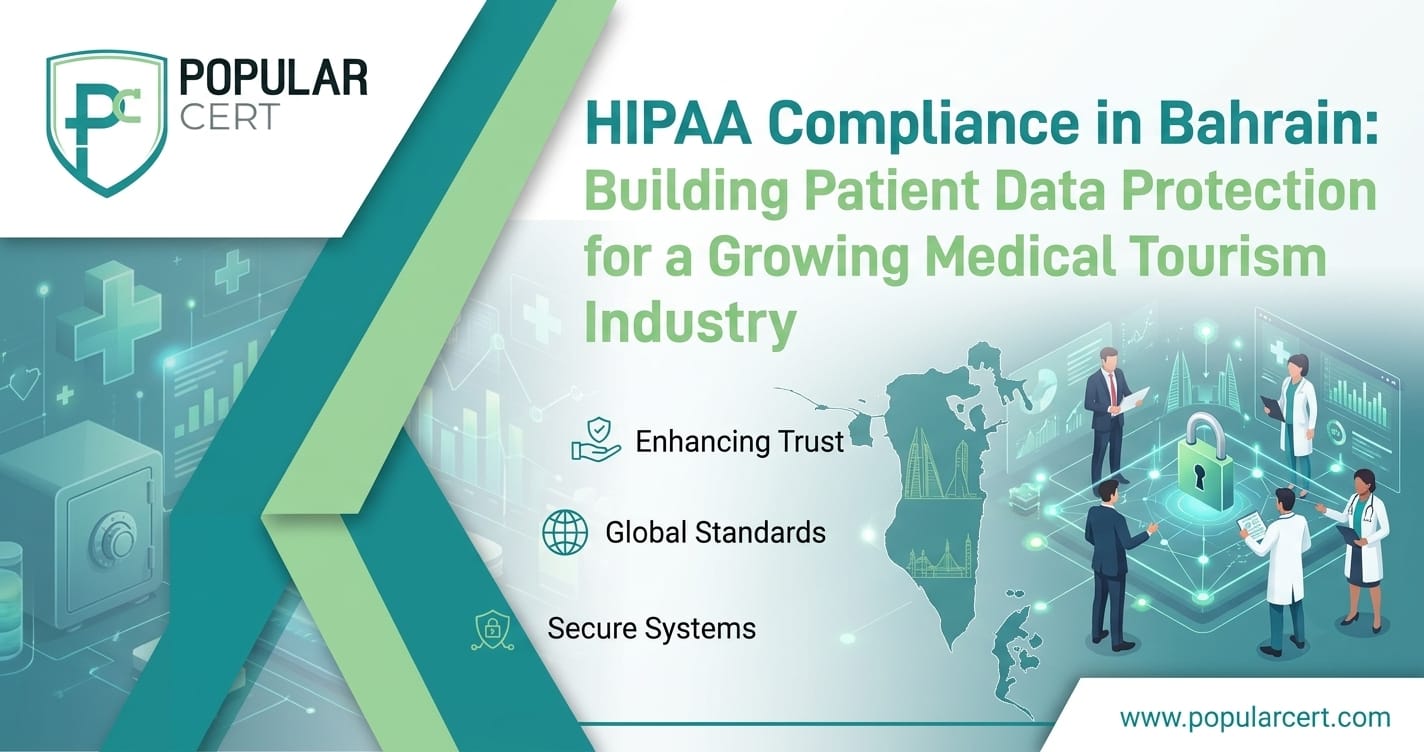
HIPAA Compliance in Bahrain is becoming an important topic for healthcare providers that serve international patients and manage sensitive medical information. As Bahrain develops its medical tourism sector, hospitals and clinics must pay close attention to patient privacy and data security. From appointment records to digital medical reports, every piece of patient information needs proper protection. Healthcare organisations that work with US patients or handle information on behalf of US healthcare entities may also need to consider HIPAA requirements.
For hospitals and medical centres in Manama, Riffa, Muharraq and other parts of Bahrain, a strong approach to data protection can support patient confidence and better healthcare services.
When Medical Tourism Meets Patient Data Protection?
Medical tourism involves more than providing treatment to patients from other countries. It also involves collecting personal details and sharing medical information between different healthcare professionals.
A patient visiting Bahrain for surgery or specialist treatment may share:
Medical history and previous treatment reports.
Passport and identification details.
Diagnostic images and laboratory results.
Insurance and payment information.
Doctor consultations and prescriptions.
Follow-up reports after leaving Bahrain.
If this information is shared without proper controls, patients may face privacy risks.
Healthcare providers must understand which privacy laws and contractual requirements apply to their activities. HIPAA is a US law and does not automatically apply to every hospital in Bahrain simply because it treats international patients.
However, HIPAA may become relevant when a Bahraini healthcare organisation acts as a business associate of a US covered entity or otherwise falls within its scope.
Why Do International Patients Expect Better Information Security?
Patients travelling abroad for healthcare want confidence in both medical treatment and information handling.
Imagine a patient from the United States travelling to Manama for a specialised procedure. The hospital may need to exchange medical reports with the patient's doctor or insurance provider.
Without proper security controls, this exchange could expose sensitive information.
Healthcare providers should pay attention to these important areas:
Patient Consent: Obtain suitable permission before sharing medical information where required.
Secure Communication: Use protected channels to exchange medical reports and test results.
Access Restrictions: Allow only authorised employees to view patient records.
Staff Awareness: Train doctors and administrative teams to handle confidential information correctly.
Data Storage: Protect electronic and physical medical records against unauthorised access.
Incident Response: Establish clear steps for investigating and responding to data breaches.
These practices can help healthcare organisations create a safer experience for international patients.
Which Healthcare Operations Need Stronger HIPAA Controls?
Different departments handle different types of patient information. A healthcare organisation should identify where sensitive data enters its systems and how it moves between departments.
Healthcare Department
Possible Data Risks
Important Security Measures
Patient Registration
Exposure of personal details
Restricted access
Medical Records
Unauthorised record viewing
Access controls and encryption
Diagnostic Centres
Sharing test results incorrectly
Secure report transmission
Billing Department
Exposure of payment and insurance details
Role-based permissions
Telemedicine
Unsecured video consultations
Protected communication systems
International Patient Desk
Cross-border information sharing
Controlled data exchange
IT Department
System attacks and data loss
Monitoring and security testing
Hospitals in Manama and Muharraq may have several departments working together to manage international patient services. Clear responsibilities can help prevent unnecessary access to sensitive information.
HIPAA and Bahrain PDPL: Two Different Compliance Responsibilities
Healthcare providers in Bahrain should understand the difference between HIPAA and the Bahrain Personal Data Protection Law (PDPL).
The Bahrain PDPL establishes local rules for processing personal data. HIPAA focuses on protected health information handled by organisations and individuals covered by its requirements.
They are not interchangeable. A hospital may need to follow Bahrain's local data protection requirements even when HIPAA does not apply to its operations.
Compliance Area
HIPAA
Bahrain PDPL
Main Focus
Protected health information
Personal data protection
Legal Scope
Applicable US covered entities and business associates
Relevant personal data processing in Bahrain
Data Security
Administrative, physical and technical safeguards
Appropriate protection of personal data
Patient Rights
Specific rights over protected health information
Rights provided under Bahrain's data protection law
Breach Handling
Applicable HIPAA breach notification requirements
Applicable local breach reporting requirements
International Data
Relevant HIPAA obligations for covered information
Rules governing personal data transfers
For medical tourism providers, understanding both frameworks can help create a more complete privacy programme.
Five Weak Points That Can Put Patient Records at Risk
Healthcare organisations sometimes focus heavily on medical equipment and treatment quality while overlooking information security.
Here are five areas that deserve attention:
Shared Staff Accounts: Multiple employees using one login makes it difficult to track activity.
Unprotected Email Attachments: Medical reports sent through unsecured channels may expose private information.
Old Employee Access: Former employees may still have access to hospital systems.
Weak Vendor Controls: External billing and IT providers may handle sensitive patient information without suitable safeguards.
Missing Backup Plans: Poor backup arrangements can affect access to important medical records.
A hospital should review these risks regularly rather than wait for a security incident.
A Practical Compliance Roadmap for Bahrain Healthcare Providers
HIPAA compliance requires more than purchasing security software. It involves people, processes and technology working together.
Healthcare providers can follow a structured approach:
Step
Action Required
Main Purpose
1
Identify applicable legal obligations
Understand compliance responsibilities
2
Map patient information
Know where sensitive data is stored
3
Conduct a risk assessment
Identify security weaknesses
4
Review staff access
Prevent unnecessary data access
5
Develop privacy procedures
Establish clear working rules
6
Train healthcare employees
Improve awareness
7
Review third-party providers
Strengthen vendor security
8
Conduct internal audits
Check whether controls are working
The organisation should also review its procedures whenever it introduces new digital health systems or starts working with international healthcare partners.
How Popularcert Supports Healthcare Compliance Preparation?
Healthcare organisations need practical guidance when working towards HIPAA-related compliance.
Popularcert helps businesses understand applicable compliance requirements and prepare their internal systems for stronger information protection.
Support may include:
Reviewing existing privacy and security practices.
Identifying gaps in current procedures.
Helping develop suitable policies and documentation.
Supporting risk assessment activities.
Reviewing employee awareness and training needs.
Preparing organisations for internal compliance reviews.
Helping healthcare providers understand the relationship between HIPAA and other applicable requirements.
Whether your organisation operates in Manama, Riffa, Muharraq or another part of Bahrain, a structured compliance approach can make patient information management more reliable.
FAQs
1. Is HIPAA mandatory for every Bahrain hospital?
No. It applies to organisations within its legal scope.
2. Does Bahrain have its own data protection law?
Yes. Bahrain has the Personal Data Protection Law.
3. Does medical tourism automatically require HIPAA?
No. Applicability depends on the organisation's activities and legal relationships.
4. Can clinics improve HIPAA compliance?
Yes. They can strengthen policies and security controls.
5. Does HIPAA compliance guarantee data security?
No. Continuous monitoring and improvement are essential.