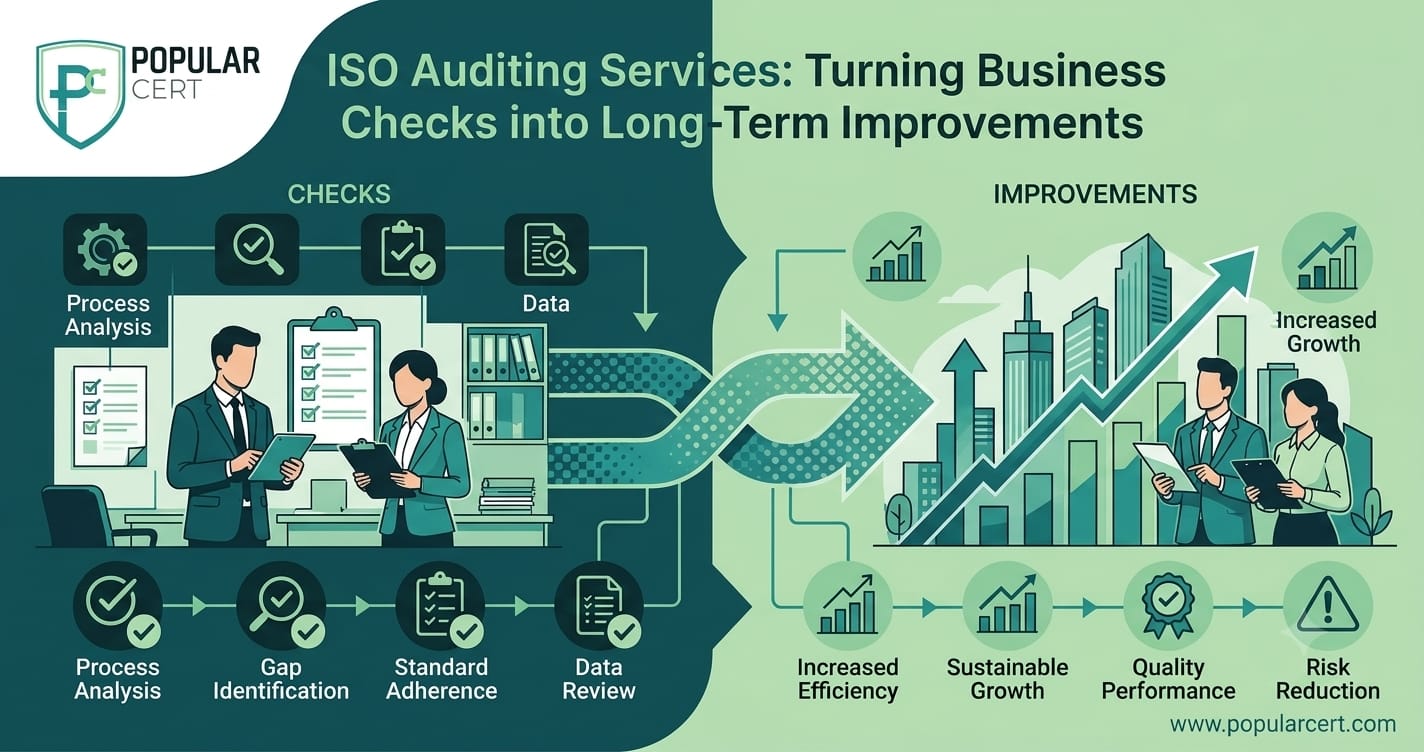
An ISO audit is not just about checking documents or finding mistakes. It helps businesses understand whether their daily activities follow planned processes and international standards. From manufacturing units in Mumbai to IT companies in Bengaluru and service providers in Dubai, regular audits help organisations identify weak areas before they become bigger problems. ISO Auditing Services give businesses a clear picture of their management systems and help them prepare for certification while improving everyday operations.
When Business Processes Look Fine but Need a Closer Check?
Many companies believe their systems are working well because daily operations run without major issues. However small gaps can remain hidden in employee responsibilities, supplier records, customer feedback and internal procedures.
An ISO audit helps bring these gaps to light.
For example a manufacturing company may produce good products but fail to maintain proper inspection records. An IT company may have security policies but may not review user access regularly. A hospital may follow safety procedures but lack complete training records.
These issues can affect compliance and business performance.
Professional ISO auditing services help companies check whether their actual activities match their documented procedures.
What Happens During an ISO Audit?
An ISO audit follows a planned process. The auditor checks documents, speaks with employees and reviews workplace activities to understand how the management system works.
The audit may include:
Reviewing company policies and procedures.
Checking records and supporting documents.
Speaking with employees about their responsibilities.
Observing daily work activities.
Identifying non-conformities and process gaps.
Reviewing corrective actions.
Preparing an audit report with findings.
The goal is not simply to find mistakes. It is to help businesses understand what needs attention and how improvements can be made.
Different ISO Standards Require Different Audit Approaches
Not every business needs the same type of audit. The audit approach depends on the standard and the organisation's activities.
ISO Standard
Main Audit Focus
Suitable Businesses
ISO 9001
Quality management and customer satisfaction
Manufacturing and service companies
ISO 14001
Environmental performance and controls
Factories and construction firms
ISO 45001
Employee health and workplace safety
Industrial and engineering companies
ISO 27001
Information security and data protection
IT firms and financial companies
ISO 22000
Food safety and hygiene controls
Food manufacturers and restaurants
ISO 13485
Medical device quality and regulatory controls
Medical equipment manufacturers
ISO 22301
Business continuity and operational resilience
Banks and large service providers
Each standard has different requirements. Therefore the audit checklist and supporting evidence must match the chosen ISO standard.
Three Audit Stages That Reveal the Real Picture
A successful ISO audit usually involves different stages. Each stage helps the organisation understand its readiness and identify areas that need improvement.
1. Document Review
The auditor checks policies, procedures, manuals, records and other documents. This helps confirm whether the required management system information is available.
2. Implementation Review
The auditor checks whether employees follow the documented processes in their actual work. Interviews and workplace observations help confirm how the system operates.
3. Findings and Corrective Actions
The audit findings are recorded and shared with the organisation. If non-conformities are identified, the company must investigate their causes and take suitable corrective action.
Common Audit Gaps That Businesses Often Overlook
Some audit problems are easy to miss because they develop slowly during normal business activities.
Common Audit Gap
Possible Business Impact
Recommended Action
Outdated procedures
Employees follow incorrect instructions
Review documents regularly
Missing training records
Employee competence becomes difficult to prove
Maintain training records
Poor supplier evaluation
Quality and delivery risks increase
Review supplier performance
Incomplete risk assessments
Important threats remain unnoticed
Update risk records
Unresolved audit findings
The same problems may return
Track corrective actions
Weak management reviews
Important decisions may be delayed
Conduct planned reviews
Fixing these gaps before an external certification audit can make the process easier and more organised.
Internal Audits and External Audits Serve Different Purposes
Businesses sometimes confuse internal audits with certification audits. However both have different roles.
Internal Audit: Conducted by trained internal auditors or appointed external professionals to check whether the management system meets the organisation's requirements and the selected ISO standard.
Certification Audit: Conducted by an independent certification body to determine whether the organisation meets the applicable certification requirements.
Surveillance Audit: Conducted after certification to check whether the management system continues to meet the standard.
Recertification Audit: Conducted before the certification cycle ends to evaluate continued compliance and system effectiveness.
A company should not treat certification as the final step. Maintaining the system is equally important.
Why Local Business Conditions Matter During an Audit?
Audit preparation should consider the organisation's actual location and industry.
For example:
Mumbai: Manufacturing and financial companies may need strong quality controls and information security practices.
Bengaluru: IT and technology companies may require detailed information security and service management controls.
Chennai: Automotive and engineering businesses may focus on quality and workplace safety.
Hyderabad: Pharmaceutical and technology companies may need well-maintained process and compliance records.
Dubai: Trading and service companies may need clear supplier controls and documented business processes.
The audit should reflect the company's operations and applicable legal requirements rather than relying on a general checklist.
What Should a Company Prepare Before the Auditor Arrives?
Good preparation saves time and reduces confusion during an audit.
Businesses should arrange:
Updated policies and procedures.
Employee training records.
Risk assessment documents.
Previous audit reports.
Corrective action records.
Supplier evaluation details.
Equipment maintenance records where applicable.
Management review minutes.
Relevant legal and regulatory compliance records.
Employees should also understand their roles. They do not need to memorise the ISO standard but should know how their daily work supports the management system.
Choosing ISO Auditing Services That Deliver Real Value
A useful audit should do more than produce a report. It should help management understand what is working and what needs improvement.
When selecting an ISO auditing service provider consider these points:
Standard Knowledge: The audit team should understand the relevant ISO standard.
Industry Experience: Auditors should understand the risks and processes of your industry.
Clear Reporting: Audit findings should be easy to understand and act upon.
Practical Guidance: Recommendations should focus on realistic improvements.
Professional Approach: Auditors should remain objective and follow a planned audit process.
The right support can help businesses avoid unnecessary confusion and build management systems that work in everyday operations.
Build a More Reliable Audit Process with Popularcert
Preparing for an ISO audit does not have to become a stressful task. With the right planning and professional guidance businesses can identify gaps early and improve their management systems step by step.
Popularcert supports organisations seeking ISO certification and management system improvement. Whether your business operates in India, Saudi Arabia, Qatar, Oman, Bahrain or other international markets the right audit preparation can help you move forward with greater confidence.
Connect with Popularcert to understand your ISO requirements and get support for your certification journey. Focus on building a system that works for your business rather than preparing documents only for an audit.
Final Thoughts
ISO auditing services help businesses look beyond routine operations and understand how well their management systems perform. They identify process gaps, improve employee awareness and support better control over business activities.
Whether a company is preparing for its first certification or maintaining an existing one, regular audits can make a meaningful difference. A successful audit is not simply about passing an inspection. It is about creating stronger processes that support business growth over time.
FAQs
1. What are ISO auditing services?
They help businesses check whether their management systems meet ISO requirements.
2. Are internal audits compulsory?
Yes. Many ISO management system standards require planned internal audits.
3. How often should ISO audits happen?
Internal audits should follow a planned schedule based on business needs and standard requirements.
4. Can small businesses use ISO auditing services?
Yes. Small and large organisations can benefit from professional audits.
5. Does an ISO audit guarantee certification?
No. Certification depends on meeting the applicable requirements and passing the certification body's assessment.