Efficiency is one of the most important factors in the frozen food distribution industry. Importers, wholesalers, retailers, and foodservice distributors must manage product quality, inventory levels, transportation requirements, and customer demand while controlling operational costs.
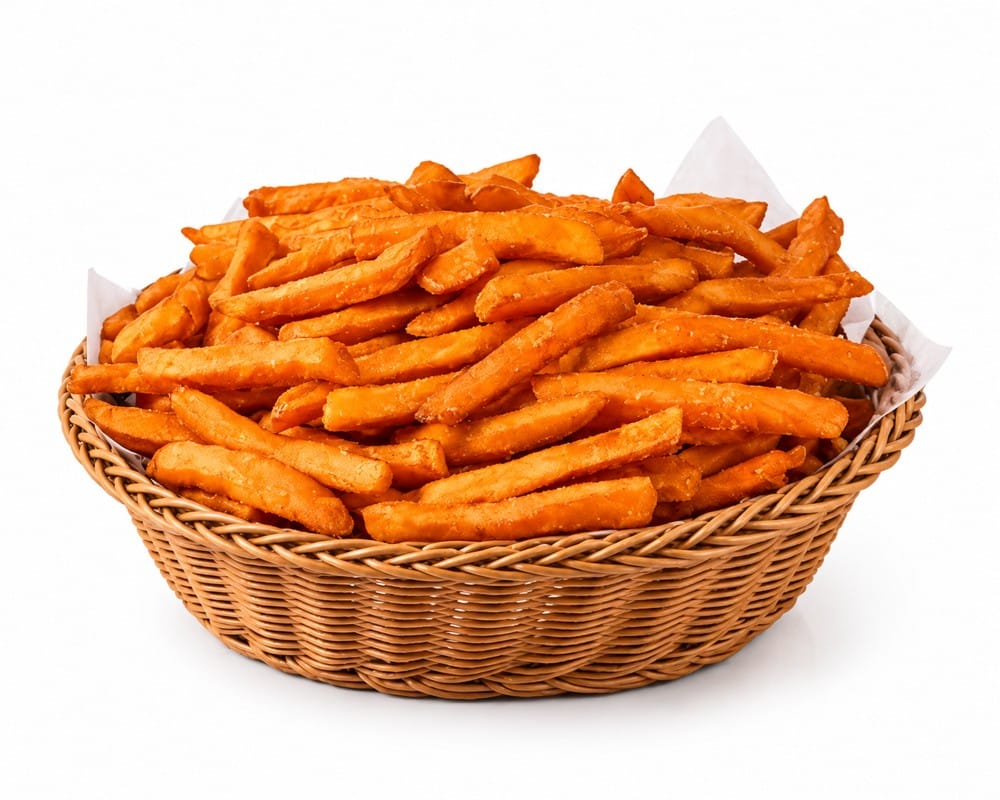
Frozen sweet potato fries can support these objectives by offering a convenient, standardized product suitable for different commercial food markets.
For distributors looking to expand their frozen food portfolios, understanding how these products contribute to supply efficiency can help improve sourcing decisions and long-term business planning.
1. Simplifying Product Sourcing
Food distributors often work with multiple suppliers to meet the requirements of restaurants, hotels, supermarkets, and catering businesses.
Managing different product specifications and purchasing schedules can make sourcing more complicated.
Frozen sweet potato fries offer a standardized product format that can simplify purchasing and inventory planning when sourced from a reliable manufacturer.
By working with suppliers that provide consistent product specifications, distributors can reduce uncertainty across repeated orders.
Clear communication about available cuts, packaging sizes, minimum order quantities, and delivery schedules also supports more efficient procurement.
2. Supporting Consistent Product Quality
Consistency is essential in commercial food distribution.
Customers expect products with predictable appearance, portion sizes, and preparation characteristics.
Frozen sweet potato fries are commercially processed to meet defined product specifications, helping distributors maintain more consistent offerings across different shipments.
Quality considerations include:
Uniform cut dimensions.
Consistent color and appearance.
Suitable packaging and labeling.
Clearly defined cooking instructions.
Appropriate storage requirements.
Before placing bulk orders, distributors should request product samples and confirm the manufacturer's quality control procedures.
Regular product evaluations can help maintain consistency and customer satisfaction.
3. Improving Inventory Management
Inventory management is a continuous challenge for frozen food distributors.
Businesses must balance product availability with warehouse capacity, customer demand, and storage costs.
Frozen sweet potato fries can support structured inventory planning when handled under suitable frozen storage conditions.
Their standardized packaging and defined shelf-life requirements can help distributors organize stock monitoring and order scheduling.
Effective inventory practices include:
Monitoring product quantities and movement.
Following recommended frozen storage conditions.
Applying first-expiring, first-out stock rotation.
Forecasting demand according to customer purchasing patterns.
Coordinating purchasing schedules with supplier lead times.
These practices help distributors maintain product availability while reducing avoidable inventory problems.
4. Expanding Foodservice Product Options
Product variety can help frozen food distributors serve different customer segments.
Frozen sweet potato fries are available in multiple cut styles, including waffle-cut and crinkle-cut varieties.
Waffle-Cut Frozen Sweet Potato Fries
Waffle-cut fries feature a distinctive lattice-shaped appearance.
They are suitable for restaurants, hotels, casual dining establishments, and foodservice businesses looking for visually appealing side dishes.
Crinkle-Cut Frozen Sweet Potato Fries
Crinkle-cut fries have a ridged surface and a familiar fry-style presentation.
They can be suitable for quick-service restaurants, catering operations, and other commercial kitchens.
Offering different product formats allows distributors to respond to varying menu requirements without relying on entirely different food categories.
5. Supporting More Efficient Foodservice Operations
Food distributors play an important role in helping commercial kitchens maintain efficient operations.
Restaurants and catering businesses often prefer products that require fewer preparation steps and provide predictable cooking results.
Frozen sweet potato fries are supplied in pre-cut formats, reducing the need for washing, peeling, and manual cutting.
For foodservice customers, this can provide several advantages:
Reduced preparation requirements.
More consistent portion planning.
Easier kitchen workflow management.
Less preparation-related trimming waste.
Greater flexibility during busy service periods.
By offering products that support kitchen efficiency, distributors can provide additional value to their commercial customers.
6. Maintaining Cold-Chain Efficiency
Temperature-controlled logistics are essential for frozen food distribution.
Distributors must ensure that products are stored, transported, and handled according to the manufacturer's specifications.
Maintaining appropriate frozen conditions helps protect product quality throughout the supply chain.
Important considerations include refrigerated transportation, temperature monitoring, warehouse management, and careful handling during loading and unloading.
Distributors should also coordinate delivery schedules to reduce unnecessary storage delays.
Effective cold-chain management supports product integrity and helps businesses meet customer expectations.
7. Working with Reliable Frozen Sweet Potato Manufacturers
Supplier reliability directly influences distribution efficiency.
Manufacturers that provide consistent products, clear documentation, and dependable communication can help distributors manage purchasing schedules and customer requirements.
Before choosing a supplier, businesses should evaluate production capacity, product specifications, packaging options, quality management practices, and export experience.
IFCG (International Food Company Group) is an Egyptian manufacturer and exporter specializing in frozen sweet potato fries, including waffle-cut and crinkle-cut varieties.
The company provides frozen sweet potato products for international importers, distributors, retailers, and foodservice businesses.
Distributors looking for a Frozen Sweet Potato Fries Manufacturer can explore IFCG's product range and export solutions through its official website.
Buyers should request current product specifications, relevant certifications, packaging details, and commercial terms before placing orders.
8. Improving Supply Planning and Cost Management
Efficient food distribution requires careful coordination between purchasing, inventory management, transportation, and customer demand.
Distributors can improve supply planning by forecasting order volumes, monitoring stock turnover, and evaluating supplier performance.
They should also consider the total landed cost of imported frozen sweet potato fries, rather than focusing exclusively on the product's unit price.
Relevant costs may include:
International freight.
Customs duties and taxes.
Frozen storage.
Handling and local distribution.
Packaging requirements.
Insurance and administrative expenses.
Understanding these costs helps distributors make more informed sourcing decisions and develop sustainable purchasing strategies.
9. Building Stronger Long-Term Supplier Relationships
Long-term supplier relationships can help food distributors maintain stable purchasing processes.
Regular communication allows buyers and manufacturers to discuss expected order volumes, product performance, packaging requirements, and potential supply challenges.
Distributors should periodically evaluate supplier performance based on delivery reliability, product consistency, documentation accuracy, and responsiveness.
These evaluations can help identify opportunities for operational improvement and better coordination.
Conclusion
Frozen sweet potato fries can help food distributors improve supply efficiency through standardized product specifications, convenient foodservice applications, and more structured inventory planning.
However, the benefits depend on reliable manufacturing, appropriate cold-chain management, and effective coordination throughout the supply chain.
For importers, wholesalers, and foodservice distributors, choosing suitable frozen sweet potato products and dependable manufacturing partners can support stronger sourcing strategies and more consistent customer service.
By focusing on product quality, supplier reliability, logistics, and long-term planning, distributors can create more efficient frozen food supply operations.