Moringa is more than a trendy green ingredient. For generations, families have cooked its leaves, added them to traditional dishes, and valued the plant for its nutritional qualities. Today, moringa powder, moringa tea, and moringa capsules make it easier to enjoy this versatile food. But a sensible daily routine begins with realistic expectations. Here is how to use moringa, what research suggests, and when extra care matters.
What Makes Moringa Worth Trying?
Moringa oleifera, often called the drumstick tree, grows in warm climates. Its edible leaves contain fiber, plant protein, minerals, and compounds such as beta carotene and polyphenols. These nutrients contribute to healthy eating, although amounts change with growing conditions, drying, storage, and cooking. A spoonful of powder is not nutritionally identical to a generous serving of cooked greens. Think of moringa as another useful vegetable, not a replacement for a varied diet.
Potential Health Benefits of Moringa
Adds Nutritional Variety
Moringa leaves provide micronutrients that help the body perform everyday functions. Including them alongside beans, whole grains, fruit, and other vegetables can improve meal variety. The strongest reason to eat moringa is straightforward: it offers nutrients as part of normal food.
Supplies Antioxidant Compounds
The leaves contain naturally occurring plant compounds with antioxidant activity in laboratory research. Antioxidants participate in protecting cells from oxidative stress. However, laboratory findings do not prove that drinking moringa tea prevents disease or creates measurable benefits in everyone.
May Influence Metabolic Markers
Scientists have investigated moringa in relation to diabetes, cholesterol, and blood pressure. Some small studies report encouraging changes, but others do not. A 2025 review of randomized trials found no consistent improvement across most cardiometabolic outcomes and judged the evidence very uncertain. Moringa should never replace prescribed treatment, especially for diabetes or hypertension.
Four Practical Ways to Take Moringa Daily
1. Moringa Powder
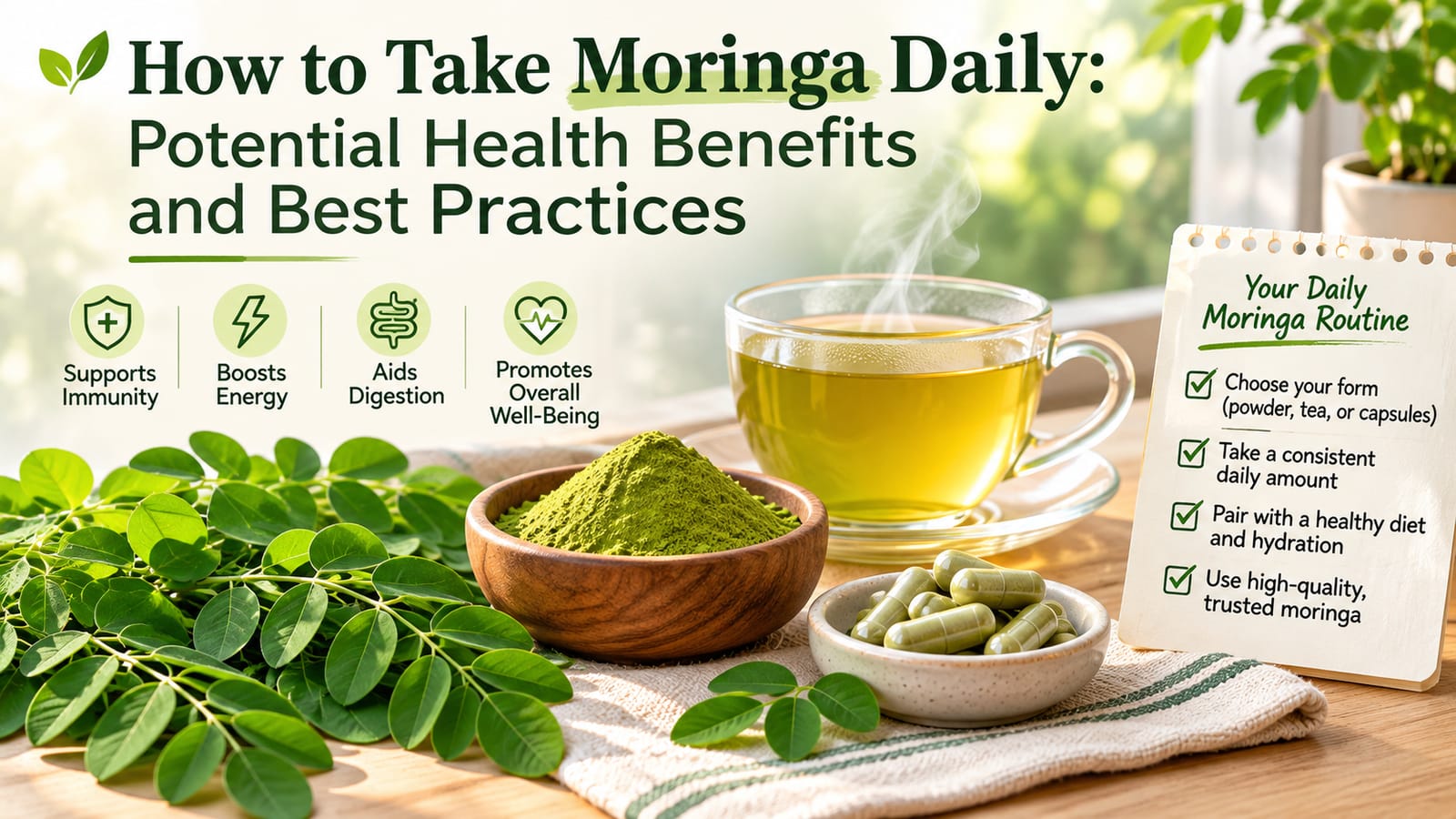
Moringa powder is made from dried, ground leaves. Its earthy taste suits smoothies, soups, yogurt, and savory sauces. Try stirring a small pinch into breakfast oats or blending it with banana and milk. Add it after cooking when possible if you want to avoid prolonged heat exposure. Begin with a little to discover whether you enjoy the flavor. There is no proven universal daily dose for general wellness.
2. Moringa Tea
It can be consumed easily as a caffeine-free substitute for ordinary tea. Place dried leaves in a strainer, pour hot water over them, and steep for five to ten minutes. Add lemon if desired. Because you discard the leaves, the drink may contain different amounts of nutrients than whole leaves or powder. Enjoy it for its flavor and ritual rather than expecting immediate results.
3. Moringa Capsules
Moringa capsules appeal to people who dislike the taste or need something portable. However, capsules may contain leaf powder or concentrated extracts, and their strengths differ considerably. Read labels carefully, choose independently tested products where available, and avoid doubling servings. Speak with a clinician before starting supplements if you take medicines or manage a health condition. Convenience does not establish superior effectiveness.
4. Fresh Moringa Leaves
Moringa leaves are ideal for everyday cooking. Rinse them thoroughly, remove tough stems, and cook the tender leaves with lentils, onions, or vegetables. They also work in soups and simple stir fries. Pairing greens with familiar meals makes regular use easier and adds texture without relying on supplements. Cook and store them using the same food safety practices you follow for other leafy vegetables.
How Much and When Should You Take It?
There is no established daily amount that guarantees health benefits. For food preparations, use modest culinary portions that suit your appetite and digestion. For supplements, follow professional advice because products are not equivalent. Timing is flexible: a smoothie at breakfast, leaves at lunch, or tea after dinner can all fit. Taking multiple forms together is unnecessary, and larger amounts are not automatically better.
Safety Tips Before Making Moringa a Habit
Food based use of moringa leaves is generally well tolerated, but concentrated products deserve more caution. Check with a healthcare professional before supplementing during pregnancy or breastfeeding, or when taking medication. Possible interactions are not fully understood. Seek advice if you have diabetes, low blood pressure, or another ongoing condition. Avoid self treating with moringa roots or bark. Stop using a product if you notice an unusual reaction, and seek urgent care for breathing trouble or severe allergy symptoms.
Buy moringa from reputable sellers, check freshness and ingredient lists, and keep dried products sealed away from moisture. Supplements should complement nutritious meals, not take their place.
Frequently Asked Questions
Can I use moringa every day?
Many people eat moringa leaves regularly as part of meals. If you are new to it, start with a small serving and see how you feel. Do not assume that long term supplement safety is established because the plant is edible.
Is moringa better for weight loss?
There is no convincing evidence that moringa alone causes weight loss. Prioritize sustainable eating patterns, physical activity, sleep, and medical guidance instead.
Final Thoughts
The easiest moringa routine is one you actually enjoy. Choose moringa powder for cooking flexibility, moringa tea for a warm drink, moringa capsules only when appropriate, or moringa leaves for wholesome meals. Focus on balanced eating, reasonable portions, and reliable information. Moringa can enrich your menu, but lasting wellness comes from your overall habits, not one ingredient.