
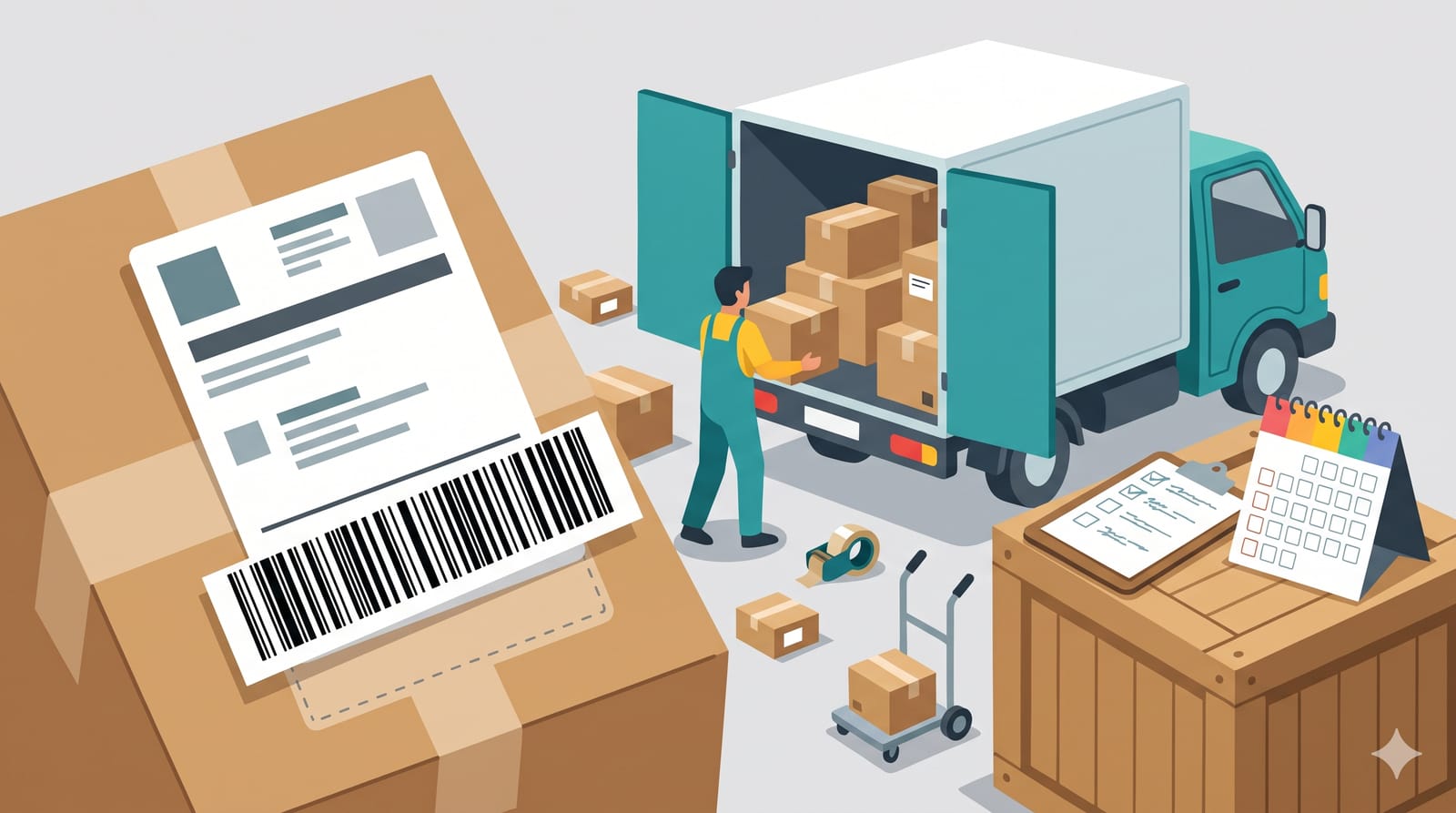
From 1 January 2027, new e-way bills will carry 14-digit numbers instead of 12, and consolidated e-way bills will move from 10 digits to 11. GSTN announced the change in Advisory No. 687 on 4 November 2026. The law, the ₹50,000 threshold and the validity rules don't change. What can break is everything around them: the invoice template that prints 12 digits, the Excel tracker that turns a long number into 1.23457E+13, the shipping integration that rejects anything that isn't exactly 12 characters. And it would break in the first week of January, right after year-end sales. Here's who's affected and a checklist to get through it calmly.
What GSTN announced
According to the advisory as reported by StudyCafe and CalcGuru:
E-way bill number: 12 digits now, 14 digits from 1 January 2027.
Consolidated e-way bill number: 10 digits now, 11 digits from 1 January 2027.
Why: GSTN expects that "the existing e-way bill numbering capacity may soon be completely exhausted."
Testing: the changes will first be released in the e-way bill Sandbox; no sandbox date has been given yet.
The ask: taxpayers, GSPs, ERP and software providers and API integrators should update their "applications, APIs, database schemas and validation rules" and be ready "well before January 01, 2027."
The advisory frames the formats as "proposed", pending sandbox testing, but the 1 January date is stated plainly. Plan for it.
First, do you generate e-way bills at all?
Many small online sellers never touch one. Per ClearTax's e-way bill guide, you need an e-way bill when a consignment, or all consignments in one vehicle, is worth more than ₹50,000; states set their own limits for movement within the state. Branch or stock transfers count too, even though no sale happens.
A quick way to place yourself:
Individual B2C parcels, each well under ₹50,000: probably not you. But your courier or 3PL may generate e-way bills for consolidated loads, so their systems still matter to you.
Moving stock to your own warehouse or a fulfilment partner in another state: yes, this is you.
B2B or bulk orders above ₹50,000: yes, this is you.
You only generate e-way bills by hand on the portal: you're the least exposed, but your Excel sheets and records still need a look.
Where "12 digits" is hiding in your business
This is the hidden-cost part. The portal will handle the new numbers. Your own tools might not:
Invoice and delivery challan templates that print the e-way bill number in a fixed-width box. A cut-off number on a document can lead to a dispute if a vehicle is stopped.
Excel and Google Sheets trackers. CalcGuru flags that pasted numbers can show as "1.23457E+13". Excel keeps 15 significant digits, so the number survives, but it displays badly and is easy to corrupt with a formula.
Accounting software or ERP fields set to 12 characters, or stored as a number instead of text.
Shipping and courier integrations that pass e-way bill numbers between your store and your logistics partner.
Validation rules that insist on exactly 12 digits, like
^\d{12}$.Reconciliation reports that match e-way bills against invoices or freight bills using a numeric key.
Your checklist before 31 December
List every place the number lives: templates, sheets, software, integrations, reports. Fifteen minutes with your accounts and dispatch team will find most of them.
Ask every vendor in writing (billing or ERP software, GSP, shipping app, 3PL): when will your update ship, and how will you test it? Also ask whether the update is included in your plan or billed separately.
Store numbers as text, not numbers. Widen fields to at least 14 characters for e-way bills and 11 for consolidated ones. In spreadsheets, format the column as Text before pasting.
Accept both lengths for a while. E-way bills generated in late December keep 12 digits and may still be valid in January, so a rule like
^(\d{12}|\d{14})$is safer than switching hard to 14.Test once the sandbox opens, or ask your vendor to: generate, update Part-B, extend validity, cancel, and create a consolidated bill.
Brief your team and transporters before the year-end rush, not during it.
Two things you can do in ten minutes today
Test your spreadsheet
Type a 14-digit test number into the column where you track e-way bills. If it turns into something like 1.23457E+13, select the column, set the format to Text, and paste again. If your team shares one tracker, fix it once there and tell everyone to paste into that format.
Send your vendors one clear message
Copy, tweak and send this to your billing software, ERP or shipping partner:
"Hi, GSTN Advisory No. 687 says e-way bill numbers move from 12 to 14 digits, and consolidated e-way bills from 10 to 11, from 1 January 2027. Can you confirm when your update will be live, whether old 12-digit numbers will still be accepted during the transition, and whether there's any extra charge? We'd like to test before the end of December."
Save the replies. If a vendor can't give you a date, that's your signal to plan a manual workaround for the first week of January.
What doesn't change
Thresholds, validity periods and the Part-A and Part-B details all stay the same; CalcGuru is clear that "the law has not changed." This is a format change, which is good news: once your tools accept the longer number, there's nothing new to learn.
Put it on the same list as your other January deadlines
January is getting crowded for online sellers. The new e-commerce rules from January 2027 need attention too, and if you sell across states, revisit GST Rule 14B for selling in another state and this month's GST changes for online sellers in the same sitting. Set aside one afternoon in early December, run this checklist, and the first e-way bill of 2027 will just be a slightly longer number.