
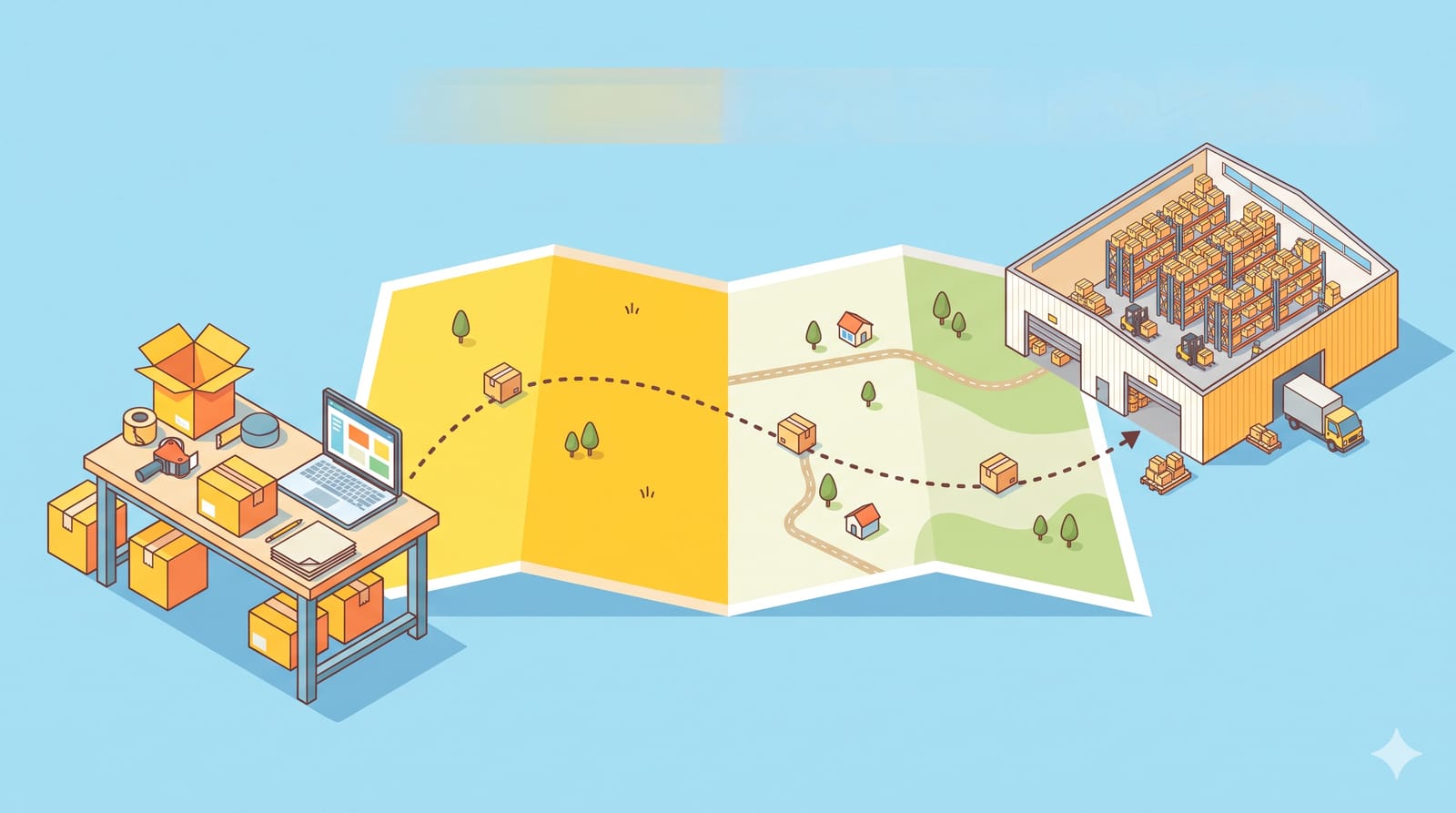
If you sell on a marketplace and want your stock in a warehouse in another state, so orders there arrive faster, today you need a GST registration in that state with a place of business there. That has kept a lot of small sellers stuck in one state. The GST Council has now recommended a simpler route: a new Rule 14B that lets eligible small sellers register in another state using the marketplace's warehouse as their address. It is not law yet. Here is what was recommended, who would qualify, the catches, and what to prepare now.
What the GST Council recommended
At its 57th meeting on 8 October 2026, the Council recommended inserting Rule 14B in the CGST Rules. The official PIB release describes it as "a simple mechanism for registration for small suppliers making supplies of goods through ECOs, in States/UTs, where they do not have physical presence", for sellers who intend to pass on input tax credit (ITC) of no more than ₹2.5 lakh a month, excluding stock transfers between their own registrations. They would declare the e-commerce operator's warehouse in that state as their Principal Place of Business, and "Registration in such cases will be granted automatically by the system, subject to certain conditions."
The key word is "recommended". As Taxscan noted on 20 October, there was no notification for the scheme yet. Law firm Trilegal makes the same point about the meeting's recommendations generally: they take effect only once the relevant notifications, circulars or amendments are issued.
Who would qualify
Taxscan's breakdown of the proposal lists the conditions. As proposed:
You supply goods through e-commerce operators that collect TCS under Section 52.
Your output tax on supplies to registered buyers (other than your own PAN) is no more than ₹2.5 lakh a month, and the ITC you intend to pass on is no more than ₹2.5 lakh a month, excluding stock transfers.
You already hold a regular GST registration in your home state.
One such registration per state or union territory for each PAN.
If you are registered under the existing Rule 14A route, you would first need to withdraw from it.
Read the ₹2.5 lakh limit carefully. Taxscan stresses that it concerns tax liability and ITC, not your monthly sales. A seller doing mostly B2C sales with a larger turnover could still fit.
A quick example
Take a home-decor seller registered in Jaipur. Most orders come from individual shoppers, and a handful of interior designers with GSTINs buy in bulk. Say the tax on those B2B sales comes to about ₹40,000 a month, and the ITC passed on to those buyers is about the same. Both are well under ₹2.5 lakh, so, as proposed, this seller could register in Karnataka using a marketplace warehouse near Bengaluru, even with total monthly sales of several lakh. If a large B2B contract later pushes either figure past the limit, the route would no longer fit.
How it would work
You apply on the GST portal, naming the operator's warehouse in the new state.
The application goes to the operator, which has seven working days to consent. No consent in that time means the application is treated as rejected.
Verification happens in your home state, including Aadhaar biometric authentication and document checks.
Registration is then granted through a system-based process.
Once registered, you could add other warehouses of the operator in that state as additional places of business. Your records would stay at your home-state principal place of business.
The catches and hidden costs
This is genuinely good news for small sellers, but go in with eyes open:
Platform-only. The registration cannot be used for supplies outside those e-commerce platforms. Your own website orders in that state would not ride on it.
You depend on the operator. If it withdraws permission, Taxscan says you would have 30 days from its intimation to amend the address, or the registration gets cancelled. Warehouse changes need the operator's consent too.
Your home registration is the anchor. If it is cancelled, the other-state registrations go with it.
Another registration is another set of compliance. Ask your CA what monthly filing and reconciliation work each extra state would add, and price that in before you expand.
Other changes from the same meeting worth knowing
The PIB release includes a few more recommendations that would help small sellers, all also awaiting implementation:
No show cause notices where the tax involved is under ₹10,000, including pending ones.
The maximum general penalty under Section 125 cut from ₹25,000 to ₹10,000.
An in-principle concept note for an optional Annual Return Quarterly Payment (ARQP) scheme for businesses with turnover up to ₹5 crore that sell only to unregistered buyers. Trilegal notes that no formal recommendation has been made yet, and the details go to the next Council meeting. For B2C-only D2C brands, this is the one to watch.
Your prep checklist for now
Work out your monthly output tax on B2B supplies and the ITC you pass on, from your last six months of returns. Are you under ₹2.5 lakh on both?
List which marketplaces you sell on and which of their warehouses, in which states, would cut delivery times for your best-selling products.
Ask your marketplace account manager how they plan to handle consent requests once the rule is notified.
Make sure your home-state registration and returns are clean. Everything else hangs off it.
Watch for the CBIC notification. The rule text may differ from the recommendation, so read it before you apply.
This is general information, not tax advice. Once the rule is notified, check the final conditions with your CA before applying.