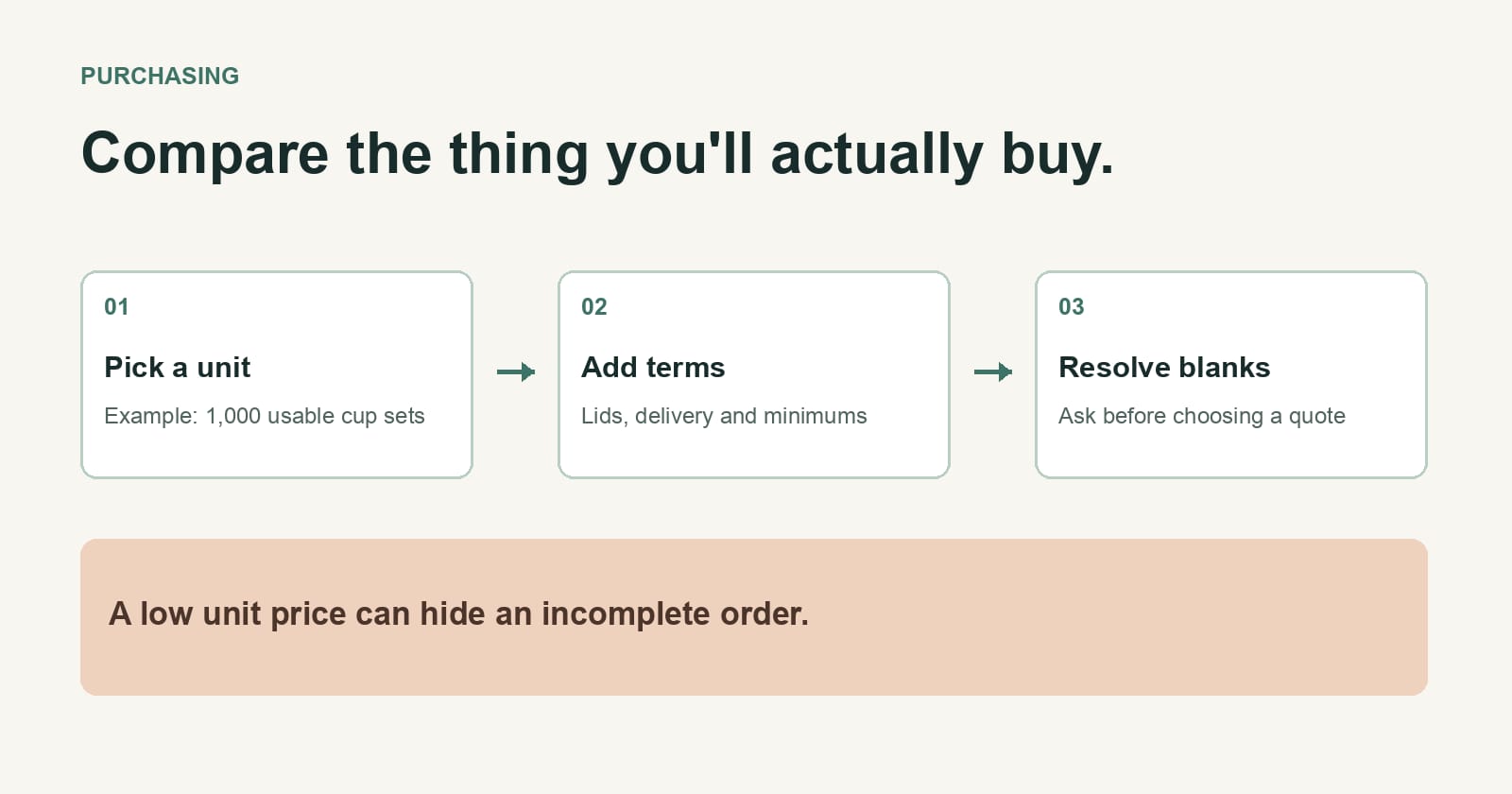
Ask an assistant to put supplier quotes on the same unit before it recommends one. The cheapest line in a table can be the most expensive choice once pack size, delivery, and what you're actually buying are made visible.
Picture a hypothetical café ordering takeaway cups. Supplier A quotes per sleeve of 50. Supplier B quotes per case of 1,000. Supplier C includes lids and charges a delivery fee below a minimum order. An assistant can make a beautiful comparison table from those PDFs and still put the wrong number in the "price per cup" column if it misses what each quote includes.
I'd start with a fixed question: "What will it cost to have 1,000 usable cups with matching lids at the café by Friday?" That is the decision the owner needs. It tells the assistant which unit, accessories, place, and date matter. If a quote doesn't answer one of them, the table should show a blank rather than a guessed total.
Ask for a calculation you can retrace
The review can be small. These three quote conditions are fictional:
Supplier A: Cups come in sleeves of 50, so the café needs 20 sleeves. The quote lists lids and delivery separately. Ask for both before calculating a delivered total.
Supplier B: One case holds 1,000 cups and delivery is included, but lids aren't. Ask for the matching lid price before comparing it with a complete set.
Supplier C: It quotes 1,000 cup-and-lid sets, but the order is below its free-delivery minimum. Ask for the fee and add it to the set price.
Those unanswered questions tell the owner what to ask before placing an order.
Give the assistant a direct instruction:
Compare these quotes for 1,000 usable cups with matching lids delivered by Friday. Copy the quoted unit, pack size, included items, delivery terms, and quote date. Show the arithmetic for any converted price. If a needed term is missing, leave the total unresolved and draft one question for that supplier. Don't place an order.
The same method works for cleaning supplies quoted by bottle or concentrate, printed materials priced by batch, and ingredients sold by different weights. The unit depends on the job. Don't let a familiar "per item" column hide what an item contains.
Then compare what the numbers leave out
A like-for-like price is the start, not the whole choice. The cups still need to arrive on time and fit the lids the café uses. Ask the assistant to list any conditions that could make a cheaper quote unusable: lead time, minimum order, substitute product, or a delivery date the supplier hasn't confirmed. Those are questions for the supplier, not facts to fill from memory.
Once the missing terms come back, the owner can choose. The assistant has done valuable work even if its first table has no winner. It has turned three incompatible quotes into a short list of facts worth getting.
Alek Perak is a Tokenrip co-founder. Tokenrip is a shared workspace for files, tasks, and decisions; agents run in the tools people already use. A shared quote record doesn't verify a supplier's terms for you.