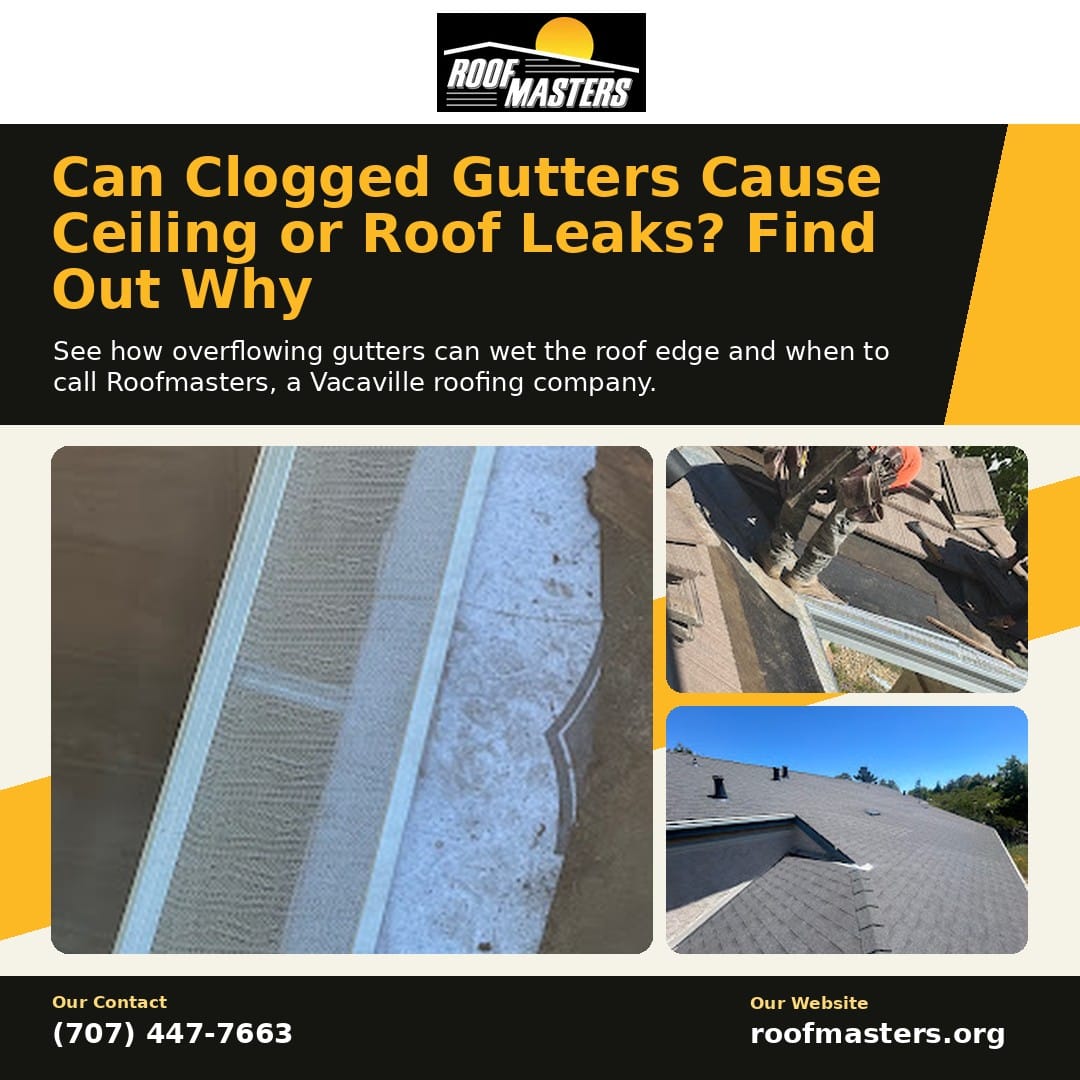
Yes, clogged gutters can contribute to a roof or ceiling leak. The clue is where the water goes after it reaches the edge of the roof. When an outlet is plugged, the gutter can fill and spill. Some water may fall in front, where you can see it. Water that runs behind the gutter may soak the boards at the roof edge or reach an opening in the trim. A ceiling stain during rain is worth investigating even after the gutter has been cleared, because a second problem may still be letting water into the house.
How a gutter clog can wet the roof edge?
A gutter collects runoff across the roof edge. The downspout carries that water to a place where it can drain away. The Building America Solution Center guide to gutters and downspouts describes how the two parts work together.
A handful of wet leaves at the outlet can slow the whole system. During a burst of heavy rain, the trough fills faster than the opening can drain. Water can go over the front lip, splash back at the eave, or run through a gap between the gutter and the fascia. If a long section sags, water may sit at the low point even when the outlet is clear. Puddles or staining after the storm can help a contractor see where that happens.
Repeated wetting may damage fascia or soffit materials. If the drip edge or adjacent roof materials are damaged, water may also reach the structure behind them. Roofmasters explains the connection between blocked gutters and roof leaks with examples of what can happen around the edge of the roof.
What you can spot from the ground
During a rain shower, look from a window or a sheltered spot. Try to see whether water is leaving the gutter through the outlet or appearing somewhere that should stay dry. Keep away from areas below loose gutters or storm damaged materials.
Water pours over one spot while the downspout below has little flow.
A wet streak appears on the fascia or siding directly behind the gutter.
Water continues dripping through a joint or from a low section after the rain eases.
Paint peels or a board darkens at the same section between storms.
One clue alone does not identify the source of an indoor leak. A gutter may overflow during the same storm that drives rain through loose flashing farther up the roof. A camera photo of where the water falls and a date on the photo can help the roofer separate the two problems.
What a ceiling stain can tell you?
A stain near an outside wall makes the roof edge a sensible place to inspect. It is also worth checking the area upslope, especially if there is a wall intersection, a roof valley, or a vent above it. Roof water can move along a board or framing member before it reaches the ceiling.
Timing matters. If the mark develops with rain and grows only during a long storm, tell the roofer when you first saw it. If it shows up on dry days or soon after somebody uses an upstairs fixture, a plumbing leak may be involved. Write down which rooms and fixtures are above it to give the person inspecting it a starting point.
Keep people out of a room with visibly sagging ceiling drywall or water near electrical fixtures. Describe what you can see from a safe spot when you call for help. Leave the wet roof, gutter and ceiling cavity for the people handling the inspection.
What to fix once the blockage is gone?
Ask whether the person cleaning the gutter will also confirm that the downspout drains and that the trough slopes toward it. A plugged elbow near the bottom can send water back up a clean downspout. If an extension is crushed or a discharge area stays wet, ask where the runoff should go. The InterNACHI exterior inspection guidance discusses checking the roof overhang and drainage details around the exterior.
If the gutter has pulled away from the fascia, have the underlying wood checked before simply tightening the fasteners. A loose attachment can be a minor issue. Soft or deteriorated wood calls for a different repair. The same goes for a drip edge that has separated from the roof or no longer sends water into the trough.
Before the visit ends, confirm whether the contractor checked the rest of the gutter run. Fixing one outlet can make it easier to spot a separate low section or a second downspout that was draining slowly. After the work, watch the same section during the next rain from a sheltered spot. Photograph any new stain separately from the old one. If dampness returns after the gutter drains properly, make sure the inspection includes the roofing and flashing above it.
Check the gutter and roof together
If you need a Vacaville roofing company to trace a rain related stain, Roofmasters can inspect the roof edge and explain whether the gutter, roofing, or both need attention. Ask for an estimate that states which work is included.
Read more
What to do if your roof leaks
How flashing protects the roof
How to prepare for El Niño rain
#GutterCleaning #RoofLeaks #CeilingWaterDamage #VacavilleRoofing