
Nobody plans to spend a lot of time during the workweek doing things that a computer could do. It just ends up happening. One manual task gets added. Then another. Then someone creates a fix for a system that does not connect to another system. Then that fix becomes the way of doing things. Then it gets passed on to an employee as part of their training. After three years the business has eight people doing work that four people should be doing. No one remembers when the inefficiency started.
This is not a story about companies or poor leadership. It is a story about how inefficiency builds up in ways that feel normal until someone shows the organization what it is actually spending its time on.
Business automation solutions are that mirror for businesses. The moment someone actually writes down the tasks happening across the company every week and gives them a time value the conversation about whether to invest in business automation solutions usually gets much shorter.
What nobody tells you before you start
Here is the thing that the marketing material around business automation solutions does not explain enough. The technology is the part. The hard part is understanding your processes well enough to automate them correctly.
This sounds simple. It is often ignored. A process that three people on your team have been doing manually for two years has accumulated knowledge that is not written down anywhere. The exception that gets handled a way because of something that happened a long time ago. The fix someone made because the system does not handle a case properly. The step that looks optional but is actually important in some situations.
Business automation solutions built without finding and dealing with this knowledge run into it when they are used. The automation works perfectly for the case and gives wrong results or just fails for the exceptions. Those issues need someone to fix them, which takes time. They require changes to the automation, which costs time and money that nobody planned for.
The businesses that do business automation solutions best are the ones that spend time on process documentation before they even look at any technology. Not documentation for no reason. Documentation that captures how the process actually works, including every exception, fix and special case that the people who do it can describe.
That documentation becomes the plan for the automation.. It often shows process problems that should be fixed before automation rather than kept in the automated version forever.
The types to consider
Business automation solutions cover a wider range than most people think when they first start thinking about this.
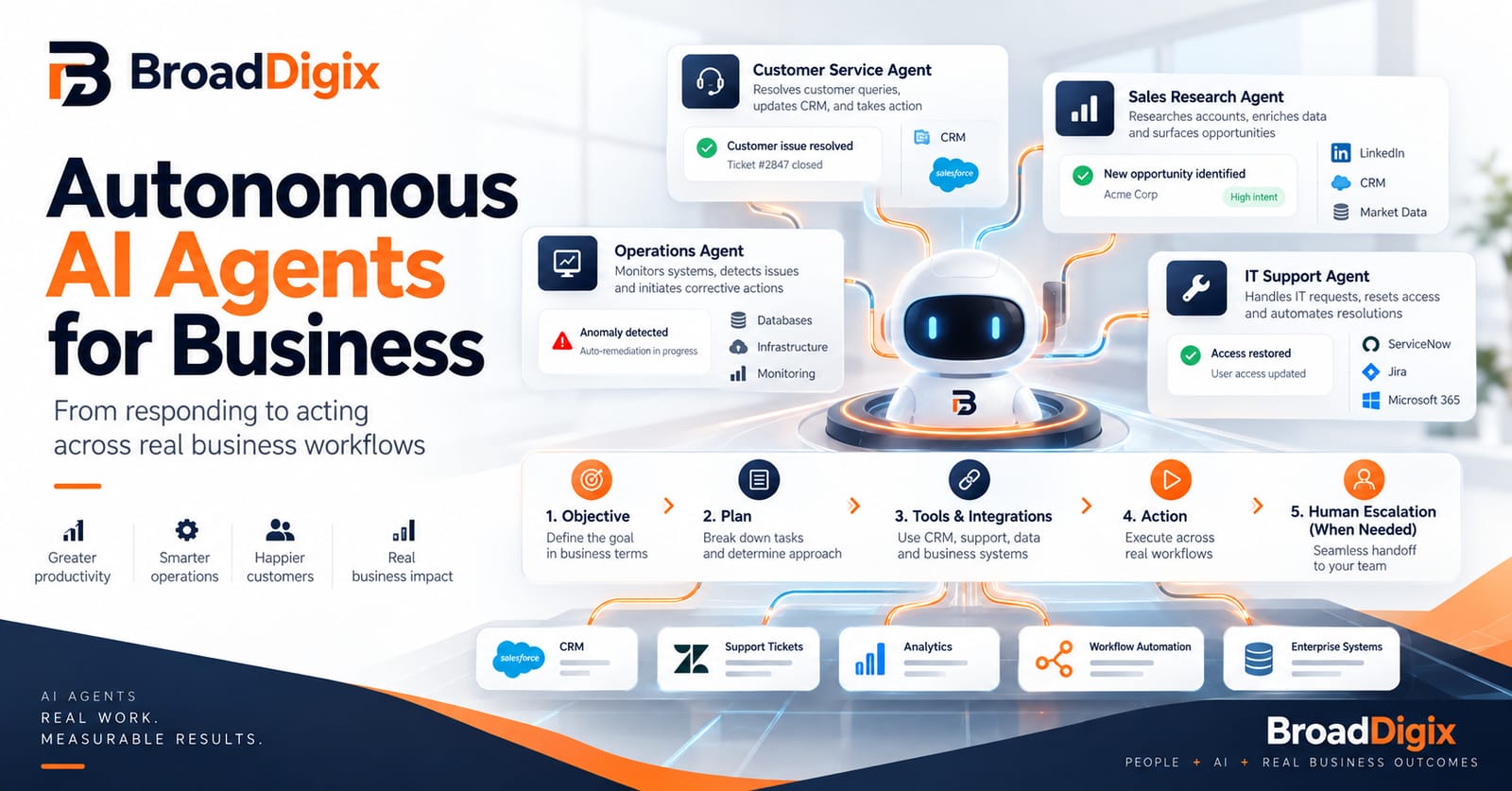
At the accessible level you have workflow automation. Processes that start automatically when something happens. A form gets filled out. A CRM record gets created an email is sent and a task is given to a team member. An invoice. It gets sent to the right person based on the amount and the supplier. A support ticket comes in. It gets sorted, given a priority and assigned based on its content. These are business automation solutions that most businesses can do without a lot of help and that give quick clear results.
Next level up is integration automation. Most businesses use systems that do not talk to each other. Sales data is in the CRM. Financial data is in the accounting system. Project details are in the project management tool. Customer support history is in the helpdesk platform. The manual work of making sure these systems match. Copying data, checking for errors updating information across tools. Is what business automation solutions that focus on system integration handle. Connect the systems and the information moves without anyone having to do it
At the advanced level you have AI-powered business automation solutions that can handle less structured inputs. Documents that come in formats and need data pulled from them. Customer messages that need to be sorted by topic and meaning before being sent to the person. Patterns that appear in amounts of data that no human could analyze manually. These abilities have become much easier to use in years and they expand what business automation solutions can do for companies that are not huge.
The question of where to begin
Every business that decides to go into business automation solutions faces the question. Where should we start.
The usual instinct is to start with the exciting process or the one that the most senior person in the room finds most annoying. Neither of these is a way to choose.
The right place to start with business automation solutions is the process that happens often has a pattern takes a lot of time and is not too complicated. You want to build confidence and show value with the one. A process that happens times each day follows the same steps takes meaningful time from staff and does not have so many exceptions that the automation becomes too hard to build is the best choice.
Early wins from business automation solutions implementations do two things. They provide value by saving time and reducing mistakes.. They build confidence in automation as a concept, which matters because later projects benefit from a team that has seen it work instead of one that is doubtful from the start.
What the real cost and benefits look like
Businesses thinking about business automation solutions often do not realize how expensive their current manual processes are because they have never actually done the math.
Take an example. Five people each spend on forty-five minutes a day on tasks that business automation solutions could handle. That is three hours and forty-five minutes of staff time each day. Over a working year that is a thousand hours. At any hourly cost that is a big number.
Business automation solutions that handle these tasks have a cost that is known and an ongoing cost that is predictable. The return on investment is not hard to figure out. Divide the implementation cost by the time saved and you get a payback period that is usually measured in months rather than years for the best business automation solutions projects.
What this math does not include is the obvious benefits. Fewer mistakes. Faster responses. Higher employee satisfaction because people are doing work that uses their skills of work that makes them feel like data entry clerks. Better customer service because automated processes are more consistent than ones. These benefits are real even if they are hard to measure.
The maintenance part
Business automation solutions are not something you set and forget. This is important to be clear about because solutions that do not plan for maintenance often fail over time.
Systems change. An API shifts and the integration that was working perfectly stops working. A process changes and the automation built around the version gives wrong results. A new edge case appears that was not considered during the setup and needs to be handled.
Business automation solutions without monitoring do not show these issues quickly. They produce failures that nobody notices until something goes wrong later. A report that has been wrong for three weeks. Customer records that stopped updating when the system changed its format. Approval requests that have been going to the person since a team change.
Monitoring and regular reviews are what separate business automation solutions that keep working from ones that slowly stop working until someone notices something is wrong.
The people side of automation
One thing that does not get attention in discussions about business automation solutions is what happens to the people whose work gets automated.
The best results happen when automation is introduced as something that removes the enjoyable parts of people’s jobs and lets them do more meaningful work rather than something that threatens their role. Teams that understand what business automation solutions are doing and why tend to work with them and point out problems quickly when something is not working.
Teams that have automation forced on them without explanation or involvement tend to avoid it blame it when something goes wrong and resist automation projects. The human side of automation is not an issue. It is a part of the project that affects whether the automation is used correctly and whether the business can keep improving it over time.
The way to go
Business automation solutions done well do not change a business overnight. They change it gradually one process at a time until the overall effect is big enough that people cannot imagine going to how things were before.
The businesses that get there are not the ones with the budgets or the most advanced tech. They are the ones that were honest about where their time went chose the processes to start with took the time to understand those processes properly before automating them and kept up with the maintenance once the automation was in place.
This approach is possible, for businesses of any size. The only thing needed to start is the willingness to actually look at where the time's going.