Online Anxiety Counselling in India - Student life is often described as one of the most exciting phases of life. It brings new experiences, friendships, opportunities and the chance to build a future. However, behind assignments, examinations, competitive exams and career decisions, many students experience emotional pressure that is not always visible to others.
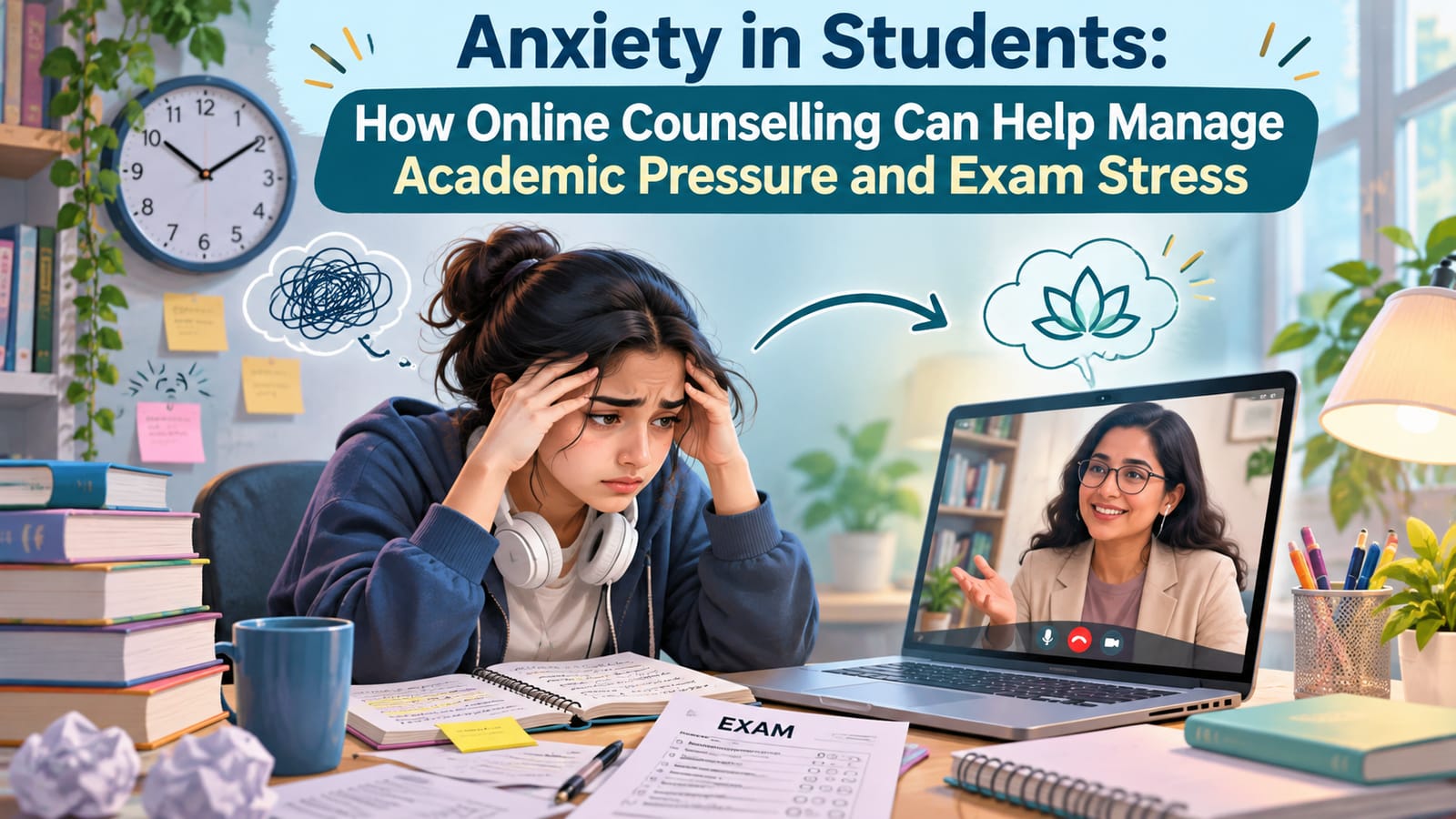
For some students, academic stress becomes more than temporary nervousness. Constant worrying about marks, fear of failure, parental expectations and uncertainty about the future can gradually affect concentration, confidence, sleep and everyday routines.
Anxiety among students deserves attention just as much as academic performance. Learning how to recognise emotional difficulties and seek appropriate support can make a meaningful difference. Online counselling is one option students can explore when they need a confidential space to discuss their concerns.
Online Anxiety Counselling in India Why Do Students Experience Anxiety?
Academic pressure is not the only reason students feel anxious. Several personal, social and environmental factors can contribute to emotional stress.
Some common triggers include:
Examination pressure: Fear of getting low marks or not meeting expectations.
Competitive environments: Comparing academic performance with classmates and friends.
Parental expectations: Feeling responsible for fulfilling family hopes and ambitions.
Career uncertainty: Worrying about college admissions, employment and future opportunities.
Financial concerns: Stress about education expenses, loans or family circumstances.
Social pressure: Difficulty fitting in, making friends or maintaining relationships.
Fear of failure: Believing that one disappointing result will affect the entire future.
Every student responds differently to these situations. What feels manageable to one person may feel overwhelming to another.
Common Signs of Anxiety Among Students
Students do not always recognise anxiety immediately. Sometimes, they assume that constant worrying is simply part of studying or preparing for examinations.
However, certain patterns may indicate that emotional support could be helpful.
1. Difficulty Concentrating
A student may sit with textbooks for hours but struggle to understand or remember information. Repeated thoughts about results, mistakes or upcoming examinations can interrupt concentration.
2. Overthinking Academic Performance
Some students continuously think about what might happen if they fail, disappoint their parents or receive fewer marks than expected.
3. Changes in Sleep Patterns
Stress may make it difficult to fall asleep, stay asleep or wake up feeling refreshed. Some students stay awake late because they cannot stop thinking about their responsibilities.
4. Physical Discomfort
Anxiety can sometimes be accompanied by physical experiences such as headaches, muscle tension, stomach discomfort, sweating or a racing heartbeat.
5. Avoiding Academic or Social Situations
A student may begin avoiding presentations, classroom discussions, examinations or social gatherings because these situations feel uncomfortable or frightening.
If these experiences are persistent or interfere with everyday life, speaking with a qualified mental health professional may help.
How Academic Pressure Can Affect Emotional Well-Being
Academic achievement is important, but it should not become the only measure of a student's worth.
When students feel that their entire future depends on every examination or assignment, they may develop unrealistic expectations of themselves.
This can create a difficult cycle:
A student worries about an upcoming examination.
Worry makes concentration more difficult.
Reduced concentration increases fear of performing poorly.
Fear creates further stress and disrupts daily routines.
Over time, this cycle may affect confidence, relationships and motivation.
Students need to understand that making mistakes, changing career plans or receiving disappointing results does not define their abilities or future potential.
How Online Counselling Can Support Students Experiencing Anxiety
Talking about emotional difficulties is not always easy, particularly when students worry about being judged or misunderstood.
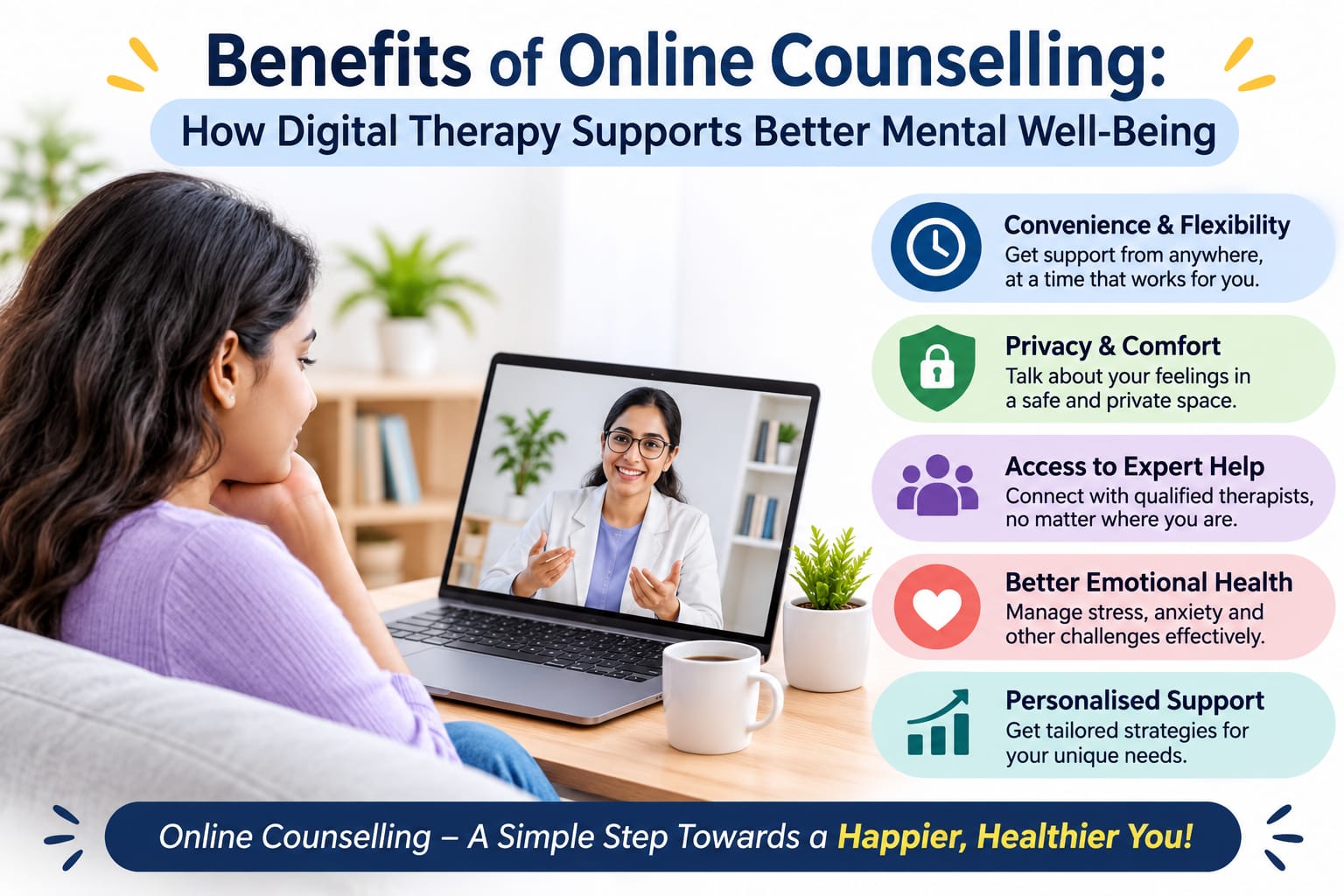
Online counselling offers an alternative way to connect with a qualified counsellor through digital communication. Students can discuss their concerns without needing to travel to a physical counselling centre.
Here are some ways professional counselling may support students.
1. Understanding Personal Anxiety Triggers
A counsellor can help students explore the situations, thoughts and experiences that contribute to their anxiety.
Understanding these triggers can make it easier to recognise emotional patterns and respond to stressful situations more thoughtfully.
2. Developing Healthier Ways to Handle Exam Stress
Counselling may help students explore practical approaches to managing examination-related worries, setting realistic expectations and responding to negative thoughts.
3. Building Confidence and Self-Awareness
Students sometimes connect their self-worth too closely with academic results. Counselling can provide an opportunity to examine these beliefs and develop a more balanced perspective.
4. Managing Overthinking
Repeated worrying about past mistakes or future outcomes can make everyday activities difficult.
A mental health professional may introduce suitable techniques to help students recognise unhelpful thought patterns and develop healthier responses.
5. Finding Space to Discuss Personal Concerns
Not every student feels comfortable discussing emotional struggles with parents, teachers or friends.
A counselling session can provide a supportive setting where students can talk openly about their experiences.
Practical Ways Students Can Manage Everyday Academic Stress
Professional support can be valuable, but everyday habits also play a role in emotional well-being.
Students can consider the following practices:
Create a realistic study schedule: Divide larger subjects into smaller tasks. A manageable plan can feel less overwhelming than trying to complete everything at once.
Take regular breaks: Continuous studying without rest can make it harder to maintain attention. Short breaks can help students return to their work with greater focus.
Maintain a consistent sleep routine: Adequate rest supports concentration, memory and general well-being.
Reduce unnecessary comparisons: Every student has different strengths, circumstances and learning patterns. Another person's academic progress is not a measure of your own potential.
Stay connected with supportive people: Talking with a trusted friend, family member, teacher or mentor can help students feel less isolated.
Make time for enjoyable activities: Hobbies, physical activity and relaxation can provide a healthy balance alongside academic responsibilities.
These habits are not a substitute for professional care when anxiety is persistent or significantly affecting daily life.
When Should a Student Consider Professional Counselling?
Feeling nervous before an examination or worrying about an important result is common. However, students may benefit from professional support when anxiety becomes difficult to manage.
Consider speaking with a qualified mental health professional if:
Worrying continues even when there is no immediate academic pressure.
Anxiety regularly affects sleep, concentration or appetite.
Fear prevents participation in classroom or social activities.
Physical symptoms repeatedly appear during stressful situations.
Emotional distress affects relationships and everyday responsibilities.
The student feels unable to manage their thoughts independently.
A counsellor can help understand the student's experiences and discuss appropriate support options. A proper assessment is important because anxiety symptoms can have different causes.
Why Some Students Prefer Online Counselling
For students balancing classes, examinations, internships and personal responsibilities, arranging an in-person appointment may sometimes be difficult.
Online counselling can offer practical advantages:
Convenience: Sessions can be attended remotely, subject to the counsellor's availability and platform arrangements.
Accessibility: Students may connect with professionals without travelling to another location.
Flexible communication: Video and audio sessions provide different ways to participate.
A private setting: Students can choose a suitable place where they feel comfortable speaking.
Continued support: Some counselling services may offer additional communication options between sessions.
Before choosing a service, students should check the counsellor's qualifications, confidentiality arrangements, session details and suitability for their needs.
Finding the Right Support with ClarityHope
Taking the first step towards emotional support can feel difficult, especially when a student has spent a long time keeping their worries private.
ClarityHope provides private online counselling sessions that allow individuals to connect with counsellors through video or audio. The platform also offers chat-based communication options, subject to its service arrangements.
Students who are experiencing persistent worry, academic pressure or emotional difficulties can explore Online Anxiety Counselling in India to learn more about available counselling support.
Seeking help does not mean a student is weak or incapable. It means recognising that emotional well-being deserves attention alongside education, career goals and personal development.
Final Thoughts
Academic success is only one part of a student's journey. Emotional well-being, confidence, healthy relationships and personal growth are equally important.
Students should not feel that they must manage every worry alone. Recognising anxiety, building healthy routines and speaking with a qualified professional when needed can help them approach academic and personal challenges with greater understanding.
The goal is not to eliminate every stressful experience. It is to develop healthier ways of responding to difficulties while remembering that one examination, one result or one setback does not determine an entire future.
Frequently Asked Questions
1. Is anxiety common among students in India?
Students may experience anxiety due to examinations, competition, family expectations, financial concerns and uncertainty about their careers. The intensity and impact vary from person to person.
2. Can online counselling help students manage exam stress?
Online counselling can provide a supportive environment to discuss examination worries, understand stress triggers and explore appropriate coping strategies with a qualified professional.
3. When should students seek counselling for anxiety?
Students should consider professional support when anxiety persists, becomes difficult to manage or interferes with sleep, concentration, relationships or everyday activities.
4. Can students attend counselling sessions from home?
Online counselling services may allow students to connect with counsellors remotely through video or audio, depending on the platform's available arrangements.
5. Does academic anxiety mean a student has an anxiety disorder?
No. Experiencing academic stress or occasional nervousness does not automatically mean someone has an anxiety disorder. A qualified mental health professional can assess persistent symptoms and discuss appropriate support.
6. How can parents support students experiencing anxiety?
Parents can listen without judgement, avoid excessive comparisons, acknowledge their child's feelings and encourage professional support when needed.
7. Is online counselling suitable for every student?
It depends on the student's age, needs, circumstances and the type of support required. A qualified professional can help determine whether online sessions are appropriate. Students experiencing an immediate crisis need urgent local support rather than relying on routine online counselling.