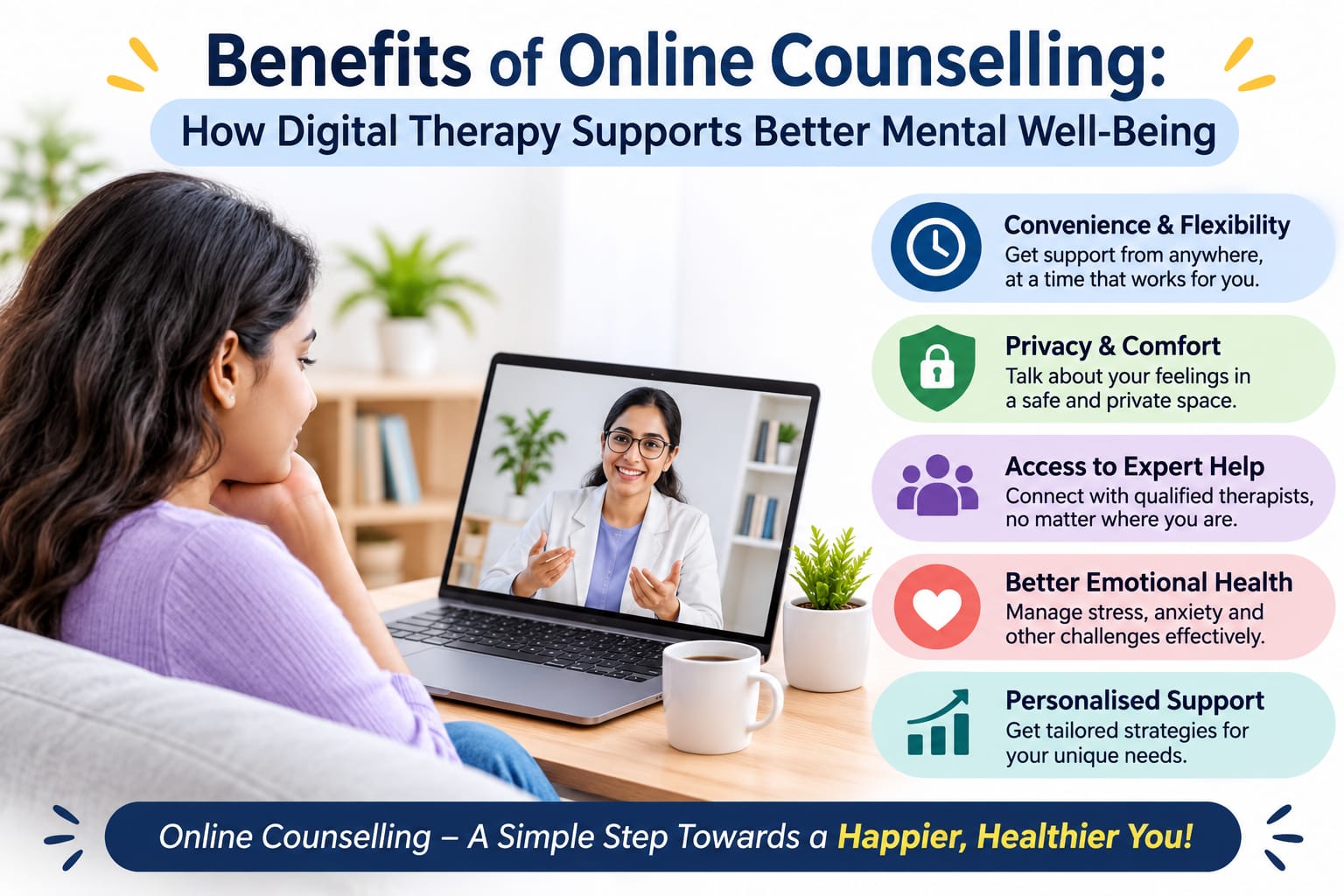
Benefits of online counselling - Introduction
Benefits of online counselling Family plays an important role in shaping our emotional well-being, personal values and everyday experiences. A supportive family environment can provide comfort, encouragement and a sense of belonging. However, disagreements, misunderstandings, generational differences and communication gaps can sometimes create tension within families.
Even families with strong relationships may experience difficult periods. Unresolved conflicts, financial pressures, parenting responsibilities and changing expectations can affect how family members communicate with one another.
Online counselling for family issues offers an opportunity to explore these concerns with professional guidance. It can help individuals understand their emotions, reflect on relationship patterns and develop healthier ways to communicate.
In this article, we explore common family challenges, how counselling may help and practical ways to build stronger family relationships.
Understanding Common Family Issues - Benefits of online counselling
Every family has its own values, expectations and communication styles. While disagreements are a normal part of relationships, recurring conflicts can sometimes affect emotional well-being.
Here are some common family challenges.
1. Communication Gaps
Poor communication can lead to misunderstandings and unnecessary arguments. Sometimes, family members may find it difficult to express their feelings or explain what is bothering them.
Over time, unspoken concerns can create emotional distance.
2. Generational Differences
Different generations may have different expectations regarding education, careers, relationships, lifestyle and personal independence.
These differences can lead to disagreements, particularly when family members struggle to understand each other's perspectives.
3. Parenting Challenges
Parenting involves several responsibilities, including supporting children's emotional development, managing behaviour and balancing family expectations.
Parents may experience stress when they disagree about parenting approaches or find it difficult to communicate with their children.
4. Financial Pressure
Financial responsibilities can sometimes create tension within families. Discussions about expenses, savings, debt and household responsibilities may become sources of disagreement.
5. Relationship Conflicts Between Family Members
Differences in opinions, unresolved disagreements and personal expectations can affect relationships between siblings, parents, adult children and other relatives.
Understanding the reasons behind these conflicts is an important step towards improving family communication.
What Is Online Counselling for Family Issues?
Online counselling is a professional support service delivered through digital communication platforms.
Individuals can connect with counsellors through available online formats, such as video or audio sessions, without travelling to a physical counselling centre.
When dealing with family-related concerns, counselling may help individuals:
Understand recurring communication problems.
Explore emotional reactions during disagreements.
Recognise personal expectations and boundaries.
Develop healthier conflict-resolution skills.
Improve the way they express feelings and concerns.
Reflect on their role in family relationships.
Depending on the provider, counselling may be offered to individuals or families. Confirm whether joint family sessions are available before booking if multiple family members want to participate.
How Online Counselling Can Help With Family Problems
Professional counselling can provide a supportive environment to understand difficult family situations and explore constructive ways forward.
1. Improving Communication Between Family Members
Communication is one of the foundations of healthy relationships.
Counselling may help individuals understand how their words, reactions and assumptions influence conversations. It can also encourage active listening and respectful expression.
For example, instead of reacting immediately during an argument, a person may learn to explain their feelings calmly and listen to the other person's perspective.
2. Understanding Emotional Triggers
Certain conversations or situations may repeatedly lead to arguments.
Counselling can help individuals identify these emotional triggers and understand why particular situations create frustration, sadness or anxiety.
Recognising these patterns may make it easier to respond thoughtfully rather than react impulsively.
3. Developing Healthy Personal Boundaries
Family relationships often involve shared responsibilities and expectations. However, maintaining healthy personal boundaries is also important.
Counselling may help individuals understand how to communicate their needs respectfully, protect their personal space and manage situations where expectations become overwhelming.
4. Managing Family-Related Stress
Ongoing disagreements and responsibilities can contribute to emotional stress.
Speaking with a counsellor may provide an opportunity to discuss these experiences, understand their emotional impact and explore practical coping strategies.
5. Building Better Understanding
Family members may interpret the same situation differently because of their individual experiences and expectations.
Counselling can encourage reflection and help individuals consider different perspectives without automatically dismissing their own feelings.
The Role of Counselling in Parent-Child Relationships
Parent-child relationships change as children grow and develop independence.
Parents may want to protect their children, while children and teenagers may want greater freedom to make their own decisions. These differences can sometimes create misunderstandings.
Counselling may help parents and children explore:
Differences in expectations.
Academic and career-related pressure.
Emotional expression and listening.
Personal independence and responsibility.
Healthy ways to discuss disagreements.
When children or teenagers are involved, it is important to choose an appropriately qualified professional who understands their developmental needs and safeguarding requirements.
Practical Ways to Build Stronger Family Relationships
Professional support can be useful, but everyday habits also play an important role in maintaining healthy family relationships.
1. Practise Active Listening
Give family members time to explain their thoughts without interrupting. Listening carefully can help reduce misunderstandings and make conversations more productive.
2. Avoid Blaming Language
Statements that begin with accusations can make others defensive.
Instead of saying, "You never understand me," try explaining how a particular situation made you feel.
3. Respect Individual Differences
Family members do not always need to agree on everything. Respecting different opinions can help create a more accepting environment.
4. Spend Quality Time Together
Simple activities such as sharing meals, going for walks or having regular conversations can help strengthen emotional connections.
5. Discuss Problems at the Right Time
Avoid starting difficult conversations when everyone is already frustrated or emotionally overwhelmed. Choosing a calmer moment can make discussions more constructive.
6. Appreciate Small Efforts
Acknowledging each other's contributions and showing gratitude can help create a more positive family environment.
7. Seek Professional Support When Needed
If family conflicts continue despite repeated efforts to resolve them, speaking with a qualified counsellor may help individuals understand the situation and explore appropriate next steps.
When Should You Consider Online Counselling for Family Issues?
Not every family disagreement requires professional support. However, counselling may be worth considering when recurring problems begin affecting everyday life.
You may consider seeking support if:
Family arguments happen frequently.
You feel emotionally exhausted by family responsibilities.
Communication has become increasingly difficult.
You struggle to express your feelings at home.
Generational differences create ongoing tension.
Family conflicts affect your sleep, concentration or work.
You find it difficult to establish personal boundaries.
You want to understand your reactions within family relationships.
If there is violence, abuse or an immediate safety concern, prioritise safety and seek appropriate local emergency or specialist support rather than relying on routine online counselling.
Why Explore Online Counselling With ClarityHope?
Finding a comfortable environment to discuss personal and emotional concerns can make seeking support easier.
ClarityHope provides private one-to-one wellness sessions through online formats, including video and audio. These sessions offer an opportunity to explore personal experiences and emotional concerns with a counsellor.
If family-related stress, communication difficulties or personal challenges are affecting your well-being, you can explore the Benefits of online counselling and learn more about available online support.
Before choosing a service, review counsellor information, qualifications, session arrangements and privacy policies to understand whether the available support matches your requirements.
Frequently Asked Questions (FAQs)
1. Can online counselling help with family problems?
Online counselling may help individuals understand family-related stress, explore communication difficulties and develop healthier ways to manage relationship concerns.
2. Can I attend online counselling without my family members?
Yes. Individual counselling allows you to discuss your personal experiences and concerns even if other family members do not participate.
3. Does family counselling require everyone to attend?
Not necessarily. Some services offer individual sessions, while others provide joint family sessions. Availability depends on the provider.
4. Can counselling improve parent-child communication?
Counselling may help parents and children understand different perspectives, communicate more clearly and explore constructive ways to manage disagreements.
5. Is online counselling suitable for family-related stress?
It may be suitable for individuals who want to explore family-related emotional concerns through remote sessions. The appropriate format depends on the seriousness and nature of the situation.
6. How do I prepare for an online counselling session?
Think about the concerns you want to discuss, choose a quiet and private location, check your internet connection and prepare any questions you may have.
7. Can counselling help with generational differences?
Counselling may help individuals understand differences in expectations, values and communication styles while exploring respectful ways to manage disagreements.
Conclusion
Healthy family relationships require communication, patience, understanding and mutual respect. Although disagreements are a normal part of family life, recurring conflicts can sometimes affect emotional well-being and personal relationships.
Online counselling can provide a supportive opportunity to explore family-related concerns, understand emotional patterns and develop healthier communication habits.
Whether you are dealing with generational differences, parenting concerns or ongoing misunderstandings, taking time to understand the situation can be an important step towards positive change.
Remember, building stronger family relationships does not mean avoiding every disagreement. It means learning how to approach differences with understanding, respect and appropriate support.