You walk into the kitchen and find a line of ants marching from the window to the sugar bowl. The natural reaction is to grab a spray and wipe them out. Within minutes the counter looks clean. Then the next morning, the line is back. If that sounds familiar, the problem is not that the spray failed. It is that sprays and baits do very different jobs, and indoor ants usually need the one that works more slowly.
How Ant Sprays Work
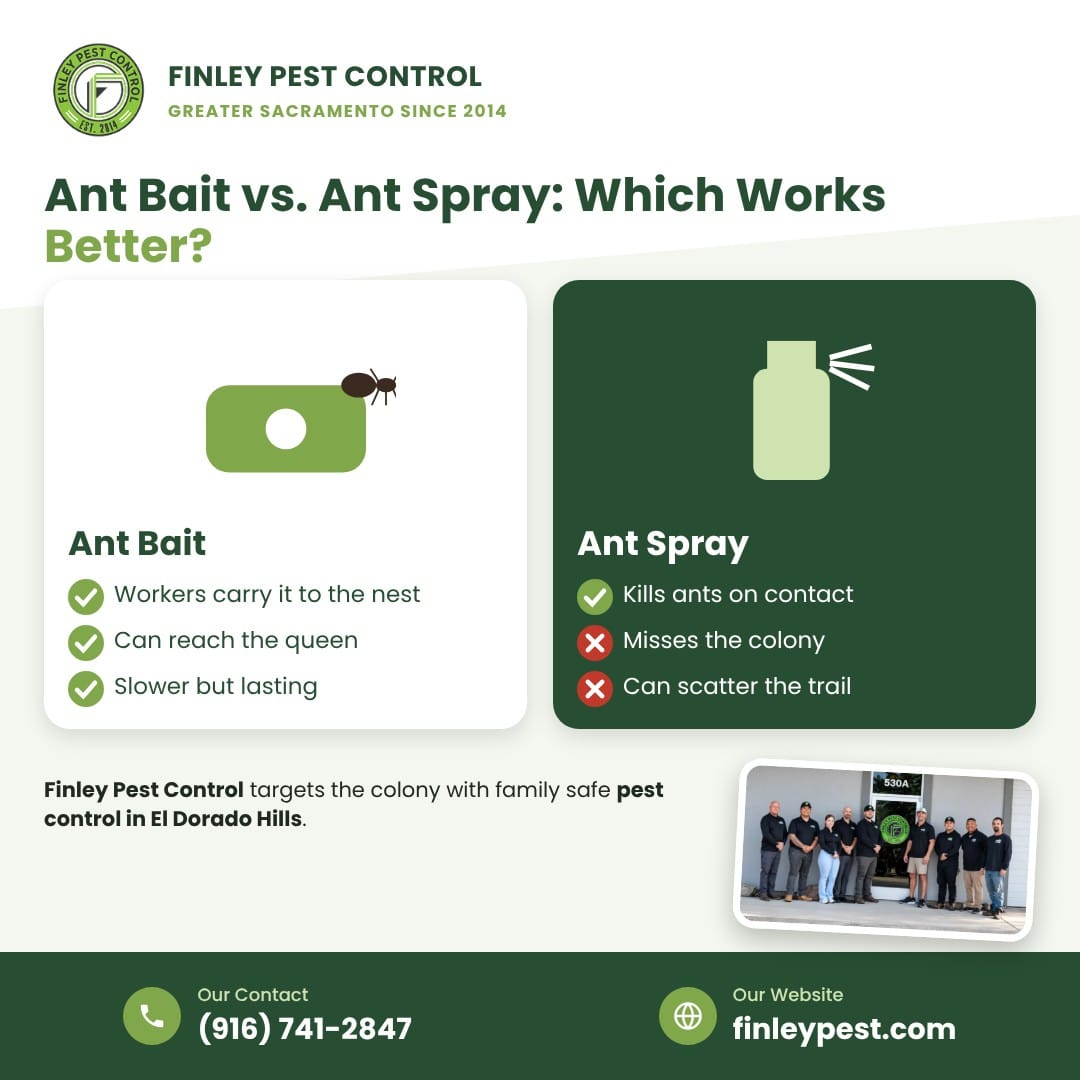
Most household ant sprays are contact products. They kill the ants they touch, and some leave a residue that kills ants crossing the treated surface for a while afterward. That makes them satisfying to use, because you see results right away.
The catch is that the ants you see are only a small part of the colony. Foraging workers are out looking for food, while the queen, eggs, larvae and many more workers stay hidden in the nest, which may be outside, under a slab or inside a wall void. Killing the foragers does not affect the nest. The colony simply sends out more workers.
The UC Statewide IPM Program's ant guide puts it plainly: spraying ants indoors will not prevent more ants from entering. Sprays can also scatter a trail, sending ants into new parts of the house and making the problem harder to track.
How Ant Baits Work
Ant baits combine food the ants want with a slow acting insecticide. Instead of killing ants on contact, baits are designed to be carried home. According to NC State Extension, worker ants find the bait, carry small amounts back to the nest and share it with other workers, the queen and the developing young. If enough bait is consumed, the whole colony can be eliminated.
That is why baits often seem slower. You may see more ants at first, as workers recruit others to the new food source. Ants can keep appearing for a week or more while the bait works its way through the colony. UC IPM notes that when properly used, baits are more effective and safer than sprays.
Bait vs. Spray at a Glance
Speed: sprays kill visible ants immediately; baits take days to a few weeks.
Reach: sprays affect only ants they contact; baits reach the nest and the queen.
Long term results: sprays rarely stop the problem; baits can eliminate the colony.
Indoor use: sprays leave residues on surfaces; baits are placed in small amounts or in enclosed stations.
Risk of scattering: sprays can split trails and spread ants; baits keep ants focused on one spot.
How to Use Ant Baits the Right Way
Baits only work if ants actually eat them, so placement and patience matter.
Follow the trail. Place bait near the trail but not directly on it, close to where ants enter the room.
Match the bait to the ant. Some ants prefer sweets, others prefer protein or grease. If ants ignore the bait, try a different type.
Remove competing food. Clean up crumbs, wipe sticky spots and seal food containers so the bait is the most attractive option.
Do not spray near the bait. Sprays contaminate bait and kill the workers that would carry it home.
Be patient and check the label. Keep baits away from children and pets and follow the label directions exactly.
When a Spray Still Makes Sense
Sprays are not useless. A targeted outdoor treatment applied by a professional around the foundation can reduce the number of ants trying to get in, especially in spring and summer. The key is using the right tool in the right place, and indoors, baits combined with prevention usually work best.
Prevent Ants from Coming Back
Even the best bait will not help if the home stays inviting. Seal gaps around windows, doors and utility lines where ants enter. Keep food in sealed containers, rinse recyclables, and empty kitchen trash regularly. Fix leaky faucets and pipes, since many ants are looking for water as well as food. Trim plants and branches so they do not touch the house and give ants a bridge inside.
For more on identifying ant species and keeping them out, see our guide to ant control: identify, prevent and eliminate infestations.
When to Call a Professional
If ants keep coming back after a few weeks of baiting, if you see ants in several rooms, or if you suspect a nest inside a wall, it is time for help. A professional can identify the species, find the nest, and combine baiting, exclusion and outdoor treatment into one plan.
Stop Indoor Ants with Finley Pest Control
If you are tired of wiping up the same ant trail every morning, Finley Pest Control can help. Our licensed, locally owned team has served the Greater Sacramento area since 2014 and provides pest control in El Dorado Hills with family safe ant treatments that target the colony, not just the trail. From a pest inspection El Dorado Hills homeowners can rely on to ongoing pest control services El Dorado Hills families trust, we will build a plan that fits your home. Contact us today for a free estimate.
Read More
#AntControl #AntBait #PestControl #ElDoradoHillsPestControl #ElDoradoHills #HomeTips #FinleyPestControl