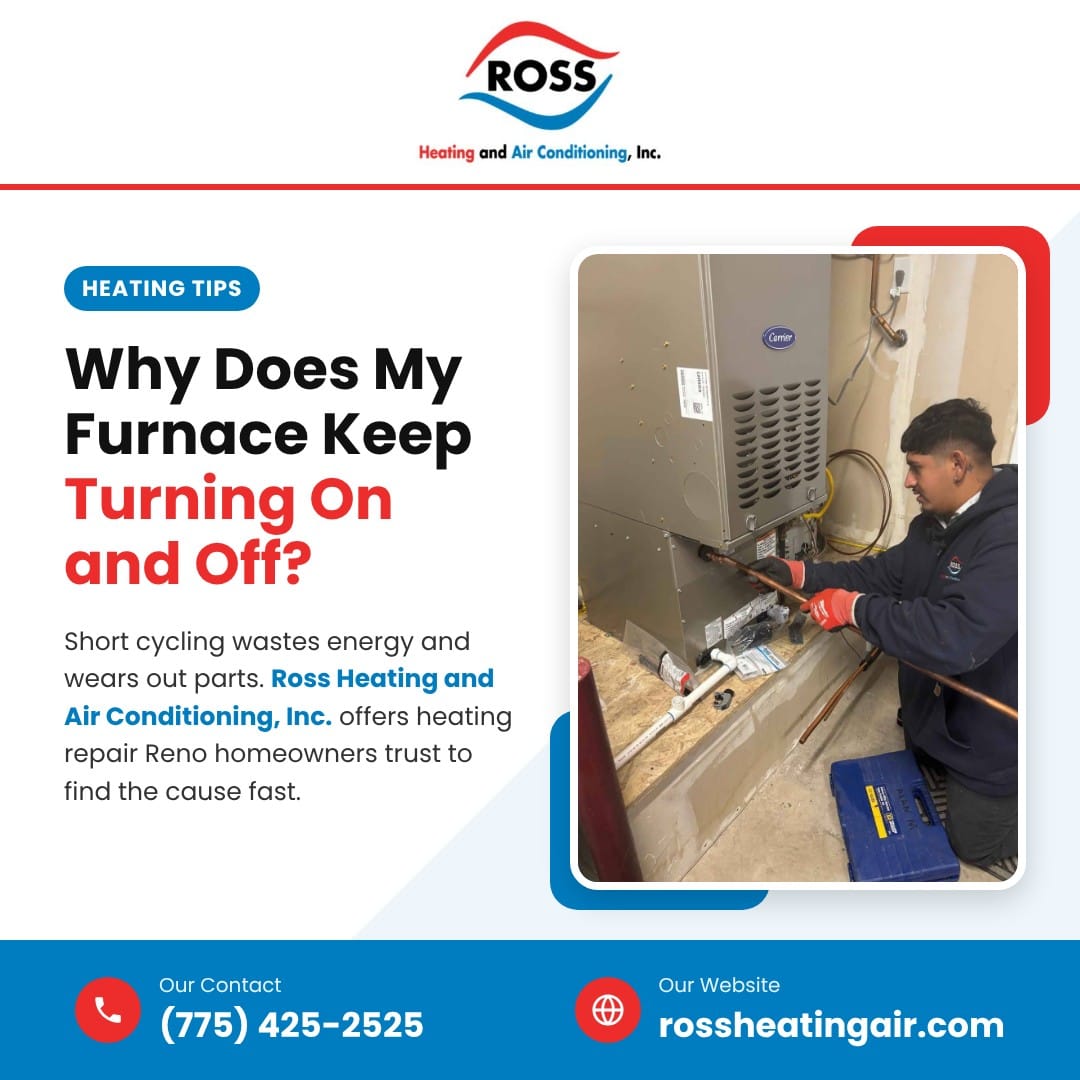
A furnace that starts, runs for a minute or two, and then shuts off again is doing something technicians call short cycling. It is one of the most common reasons homeowners call for heating repair, and it is worth taking seriously. Short cycling wastes energy, makes rooms feel uneven, and puts extra wear on parts that are built to run in longer, steadier cycles.
The good news is that the cause is often easy to narrow down once you know what to look for.
What Short Cycling Looks Like
Every furnace turns on and off through the day. The difference is in the length of each cycle. A healthy heating system usually runs long enough to bring the room up to the set temperature before resting. Short cycling looks more like this:
The burners light and the blower starts, then everything shuts down within a few minutes.
The house never quite reaches the temperature on the thermostat.
You hear the system click on and off far more often than usual.
Your energy bills climb even though the house does not feel warmer.
Common Causes of Short Cycling
Several different problems can make a furnace behave this way. Some are simple, and some need a trained technician.
A clogged air filter. When airflow is restricted, the furnace can overheat. A safety switch then shuts the burners off to protect the equipment.
A dirty flame sensor. If the sensor cannot confirm the flame, the furnace shuts the gas off as a safety measure and tries again.
Thermostat placement. A thermostat near a supply vent, a sunny window or a drafty door reads the wrong temperature and stops the cycle too early.
An oversized furnace. A unit that is too large for the home heats the space too quickly and shuts off before air has circulated. ENERGY STAR notes that oversized units tend to have shorter lives because of short cycling.
Blocked vents or exhaust. Closed registers inside or a blocked flue outside can also trigger safety shutdowns.
Why Short Cycling Should Not Be Ignored
It can be tempting to live with a furnace that cycles too often, as long as the house stays somewhat warm. The problem is that every start puts stress on the igniter, blower motor and control board. A system that starts dozens of extra times a day wears those parts out much faster than normal. Short cycling can also be a sign that a safety control is doing its job and shutting the furnace down for a reason, such as overheating. Finding that reason early protects both your comfort and your equipment.
What You Can Safely Check Yourself
Start with the easy items. Replace the air filter if it looks gray or dusty, make sure every supply and return vent is open, and check that nothing is sitting close to the thermostat that could throw off its reading. If your thermostat runs on batteries, put in fresh ones.
If the cycling continues after those steps, stop there. Flame sensors, limit switches and venting all involve gas and electrical components, and they are best handled by a professional heating service. For more early warning signs, our article Pro Tips to Watch for Heating System Issues This Fall is a helpful read.
Why Regular Heating Maintenance Helps
Many of the problems behind short cycling build up slowly. Dust collects on the flame sensor, filters fill up, and small electrical issues get worse over a season of heavy use. Routine heating maintenance gives a technician the chance to clean and test these parts before they cause trouble. ENERGY STAR recommends having the heating system checked in the fall, before contractors get busy and before the coldest weather arrives.
A tune-up is also a good time to ask whether your furnace is the right size for your home. If it is not, a technician can explain your options.
Get Your Heat Running Smoothly Again
If your furnace keeps turning on and off, Ross Heating and Air Conditioning, Inc. can find the cause and get your system back to steady, reliable heat. Our team provides heating repair Reno homeowners trust, with experience handling the dry air, dust and cold snaps that are hard on local equipment. We offer 24/7 emergency and same day service, so you do not have to wait out a cold night. Contact us today to schedule a visit.
Read More:
#HeatingRepair #FurnaceRepair #RenoNV #HeatingService #HomeHeating #WinterReady