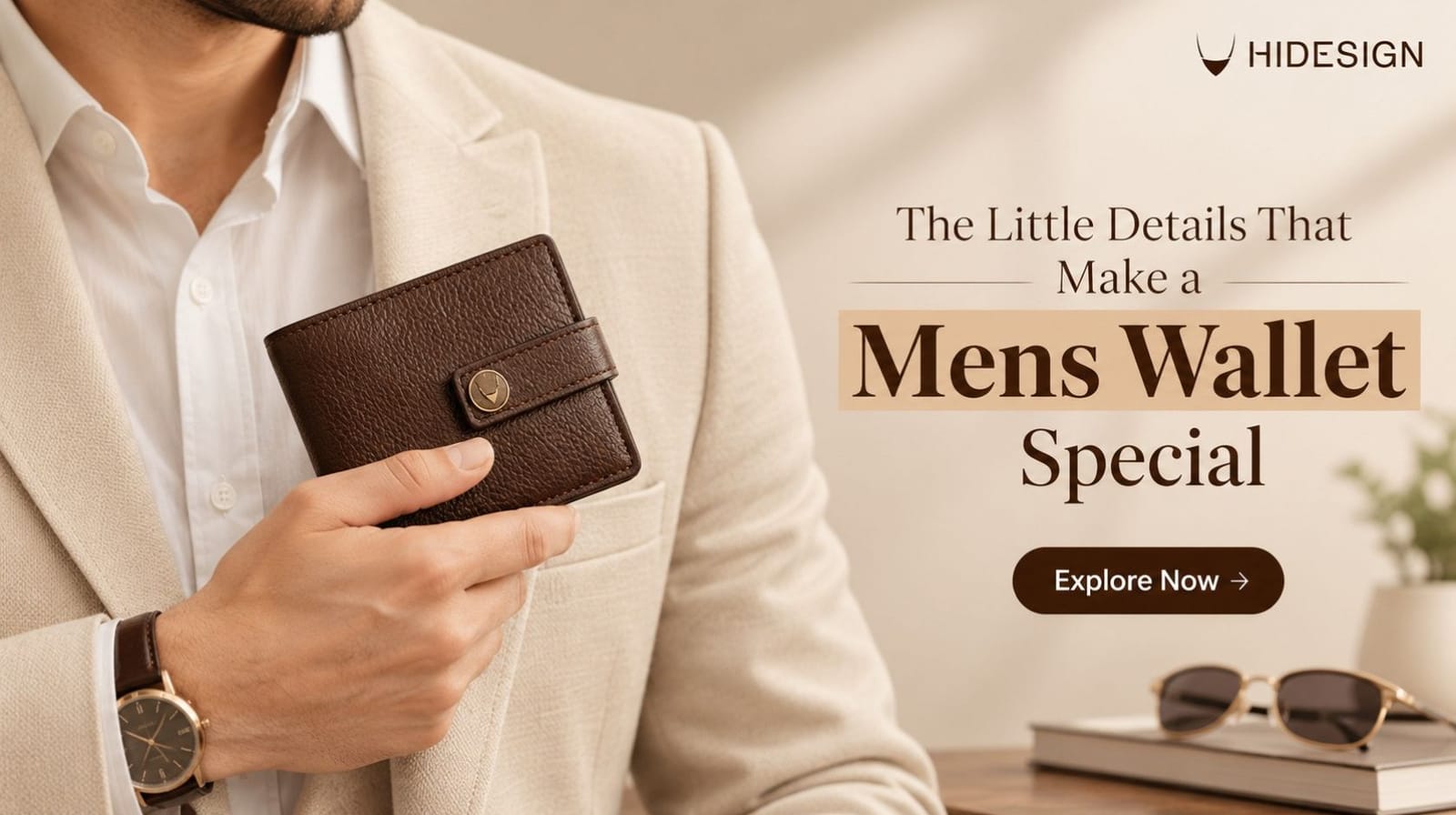
You touch your wallet more than almost anything else you own. Pocket, counter, pocket again. Maybe thirty times a day, without ever really looking at it.
That is exactly why the small things matter. A mens wallet does not win you over with a big feature. It wins you over (or slowly annoys you) through a hundred tiny details: how the edge feels under your thumb, whether the cards slide out cleanly, whether the stitching still looks sharp in year three.
Let us look at those details one by one, because once you notice them, you cannot stop.
The Edge Is the First Thing to Fail
Run your thumb along the side of your wallet. Is it smooth and slightly glossy, or fuzzy and flaky?
On a well-made mens leather wallet, the edges are sanded, sealed, and burnished until they feel almost polished. That takes patience and extra steps. Budget wallets skip all of it and paint over the raw cut, and the paint cracks within months.
Good sign: a smooth, rounded edge that feels like one solid piece.
Warning sign: a thick plastic-looking line, or tiny threads poking out.
Stitching: Count It, Do Not Just Look at It
Stitching is where wallets quietly give up. Every time you sit down, your wallet bends. Weak thread loosens, and then a corner starts opening.
Look for these three things:
Tight, even stitches. Gaps or wobbles mean the maker was rushing.
Reinforced corners. Stress builds at the corners and at the top of each card slot.
Clean thread ends. No loose strands hanging around.
Tiny details, but they decide whether a wallet lasts two years or ten.
What the Leather Is Really Called
Leather labels can be confusing, so here is the short version.
Genuine Leather vs Pure Leather
A genuine leather wallet means it's made from real hide, not plastic. A pure leather wallet for men usually signals the same promise of real hide, but the grade inside that label still varies. Full-grain sits at the top because it keeps the hide's natural surface. Lower grades are sanded, pressed, and coated, which looks tidy at first and ages badly.
Hidesign has worked with full-grain, vegetable-tanned leather since 1978. That slow tanning process lets leather soften and deepen with use instead of cracking. If you want the best leather wallet for men, the hide grade is the first thing to ask about.
The Card Slot Test
Here is a thirty-second test you can do in any shop:
Slide a card in and out five times.
Check that the slot grips it firmly without scraping.
New leather is a little tight, and that is fine. Leather that is already loose on day one will only get worse.
Why a Zip Can Be Your Best Friend
A bifold is classic, but a mens zipper wallet solves a problem nobody warns you about: coins, keys, and receipts escaping into the wrong pocket.
Look for a metal zip that glides in one smooth motion, fabric tape stitched flat, and a pull tab sturdy enough to grab with one hand. It suits travel days, when you carry boarding passes, foreign notes, and loose change all at once.
Color and Finish: Where Personality Lives
The Mens Black Wallet
A mens black wallet seems like the simplest option, yet it relies on deep dye. If only the surface is coloured, scratches show a lighter shade underneath. When the dye soaks through the leather, a black wallet ages into a rich, dark tone that suits a suit and jeans equally.
Unique Wallets for Men
If you want something less expected, look at the leather itself instead of loud branding. Unique wallets for men often come from natural grain patterns, hand-finished edges, a surprising tan with a warm undertone, or a coloured lining that only you know about.
What "Luxury" Should Actually Mean
A luxury mens wallet is not defined by a gold logo. It is defined by the details you notice over time. A premium mens wallet should feel slightly heavier in the hand, hold its shape when empty, and look better after a year in your pocket than on the day you bought it.
That is the standard a Hidesign mens wallet is built around: real leather, careful finishing, and details that hold up to daily life, without a sky-high price tag.
Your Five-Minute Checklist
Before buying any wallet, run through this:
Smell it. Real leather smells warm and earthy, not like plastic.
Press the surface. Genuine leather wrinkles lightly, then relaxes.
Check the edges and corners for neat finishing.
Test every slot, zip, and fold.
Ask whether it fits how you actually carry things: slim for front pockets, roomy for bags.
The Takeaway
The best wallet is the one you stop thinking about, because every little detail has been quietly handled. Cards slide out, the edges stay smooth, the leather grows richer with age.
Next time you pick one up, do the thumb test first. Then see what that care looks like at hidesign.com.