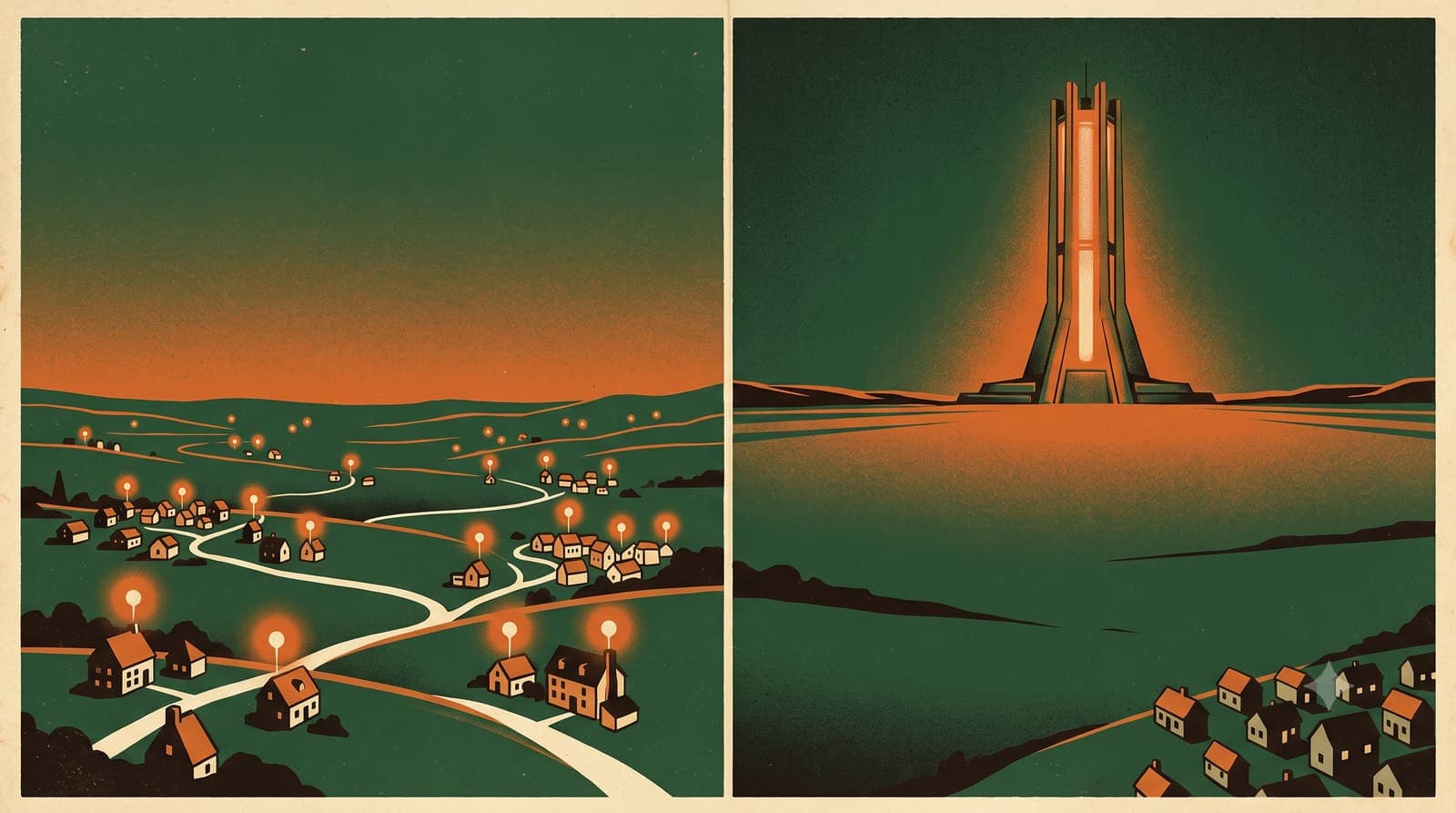
The architecture of the internet is shifting. For decades, the trend was "to the cloud"—centralizing data, intelligence, and storage in massive, distant data centers. But as we enter 2026, the sheer volume of data generated by IoT devices, autonomous systems, and real-time AI has exposed a fundamental flaw in total centralization: latency.
To build high-performance applications today, you must decide where your code lives. Does it stay in a massive data center 1,000 miles away, or does it move to the "edge" of the network, inches from the user?
Understanding Cloud Computing: The Powerhouse
Cloud computing is the delivery of computing services—including servers, storage, databases, networking, and software—over the internet. Providers like AWS, Azure, and Google Cloud offer nearly infinite scalability and high-level abstract services (like Managed Kubernetes or AI Training clusters).
Key Characteristics of the Cloud
Centralization: Data is processed in a few massive regional hubs.
High Capacity: Ideal for heavy lifting, such as training large language models or big data analytics.
Cost-Efficiency (at rest): It is generally cheaper to store petabytes of data in S3 than on localized hardware.
Understanding Edge Computing: The Quick Reflex
Edge computing is a distributed computing paradigm that brings computation and data storage closer to the sources of data. Instead of sending a request across the country, the "Edge" processes it on a local gateway, a smart device, or a Content Delivery Network (CDN) node located in the same city as the user.
Key Characteristics of the Edge
Proximity: Processing happens at the "edge" of the network, reducing the physical distance data must travel.
Low Latency: Crucial for applications where milliseconds determine success or failure.
Bandwidth Optimization: Not every byte needs to go to the cloud. Filtering data locally saves massive amounts of outgoing bandwidth.
The Core Technical Differences
To choose the right stack for your next project, you need to understand how these two paradigms differ across key performance metrics.
Feature
Cloud Computing
Edge Computing
Latency
High (50ms - 200ms+)
Ultra-low (<10ms)
Bandwidth
High consumption (all data travels)
Low consumption (local processing)
Data Volume
Best for massive datasets
Best for real-time streams
Security
Centralized, easier to monitor
Distributed, complex attack surface
Maintenance
Managed by provider
Requires managing distributed nodes
When to Use the Cloud
The cloud remains the king of storage and deep intelligence. If your application falls into these categories, the cloud is your primary home:
Big Data Analytics: Processing years of historical logs to find trends.
Machine Learning Training: You don't train a GPT-4 on the edge; you need the massive GPU clusters of a data center.
Non-Time-Sensitive Backups: Off-site storage where a 500ms delay in upload doesn't impact user experience.
Standard Web Apps: Simple CRUD applications where a slight delay in loading a profile page is acceptable.
When the Edge is Non-Negotiable
As we integrate technology more deeply into the physical world, the "round-trip" to the cloud becomes a bottleneck. Edge computing is mandatory for:
Autonomous Vehicles: A self-driving car cannot wait 200ms for a cloud server to tell it to brake. The "inference" must happen locally.
Industrial IoT (Industry 4.0): Smart factories use sensors to detect machine failure. Stopping a turbine must happen instantly at the source.
Augmented/Virtual Reality (AR/VR): High latency in VR causes motion sickness. Rendering and motion tracking must stay close to the headset.
Content Delivery (Next.js/Vercel): Using Edge Functions to personalize content or check authentication at the CDN level ensures the fastest First Contentful Paint (FCP).
The Hybrid Reality: A Symbiotic Relationship
It is a mistake to view this as a "winner takes all" battle. In modern software architecture, the most robust systems use a Hybrid Approach.
The Workflow of a Hybrid System
The Edge handles immediate actions, filters noise, and provides instant UI feedback.
The Cloud receives summarized data from the Edge to perform long-term analysis and retrain the models that the Edge uses.
Example: A Smart Home Camera
The camera uses Edge computing to detect if a "human" is in the frame (instant alert). It then sends the 10-second clip to the Cloud for long-term storage and to improve the facial recognition algorithm over time.
Challenges Facing Edge Adoption
While the Edge solves the speed problem, it introduces new headaches for DevOps and Security engineers:
Security Fragmentation: Securing one AWS VPC is easier than securing 5,000 distributed sensors in the field. Each edge node is a potential physical entry point.
Standardization: Different edge devices may run different hardware architectures (ARM vs. x86), making container orchestration more complex.
Data Consistency: Keeping state synchronized across thousands of distributed nodes is a classic distributed systems challenge (CAP theorem).
Future Outlook: AI at the Edge
The next frontier is Edge AI. We are moving away from sending prompts to a central API and toward running quantized models directly on user devices or local gateways. This shift prioritizes privacy (data never leaves the device) and speed.
For IT professionals and developers, the shift means moving beyond "Cloud-First" to "Performance-First." Whether you are deploying Lambda@Edge or managing an On-Premise IoT gateway, understanding where to draw the line between the Cloud and the Edge is the most valuable architectural skill of the decade.