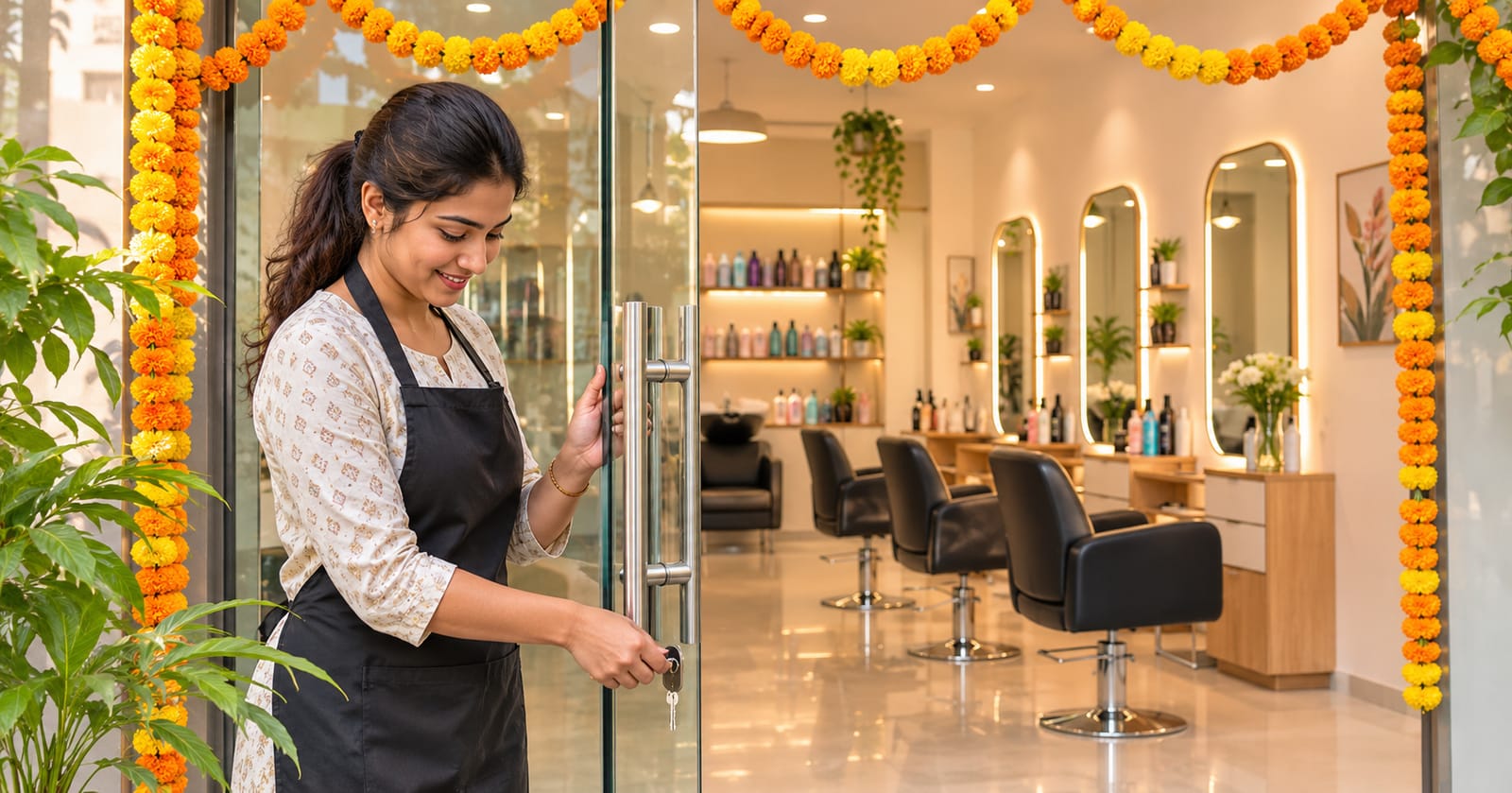
Meera had never seen the point of a salon website. Her salon had an Instagram page with regular posts, a WhatsApp number on the door, and enough regulars to keep four chairs busy. People messaged, she replied, and the appointment went into the diary.
It worked until one Saturday in December.
The message she saw on Sunday
On Friday night a new client sent a message on Instagram. She wanted a hair colour appointment the next morning at eleven and asked if there was a slot.
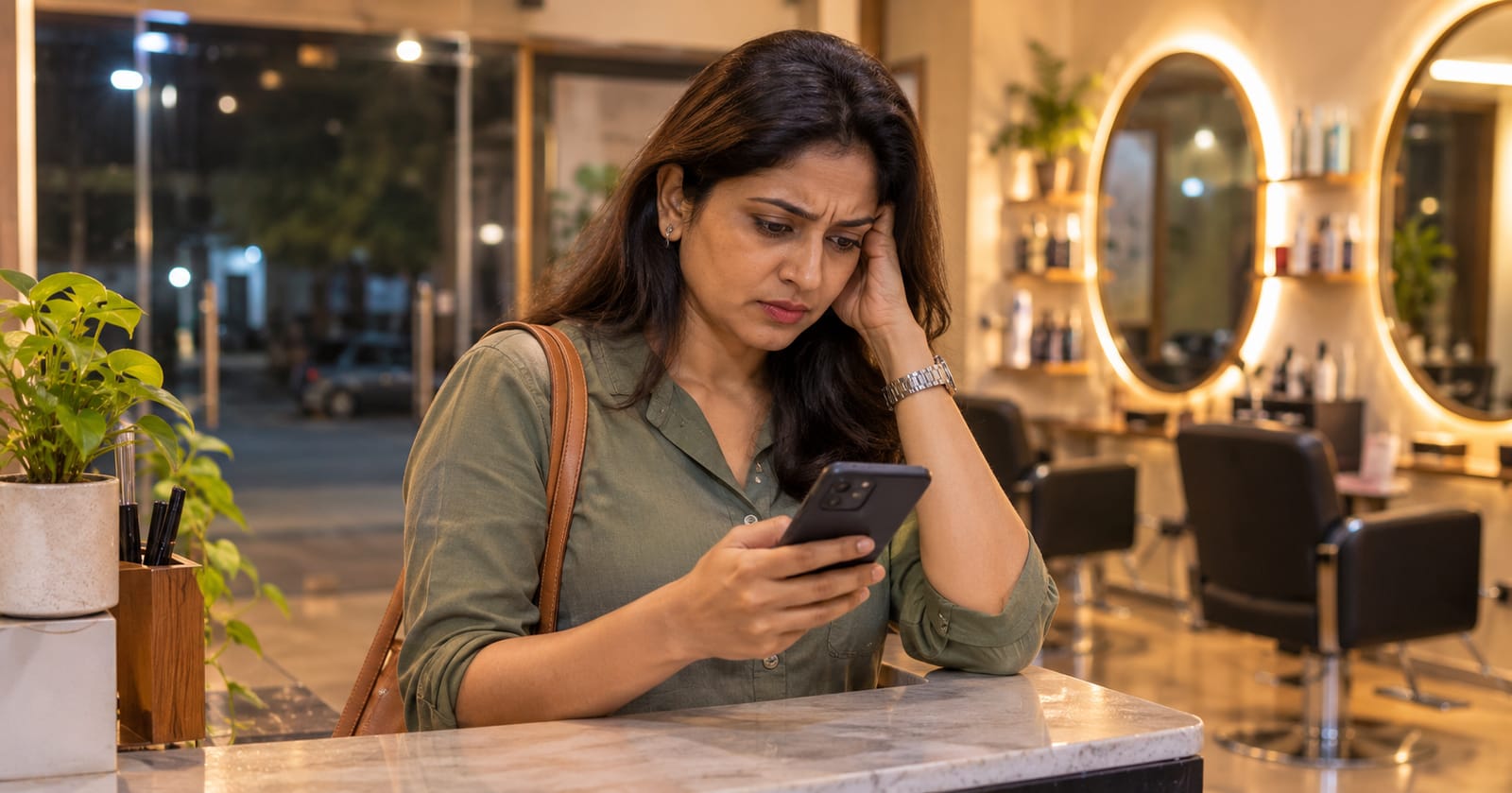
The message landed under a pile of story replies and comments on a reel. Meera was closing up, then cooking, then asleep. She saw it on Sunday afternoon.
She apologised and offered Monday. The reply was polite: the client had already gone somewhere else.
What stung was that the eleven o'clock chair had been empty.
Counting the steps
That week Meera did something she had never done. She tried to book her own salon the way a stranger would.
First, find the Instagram page. Then guess whether to message or call. Ask what a service costs and how long it takes. Wait for a reply. Go back and forth to find a time. Hope the reply comes before the day you wanted.
Her regulars didn't mind, because they already knew her. A new client had no reason to be that patient. And the ones who give up never tell you, so there is no way to count them.
Her niece, who runs a small bakery online, put it simply: "People don't want a conversation. They want a button."
One page, not a project
Meera didn't want a big website with a designer, a list of pages and something to maintain every month. She wanted one page that answered a stranger's questions and let them book.
When she looked around, she found that some salon software already includes one. Wellnito, for example, offers a salon website with online booking: each location gets its own web address with Book Appointment buttons, the service list, staff profiles with photos and specialisations, and customer ratings. WhatsApp, call and map directions sit on the same page, and the content is managed from inside the software.
Whichever tool a salon chooses, she realised the page only has to do five things:
Show what you do, service by service.
Show who does it, so a client can pick a stylist.
Show what other clients said.
Show where you are.
Offer one obvious button to book.
What changed
She put the link in her Instagram bio and saved it as a quick reply on WhatsApp.
The messages didn't stop. People still write to ask things, and she still answers. But when someone asks "Can I come tomorrow?", her reply is now a link, and the booking no longer depends on her seeing a message in time.
Instagram is where people discover a salon. A salon website is where they should be able to book it.
Meera is a made-up character used to show a common situation, not a real customer. I work with Wellnito, the salon software mentioned above.