India's online fabric and ethnic wear market is crowded. Thousands of stores sell georgette, velvet, lehengas and suits, often with near-identical photos and descriptions. In that crowd, search visibility can decide whether a store grows or stays invisible.
The good news is that most fabric and ethnic wear stores miss the same basics. Fix them, and you're already ahead of much of the competition. Here's a practical SEO checklist built for this industry.
1. Keyword Research
Think like your buyer. Customers search "velvet fabric for lehenga", "georgette fabric online" or "fabric shop in Delhi", not just "fabric".
Target long-tail keywords. Specific phrases like "embroidered organza fabric for dupatta" are easier to rank for and convert better.
Include occasion keywords: haldi, mehendi, sangeet, wedding, reception, festive.
Include local keywords if you have a physical store: your city, market and area.
Don't ignore Hindi and Hinglish searches, like "lehenga ka kapda" or "suit ka kapda", where relevant to your audience.
2. Product Pages
Product pages are where most stores lose SEO value.
Write unique descriptions. Don't copy supplier or manufacturer text. Duplicate descriptions rarely rank.
Use descriptive titles: colour, fabric, work type and use. For example, "Wine Velvet Fabric with Zari Border for Lehenga".
Add real specifications: composition, width, weight, work type and care instructions.
Explain how the fabric behaves: sheer or opaque, drapey or structured, whether it needs lining.
Mention best uses: suits, blouses, lehengas, dupattas.
Answer common questions right on the page.
3. Collection and Category Pages
Collection pages often rank better than individual products, because they target broader searches.
Add a short introduction at the top of each collection, explaining the fabric, its uses and its seasons.
Use clear, keyword-rich names, like "Velvet Fabric" or "Embroidered Organza Fabric", not vague labels.
Link related collections, such as velvet to velvet dupattas, or organza to organza satin.
Keep collections focused. One clear theme per page is better than mixed collections.
A well-structured collection page like a velvet fabric collection can capture searches for a whole fabric category, not just one product.
4. Images
Fabric is visual, so images matter for both buyers and search.
Use descriptive file names: "wine-velvet-zari-border-fabric.jpg", not "IMG_1234.jpg".
Write alt text that describes the fabric clearly.
Compress images so pages load quickly on mobile data.
Show real details: close-ups, drape, the back of embroidery and colour options.
Keep photos consistent across products for a professional look.
5. Technical SEO Basics
Mobile first: most Indian shoppers browse on phones. Test every page on mobile.
Page speed: heavy images and too many apps slow your store down.
Clean URLs: short, readable and keyword-focused.
Product schema: structured data for price, availability and reviews helps search engines understand your products.
Fix broken links and 404 pages regularly.
Submit your sitemap in Google Search Console.
6. Helpful Content
Content builds trust and attracts buyers who are still researching.
Answer real customer questions. "How much fabric do I need for a lehenga?" "Which fabric is best for a winter wedding?" "Georgette vs chiffon?"
Write guides for each occasion and fabric type.
Create useful tools. A simple fabric quantity estimator answers one of the most common questions buyers ask and keeps them on your site.
Link guides to relevant collections so readers can move from learning to buying.
Update older posts with fresh details every season.
A dedicated guides section, like a global fabric guide, helps search engines see your store as an authority on fabric, not just another seller.
7. Local SEO
If you have a physical store, local search can bring in high-intent walk-in customers.
Claim and complete your Google Business Profile.
Choose accurate categories, like "Fabric store".
Upload real store and fabric photos regularly.
Collect and respond to reviews.
Keep your name, address and phone number consistent across your website and directories.
Add an appointment link for bridal and bulk customers.
8. Internal Linking
Link from blog posts to collections and products.
Link related fabrics together, such as velvet to velvet dupattas, or chanderi to dyeable chanderi.
Use descriptive anchor text, not "click here".
Make sure every important page can be reached within a few clicks from the homepage.
9. Reviews and Trust Signals
Show product reviews and customer photos where possible.
Display clear policies: shipping, returns and payment.
Show your physical store details if you have one.
Add trust badges and secure checkout signals.
10. Track and Improve
Use Google Search Console to see which searches bring visitors and which pages appear in results.
Use analytics to track which pages lead to sales.
Review results monthly, and improve pages that get impressions but few clicks.
Plan content around seasons, like the wedding season, festivals and winter.
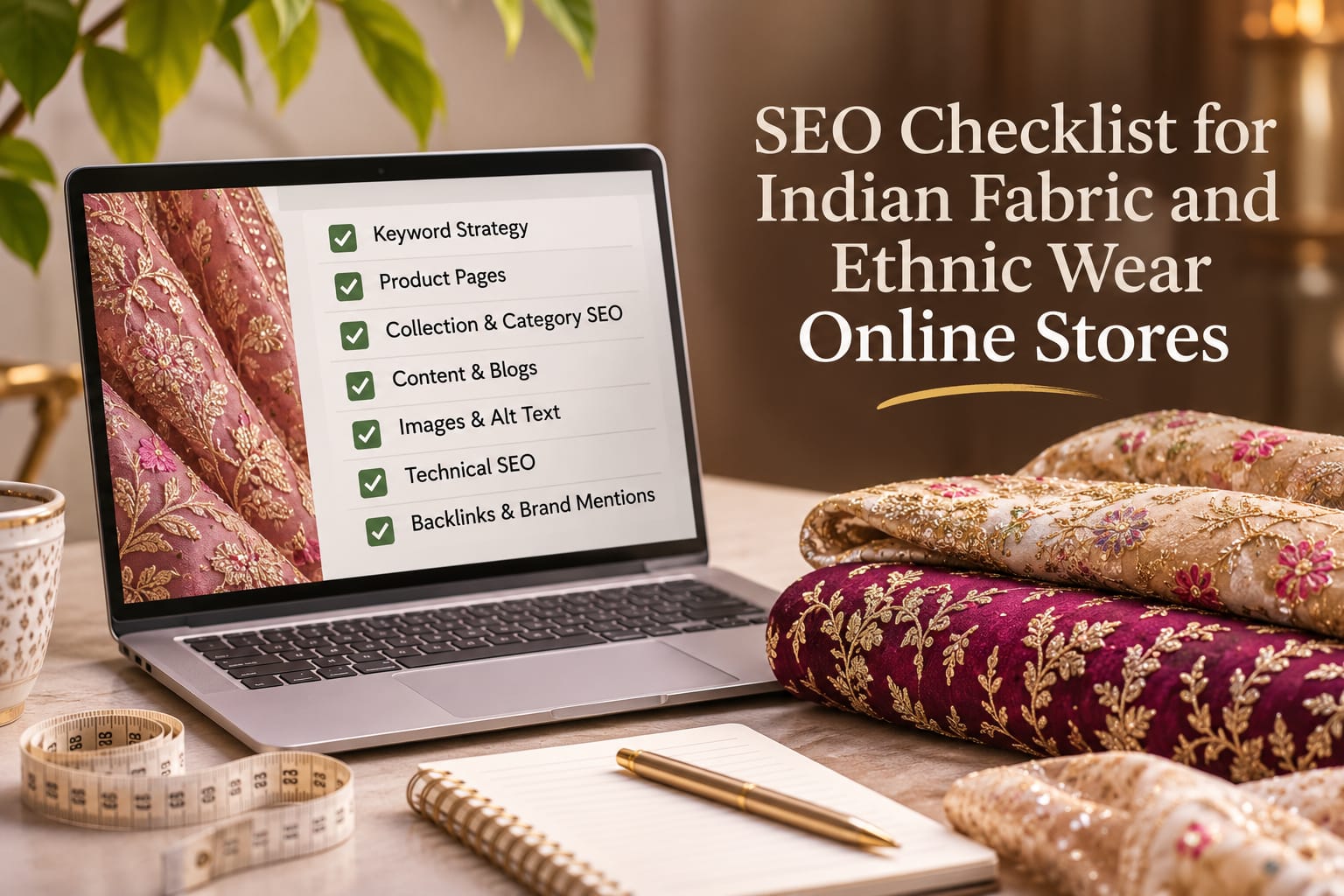
Quick SEO Checklist
Keyword research done for products, collections and occasions
Unique product titles and descriptions
Full specs: composition, width, weight, care
Collection pages with intros and internal links
Images named, compressed and with alt text
Mobile-friendly and fast-loading
Product schema added
Helpful guides and tools published
Google Business Profile complete and active
Search Console and analytics set up
Final Thoughts
SEO for a fabric or ethnic wear store isn't about tricks. It's about making your store genuinely helpful and easy to understand, for both search engines and customers. Describe fabrics honestly, organise collections clearly, answer real questions and keep improving based on what you learn. Done steadily, it builds traffic that keeps working long after any ad campaign ends.