A renewable energy project can look attractive on paper, but its long-term success depends on several factors that are not always obvious during the initial planning stage. Land availability, grid connectivity, financing, equipment selection and power purchase arrangements can all influence whether a project remains commercially viable.
For developers and investors, evaluating these factors early can prevent expensive complications later.
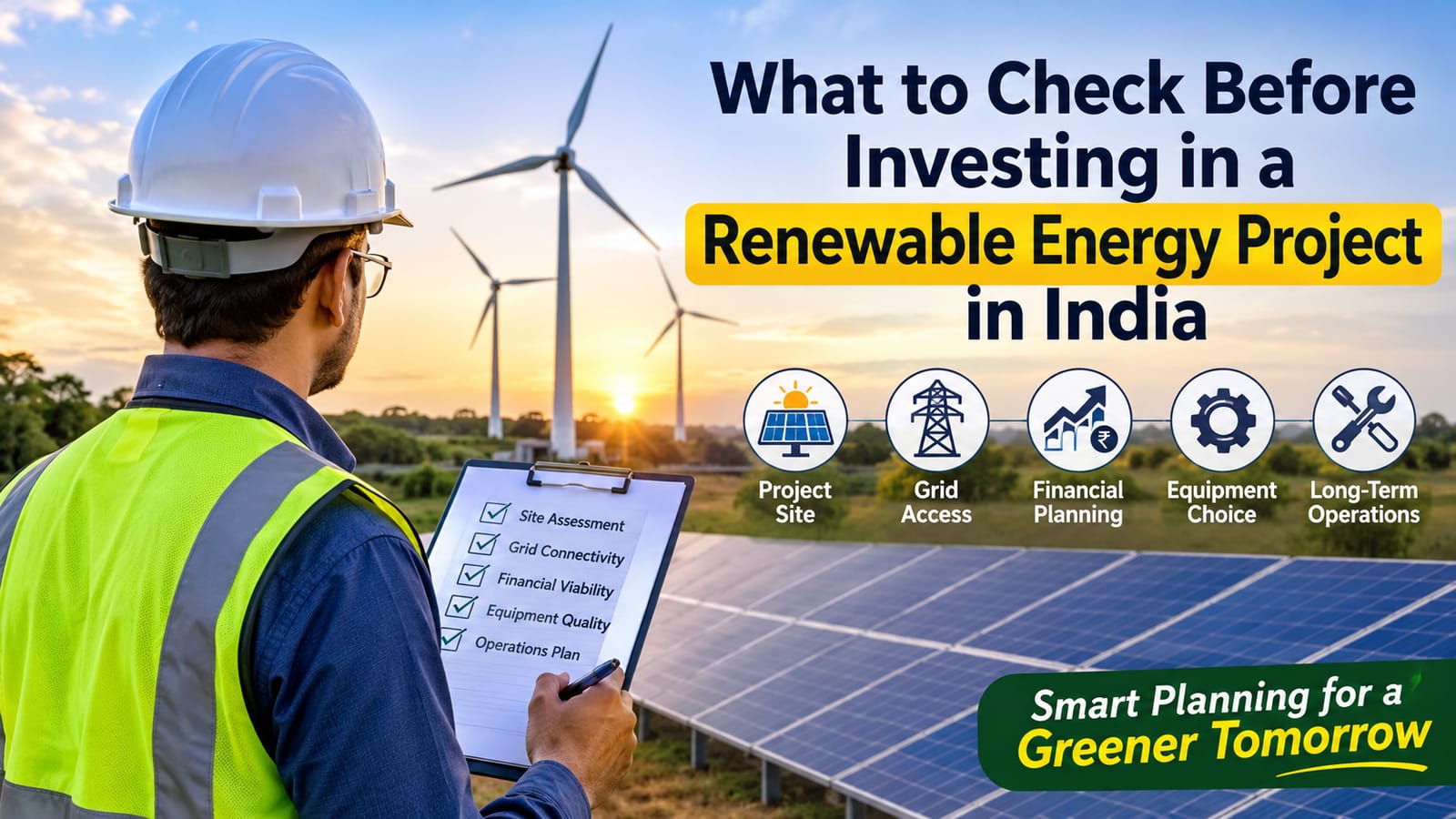
1. Understand the Site Before Committing
The quality of a project site affects both construction and long-term electricity generation. Solar developers need to examine sunlight conditions, land characteristics, accessibility and potential shading. Wind projects require reliable wind-resource assessments rather than assumptions based on nearby installations.
Land ownership, lease conditions, local permissions and environmental considerations should also be reviewed before major investment decisions are made.
2. Confirm Grid Connectivity Early
A technically suitable site may still face difficulties if connecting it to the electricity network is complicated or expensive.
Project teams should understand the distance to the nearest suitable substation, available transmission capacity, connectivity requirements and any infrastructure upgrades that may be necessary.
Treating grid connectivity as an early feasibility requirement can reduce the risk of delays after construction planning has already progressed.
3. Evaluate the Commercial Arrangement
Electricity generation alone does not guarantee predictable project revenue. Developers need to understand the proposed power purchase arrangement, tariff structure, payment conditions, contract duration and responsibilities of the parties involved.
They should also consider possible changes in operating costs, financing expenses and electricity-market conditions.
A realistic financial model should account for both expected revenue and potential operational challenges.
4. Compare Equipment Based on Lifetime Performance
Choosing equipment solely because it has a lower purchase price can create problems over the project's operating life.
Solar modules, inverters, wind turbines and battery systems should be evaluated using performance guarantees, warranty conditions, maintenance requirements, service availability and compatibility with the wider system.
The objective should be to understand the total cost of ownership rather than focusing only on the initial quotation.
5. Plan for Operations Before Construction Ends
A renewable energy installation needs regular monitoring and maintenance after commissioning. Developers should identify who will handle equipment inspections, performance monitoring, fault response, spare parts and technical support.
Clear operating responsibilities help reduce avoidable downtime and make long-term performance easier to manage.
6. Learn from Industry Discussions Before Making Decisions
Project requirements are changing as technologies, regulations and commercial models develop. Conversations with experienced developers, equipment suppliers, consultants and investors can help decision-makers understand challenges that may not appear in a basic feasibility report.
Professionals exploring India's clean energy industry events and 2027 conference information can use these opportunities to follow industry developments, exchange practical knowledge and identify relevant discussions.
IRES 2027 is one event to consider when planning engagement with India's renewable energy sector.
A Better Project Starts with Better Questions
Successful renewable energy development requires more than selecting a technology and arranging investment. Site suitability, grid access, commercial agreements, equipment performance and operational planning must work together.
Evaluating these areas before committing substantial resources can help developers and investors make more informed decisions and build projects with stronger long-term foundations.