Introduction: Why Is Reproductive Medicine Gaining Importance?
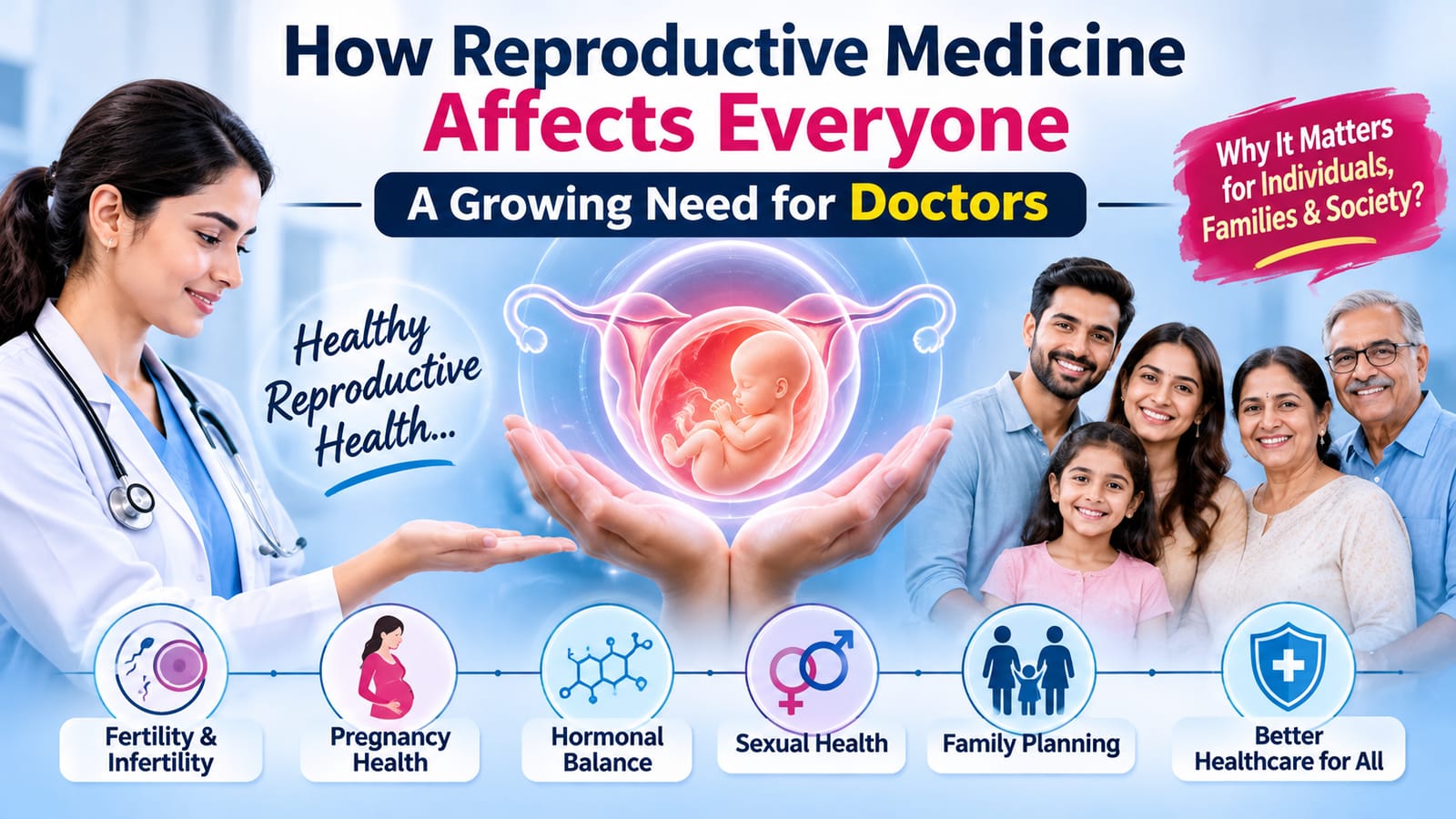
Reproductive medicine is becoming an important area of modern healthcare. It covers fertility, infertility management, hormonal disorders, reproductive genetics, sexual health and assisted reproductive technologies.
For doctors interested in expanding their knowledge of this field, Medical Global Academy offers a PG Diploma in Reproductive Child Health. Understanding reproductive health is increasingly relevant as fertility-related conditions affect individuals and families across the world.
According to the World Health Organization (WHO), approximately 1 in 6 people worldwide experience infertility during their lifetime. This highlights the importance of accessible fertility care and specialised medical knowledge.
1. Growing Demand for Reproductive Medicine in India and Worldwide
Reproductive medicine is not limited to couples seeking IVF. It is connected with several common healthcare conditions:
Women experiencing PCOS, endometriosis and irregular periods.
Couples facing primary or secondary infertility.
Men experiencing low sperm count or reduced sperm motility.
Patients requiring fertility preservation before certain medical treatments.
Individuals seeking contraception and reproductive health counselling.
Patients experiencing recurrent pregnancy loss or hormonal disorders.
Indirectly, families, gynaecologists, urologists, endocrinologists, oncologists, embryologists and diagnostic laboratories are also connected with reproductive healthcare.
2. What Are Doctors Searching for in Reproductive Medicine?
Doctors often look for specific clinical knowledge, diagnostic methods and advanced fertility technologies.
Infertility and fertility care
Infertility Diagnosis and Management
Male Infertility Treatment
Female Infertility Causes
Unexplained Infertility
Recurrent Pregnancy Loss
IVF and advanced technologies
IVF Treatment and ICSI
AI in IVF
Embryo Selection
Time-Lapse Embryo Imaging
Assisted Reproductive Technology
Hormonal and reproductive health
PCOS Diagnosis and Management
AMH Test and Ovarian Reserve
Reproductive Endocrinology
Endometriosis
Semen Analysis and Sperm DNA Fragmentation
These are relevant search topics for doctors exploring reproductive healthcare. Actual search volume and competition should be checked using a keyword research tool.
3. Advanced Technologies Transforming Reproductive Medicine
Modern reproductive medicine is moving beyond traditional infertility evaluation.
AI in IVF: Artificial intelligence is being researched for embryo image analysis, sperm assessment and IVF laboratory support.
ICSI: This technique involves injecting a single sperm directly into an egg in selected fertility treatment situations.
Reproductive Genetics: Genetic counselling and preimplantation genetic testing (PGT) may help assess specific genetic conditions when clinically indicated.
Fertility Preservation: Egg, sperm and embryo freezing can help preserve reproductive options in selected medical circumstances.
Advanced Diagnostics: AMH testing, hormonal evaluation, semen analysis and ultrasound assessment can contribute to fertility investigations.
These technologies require appropriate clinical expertise, evidence-based use and professional judgement.
4. Why Should Doctors Learn Reproductive Medicine?
Knowledge of reproductive medicine can be relevant to doctors working in gynaecology, obstetrics, urology, endocrinology, internal medicine and other related specialties.
Understanding infertility, hormonal disorders, reproductive anatomy, contraception and assisted reproductive technologies can help healthcare professionals develop a broader understanding of reproductive health.
Doctors should review a programme's curriculum, eligibility, teaching format and certification details before choosing it according to their professional learning objectives.
5. India's ART Regulations and the Future of Fertility Care
India's Assisted Reproductive Technology (Regulation) Act, 2021 provides a legal framework for ART clinics and ART banks, with an emphasis on safe and ethical reproductive healthcare.
Looking ahead, AI-assisted IVF research, reproductive genetics, advanced embryo assessment, male infertility research and personalised fertility care are important areas to watch.
As reproductive healthcare evolves, doctors need to stay informed about scientific developments, clinical evidence and applicable regulations.
Frequently Asked Questions
1. Is reproductive medicine important in India?
Yes. It addresses infertility, PCOS, hormonal disorders, male reproductive health, fertility preservation and assisted reproductive technologies.
2. How many people worldwide experience infertility?
WHO estimates that approximately one in six people of reproductive age experience infertility during their lifetime.
3. What are the latest trends in reproductive medicine?
AI in IVF, ICSI, embryo assessment, reproductive genetics, fertility preservation and personalised infertility management are important areas of development.
4. Which doctors can benefit from reproductive health education?
Doctors in gynaecology, urology, endocrinology, internal medicine and related healthcare fields may benefit from relevant education, depending on programme eligibility.
Conclusion
Reproductive medicine is much more than IVF. It connects fertility, hormonal health, male and female reproductive disorders, genetics and advanced medical technology.
With infertility affecting a significant proportion of the global population, the need for evidence-based reproductive healthcare remains important in India and worldwide.
For doctors, understanding these developments can support better clinical knowledge and help them stay informed about the changing landscape of reproductive healthcare.
Medical Disclaimer: This article is intended for medical education and general information. Diagnosis and treatment should follow individual patient assessment, current clinical evidence and applicable professional guidelines.