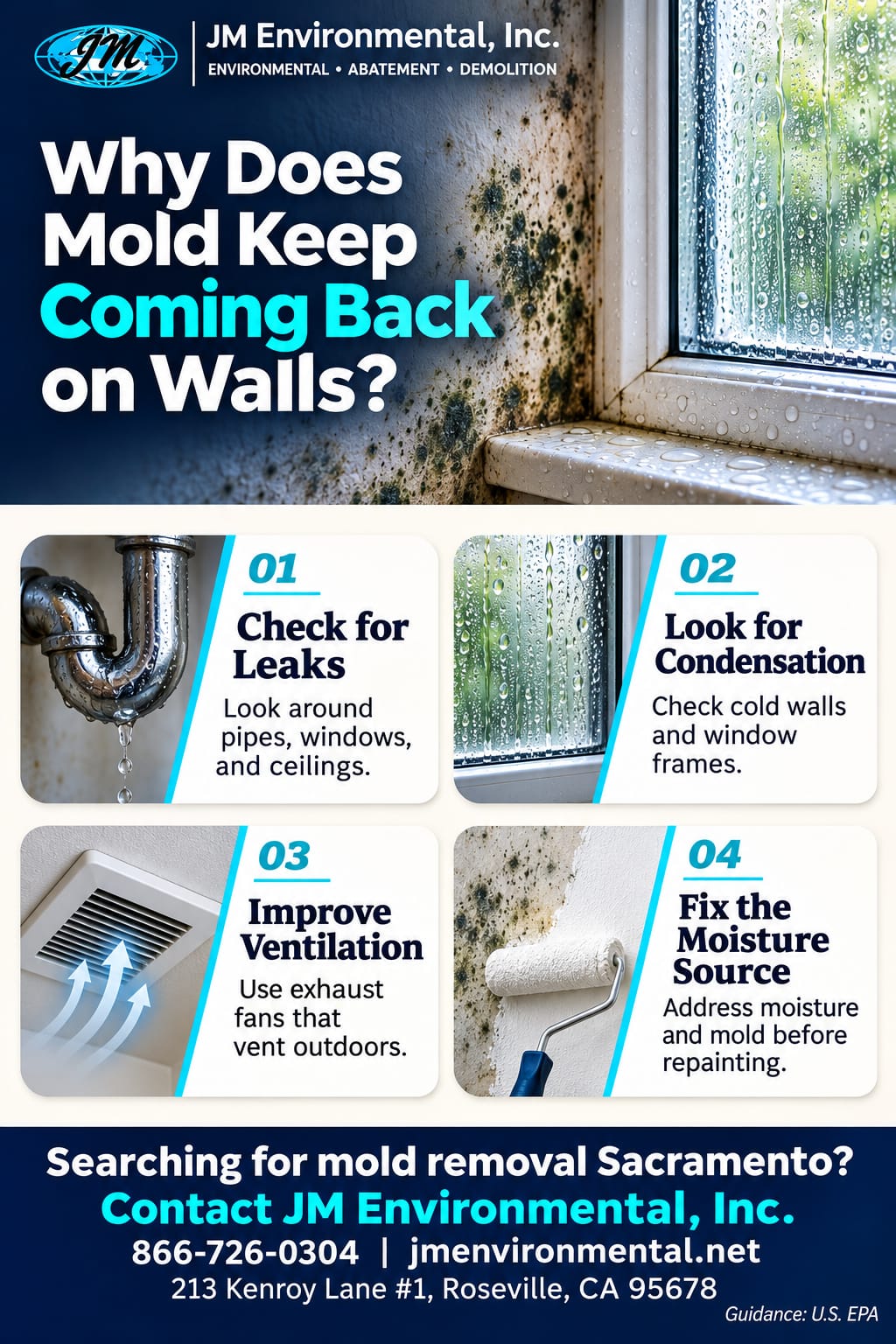
If mold keeps appearing on the same wall, moisture may still be reaching that area. This infographic from JM Environmental, Inc. walks through four things to check when mold returns, from a small plumbing leak to condensation around a window.
1. Check for leaks. Start near the affected wall. Look for water stains, peeling paint, or damp surfaces around pipes, windows, and ceilings. Notice when the area gets wet. Dampness after rain may point to a different source than dampness that appears after someone uses a nearby shower.
2. Look for condensation. Check for droplets on window glass, frames, and nearby walls. Condensation forms when warm, moist air meets a cold surface. If you regularly find moisture in the same corner or around the same window, note when it appears and how long the surface stays damp.
3. Improve ventilation. Bathrooms and kitchens generate moisture during everyday activities. Use an exhaust fan that vents outdoors when showering or cooking. If the room stays damp afterward, check whether the fan is working and whether moisture is collecting in areas with limited airflow, such as behind furniture.
4. Fix the moisture source before repainting. A fresh coat of paint can hide a stain while the wall underneath stays damp. Identify what is keeping the area wet and address the moisture and mold before repainting. Take photos of the affected area and note any recent leaks or water damage. These details can help a professional understand where the problem started and why it may be returning.
Searching for mold removal Sacramento? Contact JM Environmental, Inc. to discuss recurring mold in your home or business. Share where you first noticed the growth, when it came back, and whether you’ve seen signs of water damage nearby so the team can help you determine the next step.