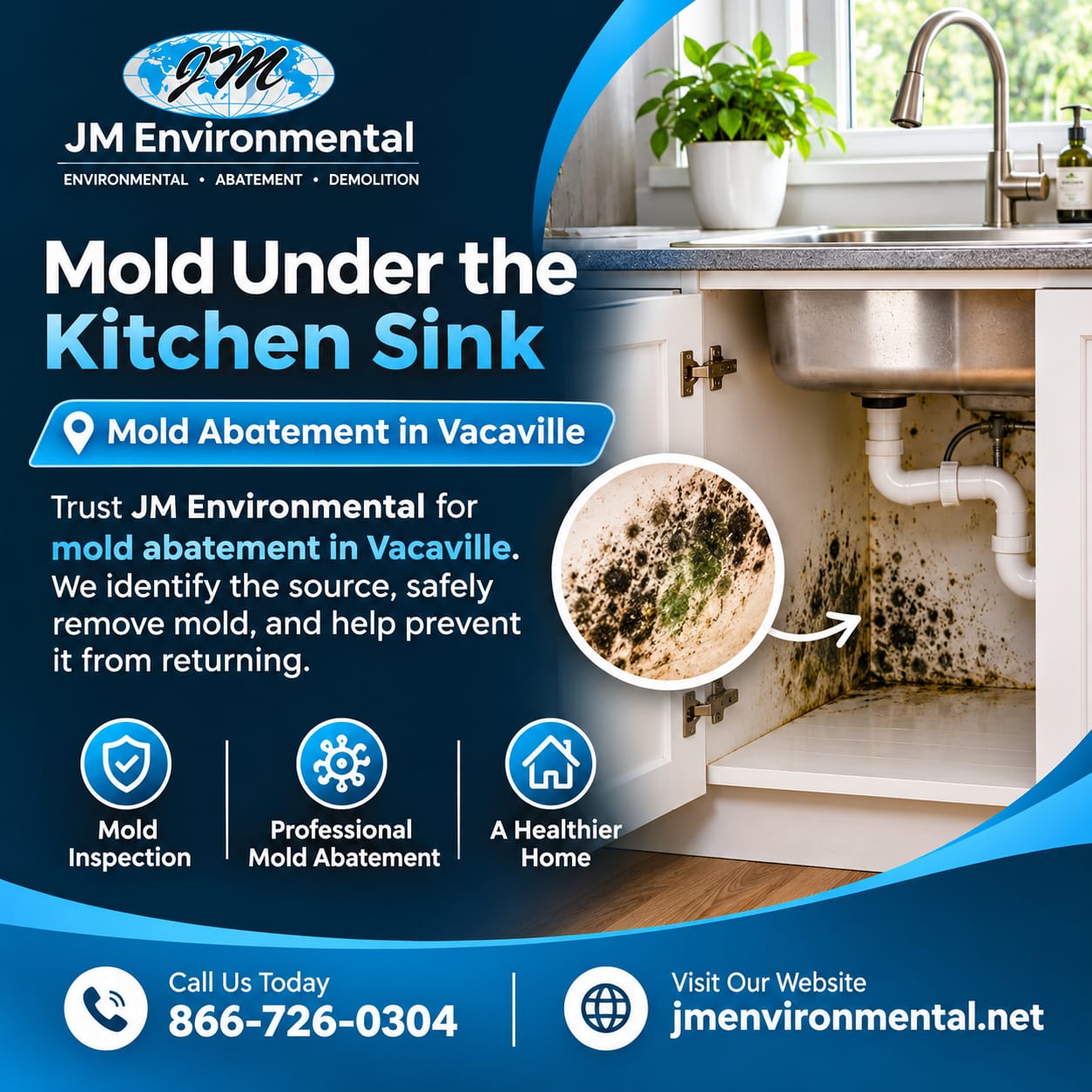
The cabinet under the kitchen sink is one of the most common places for mold to hide. It is dark, it is closed most of the day, and it sits right next to the plumbing that brings water in and carries it away. By the time you notice a musty smell or a dark stain on the cabinet floor, mold may have been growing for weeks. Here is what causes mold under the kitchen sink, how to tell how serious it is and what to do about it.
Why Mold Grows Under Kitchen Sinks
Mold needs three things to grow: moisture, a food source and time. The space under a sink offers all three. Particleboard and plywood cabinet bases absorb water easily, and the closed doors keep air from moving and drying things out.
The most common moisture sources include:
Loose or worn supply line fittings that drip slowly where they connect to the shutoff valves
Leaking drain connections at the P-trap or garbage disposal
Dishwasher hose leaks where the drain or supply line runs through the cabinet
Failed seals around the faucet or sink rim that let water run down inside the cabinet
Condensation on cold water pipes in humid weather
A single slow drip can keep the cabinet floor damp enough for mold, even if you never see standing water.
Warning Signs to Look For
Mold under the sink often goes unnoticed because the area is hidden behind cleaning supplies and trash bins. Check the cabinet regularly for:
A musty or earthy smell when you open the doors
Dark, green or white spotting on the cabinet floor, walls or back panel
Soft, swollen or warped particleboard
Peeling shelf liner or stained cardboard boxes
Water stains or rust on pipes and fittings
The CDC notes that mold can look like spots of many different colors and often has a musty smell. It also explains that you do not need to identify the type of mold before removing it.
Is Mold Under the Sink a Health Concern?
The kitchen is where food is prepared and families gather, so mold here deserves attention. According to the CDC, exposure to damp and moldy environments can cause symptoms such as a stuffy nose, coughing, wheezing and eye irritation, while some people have no reaction at all. People with asthma, allergies or weakened immune systems may be more sensitive. Fixing the problem quickly is the best way to keep it from spreading into walls, floors and neighboring cabinets.
What to Do When You Find Mold Under the Sink
1. Empty the Cabinet and Find the Leak
Take everything out and dry the area with towels. Run the faucet, the dishwasher and the disposal while you watch the pipes with a flashlight. Feel each connection for moisture. Even a tiny bead of water at a fitting is enough to cause trouble.
2. Fix the Water Source First
Tighten loose fittings, replace worn supply lines and reseal the sink rim if needed. Cleaning mold without fixing the leak only buys a few weeks before it returns.
3. Dry Everything Completely
The EPA's guide to mold, moisture and your home recommends drying water-damaged areas and items within 24 to 48 hours to prevent mold growth. Leave the cabinet doors open and use a fan if the area stays damp.
4. Clean or Replace Affected Materials
The EPA advises scrubbing mold off hard surfaces with detergent and water, then drying them completely. Porous or absorbent materials that are moldy may need to be thrown away, because mold can grow into their small spaces. For under-sink cabinets, that often means swollen particleboard should be replaced rather than cleaned.
5. Know When to Call a Professional
The EPA says homeowners can usually handle a moldy area smaller than about 10 square feet. If the mold has spread into the wall behind the cabinet, under the flooring, or into neighboring cabinets, or if it keeps coming back, it is time for professional help. Not sure whether you are looking at mold at all? Our guide Is It Mold or Dirt? 11 Common Places to Check in Your Home can help you tell the difference.
How to Keep Mold from Coming Back
A few habits make a big difference. Check under the sink once a month, keep the cabinet from being overpacked so air can move, place a small leak alarm or a shallow tray under the trap, and replace braided supply lines every several years. Wiping up spills right away and running the kitchen exhaust fan while cooking also help keep humidity down.
Get Mold Abatement in Vacaville from a Team You Can Trust
Mold under the kitchen sink is often a small problem that becomes a big one when it is ignored. JM Environmental offers certified, insured and licensed mold abatement in Vacaville for homes and businesses. The team can inspect the area, contain the growth, remove damaged materials and help you stop the moisture that caused it. Book an assessment with JM Environmental today and keep your kitchen clean, dry and healthy.
Read More
#KitchenMold #MoldUnderSink #MoldAbatement #MoldPrevention #VacavilleCA #HomeMaintenance #JMEnvironmental