Understanding how two cryogenic storage solutions serve different laboratory and industrial requirements.
Liquid nitrogen plays an important role in laboratories, pharmaceutical research, biotechnology and other scientific applications where extremely low temperatures are required. However, storing and handling it involves more than simply maintaining a cold environment. The equipment must support the intended application, storage duration and handling requirements.
Two commonly used solutions are liquid nitrogen storage tanks and liquid nitrogen Dewars. Although both are designed to hold cryogenic liquids, their construction, operating mechanisms and intended applications can differ. Understanding these differences helps laboratories identify equipment that matches their operational requirements rather than treating every liquid nitrogen storage container as the same type of solution.
Two Approaches to Cryogenic Storage
Liquid nitrogen is widely used for preserving biological materials, supporting scientific experiments and maintaining temperature-sensitive samples. Since it exists at approximately −196°C under atmospheric pressure, specialised equipment is required to manage its extremely low temperature.
This is where cryogenic storage equipment becomes essential. Different laboratory activities demand different storage arrangements. A research facility preserving biological specimens over an extended period may have different requirements from an operation that needs a regular supply of liquid nitrogen for laboratory processes.
A liquid nitrogen storage tank is generally associated with holding larger quantities of liquid nitrogen and supplying it when required. Depending on its design, it may feature pressurisation and dispensing arrangements.
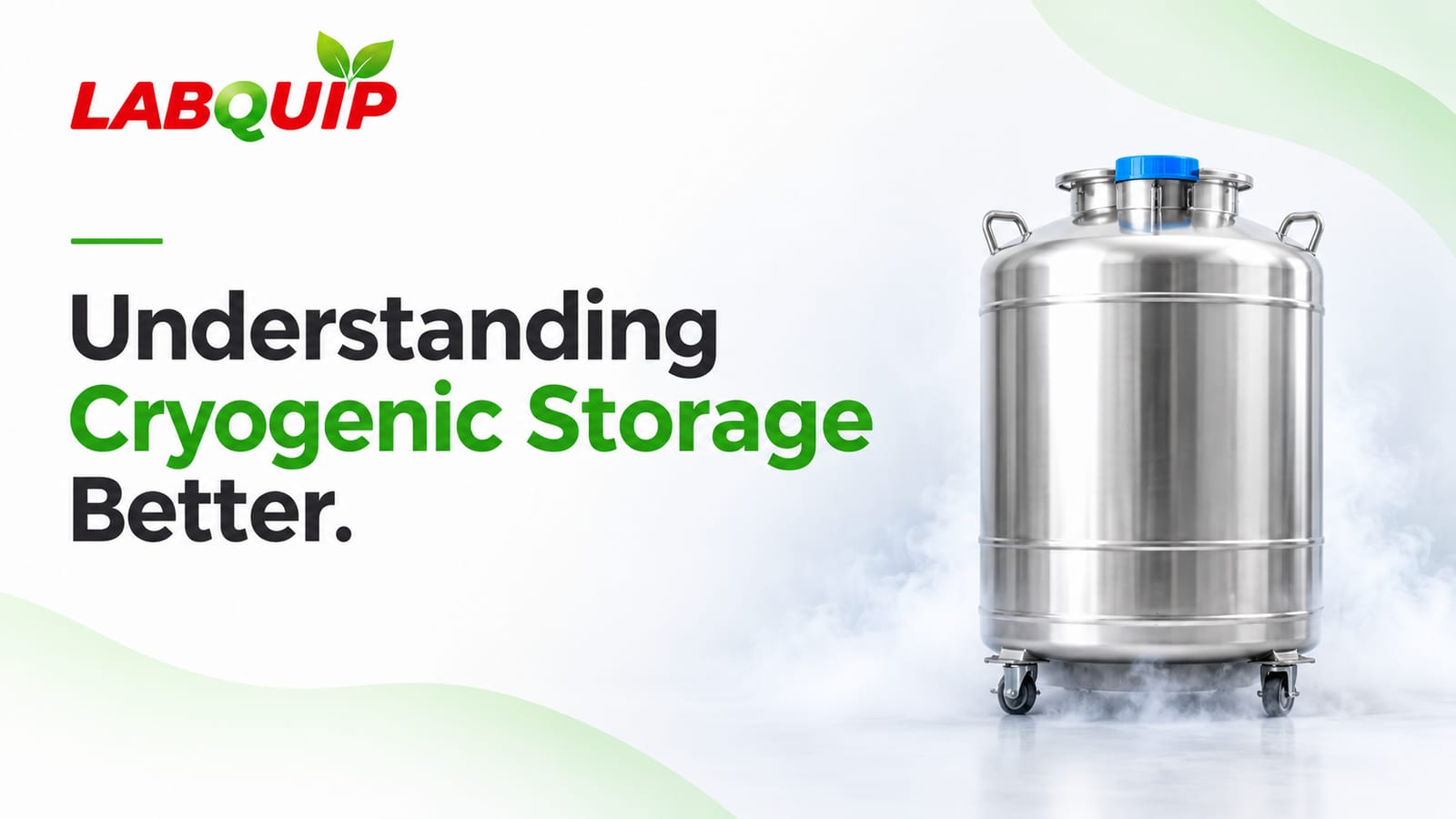
A liquid nitrogen Dewar, on the other hand, uses vacuum insulation to minimise heat transfer from the surroundings. Dewars are available in different designs and capacities, ranging from smaller laboratory vessels to larger storage units.
Both serve important roles in cryogenic applications, but their suitability depends on how the liquid nitrogen will be stored, accessed and used.
Understanding Their Design and Function
The most noticeable difference between these systems lies in their construction and the way they manage liquid nitrogen.
A typical liquid nitrogen storage tank is designed to hold a defined quantity of cryogenic liquid while limiting heat transfer from the external environment. Larger models may include pressure-building mechanisms, pressure regulators and dispensing valves that allow controlled liquid nitrogen withdrawal. These features make them suitable for applications where a consistent supply is required.
A Dewar vessel uses a double-wall construction with a vacuum-insulated space between the walls. This arrangement reduces heat transfer and slows the evaporation of liquid nitrogen. Depending on the model, Dewars may have open-neck designs, protective lids or specialised dispensing arrangements.
It is important to understand that these terms are not always mutually exclusive. Many liquid nitrogen storage vessels use Dewar insulation principles, while some specialised models are engineered for pressurised operation.
Their capacity and performance also vary. Smaller vessels may be suitable for routine laboratory use, whereas larger units are designed for greater storage requirements. Factors such as insulation quality, neck design, liquid nitrogen withdrawal frequency and operating conditions influence holding time and evaporation rates.
Where Each System Finds Its Application
The application often determines which type of cryogenic equipment is appropriate. Different scientific and industrial activities require different approaches to storing and accessing liquid nitrogen.
In biotechnology and pharmaceutical research, biological sample storage requires carefully controlled conditions to preserve sensitive materials. Liquid nitrogen-based systems are used for storing cells, tissues and other biological specimens at cryogenic temperatures.
Research laboratories may use smaller Dewars for routine activities that involve handling or transferring liquid nitrogen. Their design can make them practical for laboratory operations where portability and convenient access are important.
Larger storage vessels are useful in facilities that require substantial quantities of liquid nitrogen. Depending on their configuration, they can support regular supply requirements and connect with suitable dispensing or transfer arrangements.
Cryogenic storage also plays an important role in biobanking, medical research and specialised scientific facilities. In these environments, the equipment must support the intended preservation method, sample arrangement and storage duration.
For long-term cryogenic storage, the choice of equipment should consider more than its nominal capacity. Temperature requirements, evaporation characteristics, monitoring arrangements and the method of sample storage all contribute to the overall preservation process.
What Determines the Right Storage System
The right equipment depends on how liquid nitrogen will be used within a facility. A vessel that works well for routine laboratory handling may not be appropriate for continuous supply or specialised sample preservation.
Several technical considerations deserve attention before specifying a system.
Storage capacity: The required LN2 storage capacity depends on daily consumption, replenishment frequency and the quantity of material being preserved.
Holding time: Insulation performance and evaporation rate influence how long liquid nitrogen can remain in the vessel before replenishment is necessary.
Operating requirements: Some applications need easy liquid nitrogen access, while others require controlled dispensing or pressurised delivery.
Sample preservation: Biological materials may require specific storage configurations, including suitable racks, canisters or vapour-phase arrangements.
Handling and transportation: Weight, vessel dimensions, neck openings and compatibility with transfer accessories affect day-to-day operations.
Safety considerations: Pressure ratings, ventilation, handling procedures and manufacturer guidelines must be considered when working with cryogenic equipment.
Another important consideration is the difference between liquid-phase and vapour-phase storage. In liquid-phase systems, samples are stored in direct contact with liquid nitrogen. Vapour-phase systems maintain samples in a cold nitrogen vapour environment above the liquid. The appropriate approach depends on the sample type, preservation protocol and equipment design.
Ultimately, the specifications should match the actual laboratory application rather than relying on capacity or appearance alone.
Supporting Cryogenic Storage Requirements with the Right Equipment
Reliable cryogenic storage depends on equipment designed around the demands of the application. From routine laboratory handling to specialised biological preservation, understanding the differences between storage vessels helps establish a more suitable approach.
Labquip Asia offers Antech cryogenic storage solutions for laboratory and scientific applications.
Visit Labquip Asia to learn more about its Liquid Nitrogen Container range and identify suitable solutions for your laboratory requirements.