Chemical research often involves substances that release hazardous vapours, fumes and airborne contaminants. Without appropriate ventilation, laboratory personnel may be exposed to these substances during routine procedures. Fume hoods help manage this risk by controlling air movement around the working area.
Ducted and ductless fume hoods follow two different approaches to handling contaminated air. One removes it through an external exhaust system, while the other uses specialised filters before recirculating the treated air. Understanding these technologies helps laboratories assess their ventilation requirements and application needs.
Understanding Ducted Fume Hood Technology
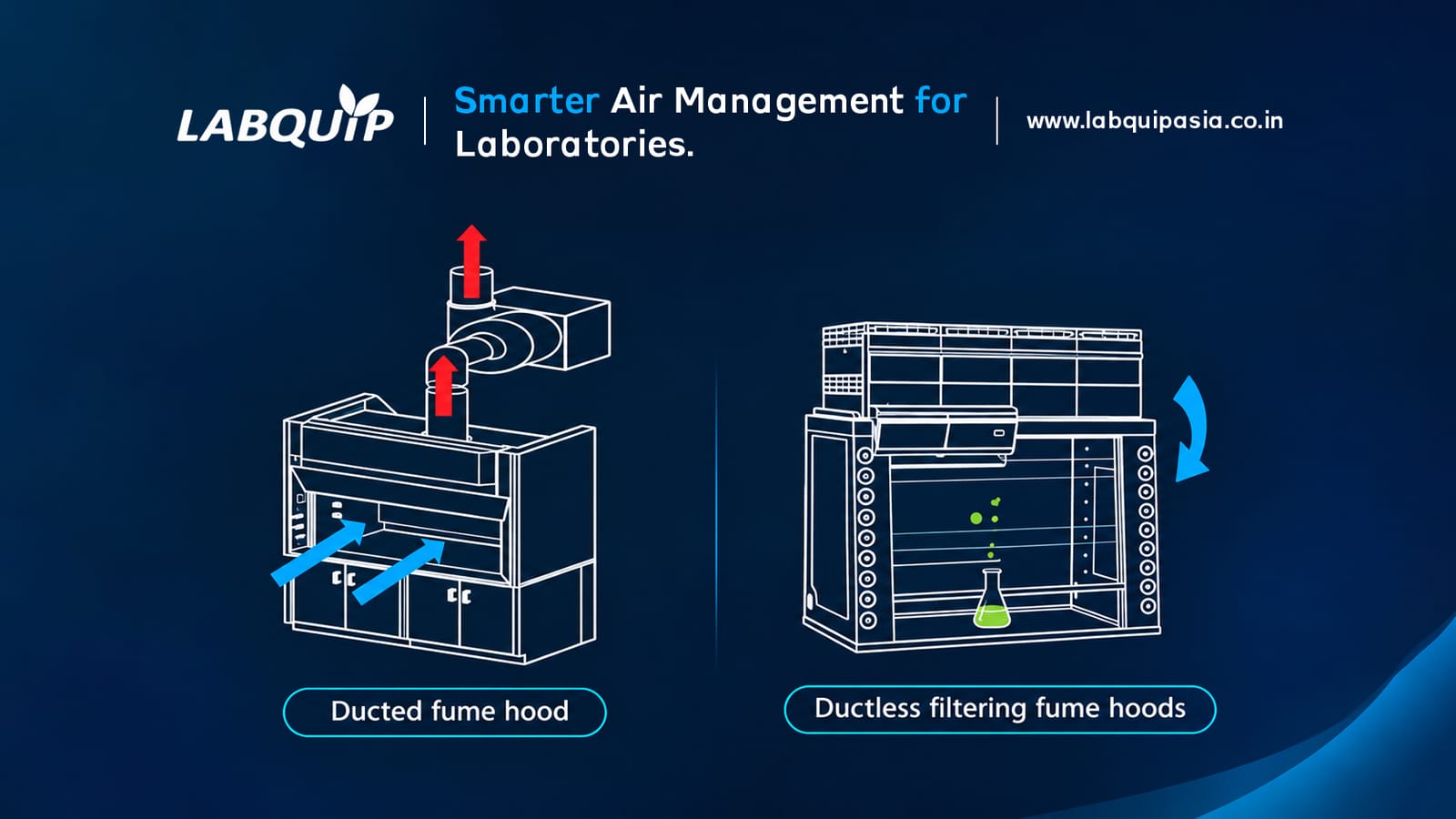
A ducted fume hood operates through an external exhaust ventilation system. Air enters through the front opening, moves across the work surface and carries airborne contaminants away from the operator. The exhaust system then transports this air through connected ductwork and releases it outside the building.
This arrangement is commonly used in laboratories where chemical procedures generate hazardous vapours that require external exhaust. It can support a broad range of chemical handling activities, depending on the system design and installation.
Airflow plays an important role in its operation. Sash position, exhaust performance and room ventilation can influence how effectively contaminants remain contained within the enclosure.
Installing this type of laboratory fume hood requires suitable exhaust infrastructure and proper ventilation planning. The system must also meet the requirements of the intended laboratory procedures.
The Filtration Science Behind Ductless Fume Hoods
Ductless fume hoods manage contaminated air through specialised filtration rather than external ductwork. They draw air through the working area, pass it through compatible filters and return the treated air to the laboratory.
Activated carbon filters are commonly used to capture certain chemical vapours through adsorption. During this process, chemical molecules adhere to the surface of the filter material. Different filtration media may be needed depending on the substances involved.
Chemical compatibility is therefore essential. A filter designed for one group of substances may not provide adequate protection against another. Laboratories must assess chemical types, concentrations, quantities and operating conditions before using a ductless system.
Filter saturation also requires attention. As contaminants accumulate, the filter’s remaining capacity decreases. Regular monitoring and replacement according to manufacturer recommendations help maintain its intended performance.
These systems can be suitable for specific laboratory applications where compatible filtration is established and external exhaust ducting is impractical.
Airflow, Filtration and Laboratory Safety
Although both technologies help control exposure to airborne contaminants, their operating requirements differ. Ducted systems depend on effective exhaust ventilation, whereas ductless models rely on suitable filtration media.
Several technical considerations influence their performance:
Chemical compatibility: Substances must be suitable for the filtration media used in ductless systems. Some applications require external exhaust instead.
Airflow performance: Appropriate airflow helps maintain containment around the working area. Sash position and ventilation conditions should be considered.
Installation requirements: Ducted equipment needs compatible exhaust infrastructure, while ductless models require suitable placement and access to filtration components.
Maintenance: Airflow, exhaust components, filters and monitoring systems require periodic inspection.
Understanding these factors is particularly important when evaluating different laboratory fume hood applications. The decision should be based on a documented risk assessment and the manufacturer’s technical guidance, not simply installation convenience.
Fume Hood Applications in Modern Laboratories
Academic institutions, pharmaceutical facilities, chemical testing centres and industrial research laboratories handle substances with different properties and exposure risks. Their ventilation requirements therefore depend on the nature of their work.
Ducted systems may be appropriate for procedures involving chemicals that require external exhaust. Ductless technology may suit specific applications where compatible filtration has been established and air recirculation is permitted under applicable safety requirements.
Before installing a fume hood for chemical laboratories, facilities should assess the chemicals involved, operating procedures, ventilation infrastructure and maintenance requirements.
For organisations evaluating a chemical fume hood supplier or laboratory fume hood supplier in India, technical guidance and product suitability are just as important as the equipment range. An appropriate ventilation arrangement supports better containment and helps establish a controlled laboratory working environment.
Ultimately, understanding the differences between exhaust ventilation and filtration provides a more informed basis for laboratory equipment decisions.
Explore Laboratory Fume Hood Solutions with Labquip
Looking for reliable laboratory equipment? Connect with Labquip Asia to explore suitable fume hood solutions for your laboratory requirements.