You don’t think much about a storage container until the sample inside it is something you cannot afford to lose.
In a laboratory, a sample may represent weeks of research, valuable biological material, or work that cannot simply be repeated. When that material needs to remain at extremely low temperatures, storage becomes much more than putting a sample somewhere cold. The container, the storage conditions, the way samples are organised, and how often they are accessed can all become part of the preservation process.
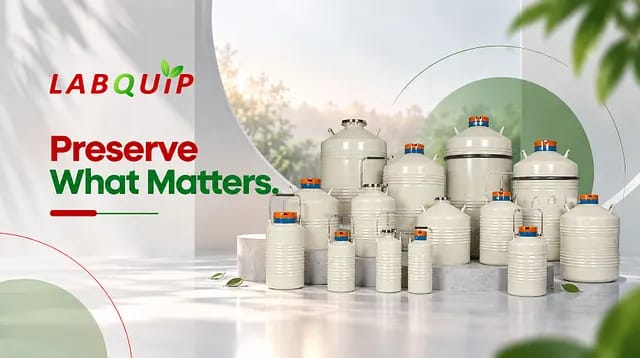
This is where a Cryocan comes into the picture. Designed for liquid nitrogen-based cryogenic storage, it provides laboratories with a dedicated environment for maintaining samples at very low temperatures. But understanding a Cryocan is not simply about knowing how much liquid nitrogen it can hold. The more important question is whether its storage characteries fit the way a laboratory actually works.
Why Cryocan Storage Matters
Liquid nitrogen is widely used for cryogenic preservation because it provides an extremely low-temperature environment. Laboratories working with biological samples and other temperature-sensitive materials may rely on this type of storage when maintaining the condition of those materials over extended periods is important.
But liquid nitrogen itself is only one part of the equation. You need a container specifically designed to work with it. A suitable liquid nitrogen storage container needs to manage the cryogenic environment while also making sample storage practical for laboratory staff.
Imagine a laboratory maintaining a large collection of samples. The challenge is not simply keeping everything cold. Staff may need to identify a particular sample, access it carefully, return it to storage, and keep the remaining samples properly organised. If the storage system does not suit that workflow, even routine sample handling can become unnecessarily difficult.
This is why cryogenic storage deserves more thought than simply looking at container capacity. The type of material being stored, the number of samples, frequency of access, expected storage duration, and available laboratory space all have a role to play.
A Cryocan essentially becomes part of that larger storage system, helping laboratories manage materials that require liquid nitrogen-based preservation.
What Happens Inside LN2 Containers
From the outside, a liquid nitrogen container can look relatively simple. Inside, however, its job is to maintain an environment where heat transfer is minimised and liquid nitrogen can be retained for the intended storage application.
Liquid nitrogen naturally evaporates when it absorbs heat from its surroundings. A cryogenic container therefore needs appropriate insulation and construction to reduce heat transfer and limit unnecessary evaporation. The exact performance depends on the container design and operating conditions, which is why specifications such as holding time and storage capacity matter when evaluating an LN2 system.
Inside an LN2 storage container, samples can be organised using suitable canisters, racks, or other storage arrangements depending on the equipment. This organisation becomes particularly useful when laboratories are handling numerous samples and need to retrieve specific materials without disturbing the entire storage arrangement.
There is also an important difference between simply storing liquid nitrogen and using it as part of a controlled sample-preservation process. The container needs to work with the laboratory’s handling practices. How frequently is it opened? How are samples identified? How much material needs to be stored? How often is replenishment required?
These practical details can influence how useful a particular cryogenic storage system will be in everyday laboratory work.
What Your Laboratory Actually Needs
There is no single storage requirement that applies to every laboratory.
A research facility maintaining a growing collection of biological samples may have very different needs from a laboratory storing a smaller number of materials for specific experiments. Even when two laboratories use liquid nitrogen, their requirements for capacity, accessibility, organisation, and storage duration can vary considerably.
Start with the samples themselves. Understanding what needs to be preserved and approximately how much storage space is required provides a much clearer starting point than looking at equipment specifications first.
Then consider access. If samples are retrieved regularly, the storage arrangement needs to support practical handling and identification. If the primary requirement is longer-term storage with limited access, other factors may become more important.
Holding requirements should also be considered. The expected holding time between liquid nitrogen refills, operating conditions, and usage patterns can all influence the suitability of a particular cryogenic storage container.
Laboratory space is another practical consideration that is easy to overlook. A container may have suitable storage capacity on paper, but its physical dimensions and handling requirements still need to work within the available environment.
The goal is therefore not to select a container simply because it has a certain capacity. The goal is to match the equipment with the laboratory’s actual workflow, sample requirements, and cryogenic storage needs.
Cryocan Solutions from Labquip Asia
Once the storage requirement is clearly understood, the next step is to work with a supplier that can provide suitable cryogenic equipment for the application.
Labquip Asia supplies Cryocan solutions and liquid nitrogen storage equipment for laboratory applications. Rather than treating cryogenic storage as a one-size-fits-all requirement, laboratories can evaluate factors such as storage capacity, sample requirements, holding needs, accessibility, and available space before selecting a suitable system.
For laboratories involved in biological sample preservation, research, and other applications requiring liquid nitrogen storage, the right equipment can become an important part of maintaining an organised and practical cryogenic workflow.
If you are looking for a Cryocan liquid nitrogen container or a suitable liquid nitrogen storage container, Labquip Asia can help you explore the available solution according to your laboratory’s requirements.
Because when the material inside the container represents valuable research, the storage system deserves just as much attention as the sample itself.