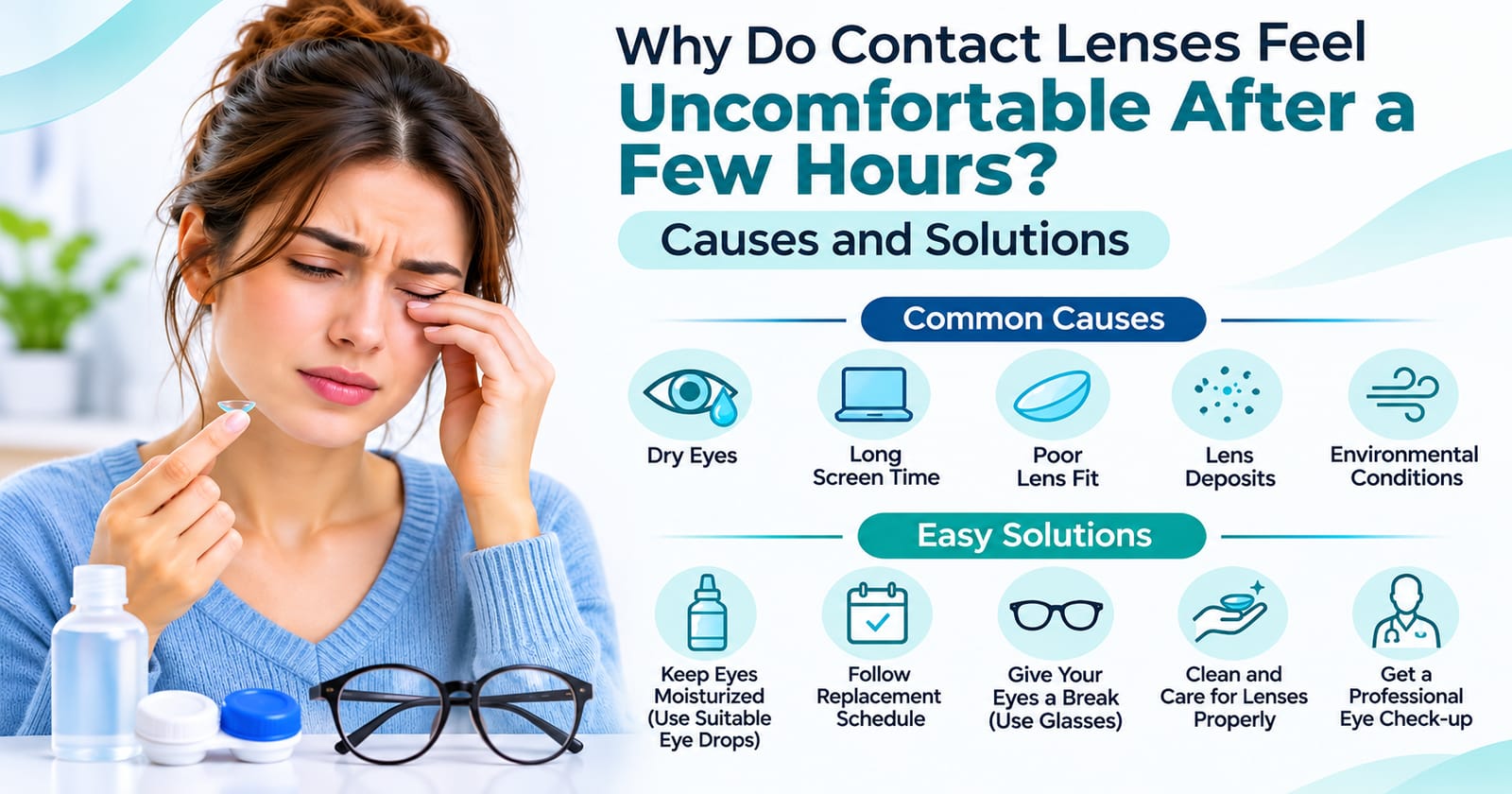
Have you ever put on your contact lenses in the morning, felt perfectly comfortable, and then noticed dryness, irritation, or a scratchy sensation by the afternoon?
You are not alone. Many contact lens wearers experience discomfort after several hours, even when their lenses feel fine initially.
Contact lenses sit directly on the eye's tear film, so their comfort depends on several factors, including moisture, lens material, fit, wearing habits, and the surrounding environment.
Understanding these factors can help you identify possible reasons for discomfort and know when to seek professional advice.
Sometimes, giving your eyes a break from contact lenses and switching to comfortable eyeglasses from Lensmake can be a practical alternative, particularly when your eyes feel dry or irritated.
Let's explore why contact lenses can become uncomfortable after a few hours and what you can do about it.
Your Eyes May Become Dry Throughout the Day
Dryness is one of the most common reasons contact lenses become uncomfortable.
Your eyes naturally produce tears that lubricate the surface and help maintain clear vision. Contact lenses interact with this tear film and can affect how moisture spreads across the eye.
As the day progresses, the tear film may become less stable, causing dryness, burning, or a gritty sensation.
Air conditioning, fans, dry weather, and prolonged screen use can make these symptoms worse.
If dryness happens frequently, an eye care professional can assess your tear film and recommend appropriate treatment or lens changes.
You May Blink Less While Using Screens
When concentrating on computers, smartphones, or other digital screens, people often blink less frequently or incompletely.
Blinking helps distribute tears across the eyes and keeps contact lenses comfortable.
Reduced blinking can cause tears to evaporate more quickly, increasing dryness and irritation.
This explains why some people feel comfortable wearing contacts outdoors but experience discomfort after working on a computer for several hours.
Taking regular screen breaks, blinking fully, and adjusting your workspace may help reduce symptoms.
If discomfort continues, consider discussing contact lens options with your optometrist.
Your Contact Lenses May Not Fit Properly
Contact lenses are not one-size-fits-all products.
Different lenses have different shapes, diameters, materials, and fitting characteristics.
A lens that does not fit appropriately may move excessively, feel unstable, or cause irritation.
Even when the prescription is correct, the lens design may not be suitable for your eyes.
An improperly fitted contact lens can also affect the health of the eye's surface.
If your lenses repeatedly become uncomfortable, schedule a contact lens fitting assessment rather than changing lens specifications yourself.
Lens Material Can Affect Comfort
Contact lenses are manufactured using different materials, including conventional hydrogels and silicone hydrogels.
These materials differ in oxygen permeability, water content, surface properties, and how they interact with tears.
Some wearers find one material more comfortable than another.
However, a higher water content does not automatically mean a lens will feel more comfortable throughout the day.
Comfort depends on the entire lens design and the condition of the wearer's eyes.
An eye care professional can help determine whether another lens material or replacement schedule may be appropriate.
Deposits Can Accumulate on Contact Lenses
During normal wear, substances from the tear film can accumulate on contact lenses.
These may include proteins, lipids, and other deposits.
Over time, deposits can affect the lens surface and contribute to discomfort or reduced visual clarity.
This may be particularly noticeable with reusable lenses.
Proper cleaning and following the manufacturer's recommended replacement schedule can help reduce deposit-related problems.
Never use tap water or saliva to clean contact lenses.
Use only the contact lens care products recommended for your specific lenses.
You May Be Wearing Your Lenses Too Long
Contact lenses have recommended wearing schedules that depend on their type and your eye care professional's instructions.
Wearing lenses beyond your recommended daily duration may increase discomfort.
Some people also try to extend the life of reusable lenses beyond their replacement schedule.
This can increase the risk of deposits, irritation, and complications.
Daily disposable lenses should be discarded after one use, while reusable lenses require proper cleaning, storage, and timely replacement.
Unless your eye care professional has specifically prescribed lenses for overnight wear, remove your contact lenses before sleeping.
Even lenses approved for overnight wear carry additional risks.
Air Conditioning and Environmental Conditions Can Make Discomfort Worse
Your environment can influence contact lens comfort.
Air-conditioned offices, windy weather, low humidity, smoke, and dust may contribute to irritation or tear evaporation.
People who spend long hours in dry indoor environments may notice that their contact lenses become less comfortable toward the end of the day.
Avoid directing fans or air-conditioning vents toward your face.
Maintaining comfortable indoor humidity and reducing exposure to irritating environments may also help.
If symptoms persist despite these changes, professional evaluation is important.
Allergies May Contribute to Contact Lens Irritation
Seasonal allergies and environmental allergens can affect the eyes.
Common symptoms include itching, watering, redness, and irritation.
Contact lens wear may become less comfortable when the eyes are already inflamed or sensitive.
Rubbing your eyes while wearing contacts can make irritation worse.
If you suspect allergies, remove your lenses and consult an eye care professional about suitable treatment.
Not every eye drop is compatible with contact lenses, so check before using allergy medications or lubricating drops while wearing them.
Your Contact Lens Solution Could Be Causing Problems
Some people experience irritation related to their contact lens cleaning or disinfecting solution.
Sensitivity to certain ingredients may contribute to burning, redness, or discomfort.
Improper cleaning or incomplete neutralization of hydrogen peroxide-based solutions can also cause significant eye irritation.
Never put hydrogen peroxide contact lens solution directly into your eyes.
Always follow the manufacturer's instructions, including the required neutralization process.
If you suspect a solution-related problem, stop using the lenses and seek advice from your eye care professional before changing products.
You May Need a Break From Contact Lenses
Not everyone finds contact lenses comfortable for an entire working day.
Some people prefer wearing contacts for specific activities and switching to glasses afterward.
For example, you might wear contact lenses during exercise or social activities and use prescription glasses while working at home.
Keeping an updated pair of prescription glasses is useful in case your contact lenses become uncomfortable or cannot be worn.
Exploring eyeglasses at Lensmake can help you find a frame style that suits your everyday routine.
However, switching to glasses is not a substitute for medical evaluation when discomfort is persistent or accompanied by other symptoms.
How to Improve Contact Lens Comfort
Maintaining good contact lens habits can help reduce avoidable discomfort.
Wash and thoroughly dry your hands before handling lenses.
Follow the wearing and replacement schedule prescribed by your eye care professional.
Use appropriate cleaning and disinfecting products for reusable lenses.
Avoid exposing contact lenses or storage cases to tap water, swimming pools, or hot tubs.
Take regular breaks during prolonged screen use and remember to blink fully.
Ask your eye care professional whether contact lens-compatible lubricating drops are suitable for you.
Keep prescription glasses available for times when contact lenses are uncomfortable.
Most importantly, do not ignore persistent discomfort or attempt to continue wearing painful lenses.
When Should You Stop Wearing Contact Lenses?
Mild dryness can occur, but contact lens discomfort should not automatically be considered harmless.
Remove your lenses immediately if you experience significant pain, unusual redness, light sensitivity, discharge, or sudden blurred vision.
These symptoms can sometimes indicate an eye infection or another condition requiring urgent attention.
Do not put the lenses back in until an eye care professional has assessed the problem and advised that it is safe.
Contact lens-related infections can progress quickly, so prompt evaluation is important.
Frequently Asked Questions
Why do my contact lenses feel fine in the morning but uncomfortable at night?
Tear film changes, environmental dryness, screen use, deposits, and wearing duration may contribute to discomfort later in the day. A contact lens examination can help identify the cause.
Can I use eye drops when my contact lenses feel dry?
Some lubricating drops are specifically labeled for use with contact lenses. Others are not suitable while lenses are in place. Ask your eye care professional which product is appropriate.
Are daily contact lenses more comfortable than monthly lenses?
Daily disposable lenses may improve comfort for some wearers because they are replaced after each use. However, comfort depends on lens material, fit, tear film health, and individual needs.
Should contact lenses feel uncomfortable after eight hours?
There is no single comfortable wearing duration that applies to everyone. Persistent discomfort is a reason to review your lenses, wearing habits, and eye health with an eye care professional.
Can I switch between contact lenses and glasses?
Yes. Many people alternate between properly prescribed contact lenses and eyeglasses depending on their activities, comfort, and preferences.
Final Thoughts
Why do contact lenses feel uncomfortable after a few hours?
The answer often involves several factors rather than one specific cause.
Dry eyes, reduced blinking, lens fit, material, deposits, environmental conditions, and wearing habits can all affect comfort.
Following proper lens care instructions and maintaining regular eye examinations can help protect your eye health.
If discomfort continues, an eye care professional can identify possible causes and recommend suitable options.
Remember that contact lenses should never cause significant pain, and persistent irritation should not be ignored.
Healthy eyes and comfortable vision should always come before convenience.
About the Author
Md Tauqueer Raza is a Shopify Developer at Lensmake with an interest in eyewear fashion, lens technology, e-commerce, and digital shopping experiences. He enjoys creating helpful articles about eyeglasses, frame selection, and everyday eyewear.