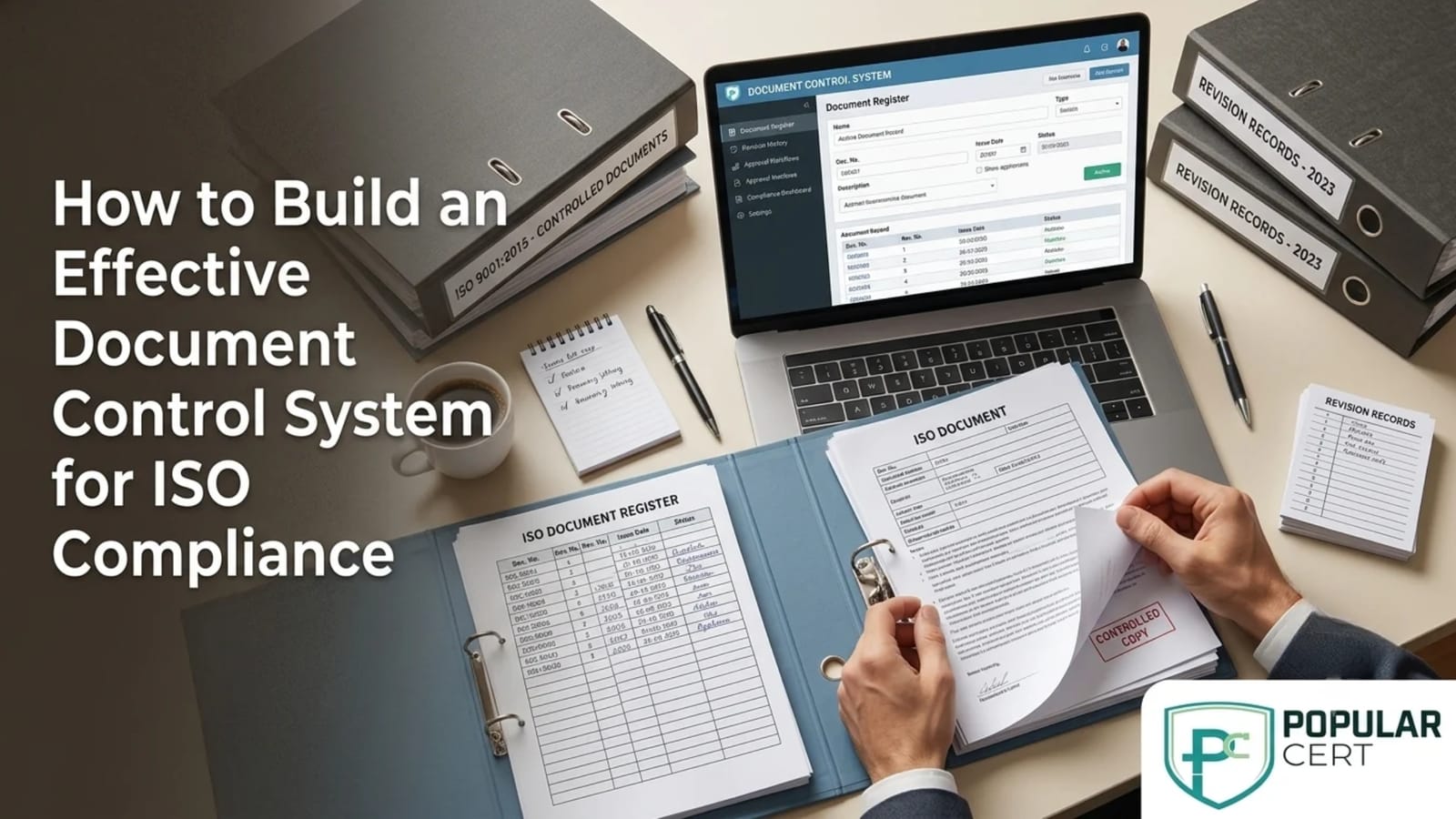
A well-organized document control system is essential for maintaining an effective ISO management system. Organizations use policies, procedures, work instructions, forms and records to ensure that employees follow consistent processes and meet established requirements.
However, problems can occur when employees use outdated procedures, access incorrect documents or fail to maintain important records. These issues can create confusion, affect operational performance and lead to audit findings.
An effective document control system helps organizations create, review, approve, distribute, update and maintain documents in a controlled manner. It also ensures that employees can access the correct information when they need it.
What Is a Document Control System?
A document control system is a structured process for managing documents and records used within an organization's management system.
It ensures that documents are properly identified, reviewed, approved, updated and made available to authorized employees.
For ISO compliance, document control helps organizations maintain accurate information and provide evidence that their processes are being followed.
Common controlled documents include:
Quality, environmental and occupational health and safety policies.
Standard operating procedures (SOPs).
Work instructions.
Process flowcharts.
Risk assessments.
Inspection checklists.
Training materials.
Forms and templates.
Internal audit reports.
Management review records.
Organizations can manage these documents through electronic systems, shared platforms or controlled paper-based arrangements.
Why Is Document Control Important for ISO Compliance?
Document control supports consistent operations and helps organizations demonstrate that their management systems are properly maintained.
1. Prevents the Use of Outdated Documents
Employees may unknowingly follow old procedures when documents are not updated or distributed correctly.
A document control system helps ensure that current approved versions are available at relevant work locations.
For example, if a manufacturing company updates its equipment inspection procedure, the previous version should be withdrawn from active use and replaced with the approved revision.
2. Improves Process Consistency
When employees follow the same approved procedures, organizations can maintain more consistent operational practices.
Document control ensures that departments use standardized instructions, forms and process requirements.
This is particularly important for businesses with multiple departments, production facilities or operating locations.
3. Supports Audit Readiness
ISO auditors may review procedures, records and other documented information to determine whether an organization's management system meets applicable requirements.
A controlled system makes it easier to retrieve approved documents, identify revisions and provide evidence during audits.
4. Strengthens Accountability
Document control establishes responsibilities for preparing, reviewing, approving and updating information.
This helps organizations identify who is responsible for maintaining each document and reduces unauthorized changes.
5. Protects Important Business Information
Documents and records may contain confidential business information, customer details, technical specifications and operational data.
Suitable access permissions, storage arrangements and backup procedures help protect this information from loss, unauthorized access or unintended modification.
How to Build an Effective Document Control System
Organizations can establish a practical document control system by following these steps.
1. Identify the Documents Required
Start by identifying the documents needed to operate the management system and meet applicable ISO requirements.
The documentation required depends on the organization's size, activities, operational complexity and applicable standard.
For example:
ISO standard
Common controlled documents
ISO 9001
Quality policy, procedures, inspection records and work instructions
ISO 14001
Environmental policy, environmental aspects register and monitoring records
ISO 45001
OH&S policy, hazard assessments and safety procedures
ISO 22000
Food safety policy, HACCP plan and monitoring records
ISO/IEC 27001
Information security policies, risk assessments and access control procedures
Create a document register to identify the documents used across different departments.
2. Establish a Document Identification System
Every controlled document should have a unique identification method.
This makes documents easier to locate, track and manage.
A document identification system may include:
Document title.
Document reference number.
Department or process name.
Revision number.
Issue or effective date.
Document owner.
Approval status.
For example, a company may use the reference SOP-PRO-001 for a production standard operating procedure.
The identification format should remain consistent across the organization.
3. Define Document Review and Approval Responsibilities
Documents should be reviewed before they are released for use.
Organizations should identify who prepares, reviews and approves each document based on its purpose and operational importance.
A typical approval structure may include:
Responsibility
Main activity
Document owner
Prepares or updates the document
Department manager
Reviews technical accuracy and suitability
Quality or compliance manager
Checks alignment with management system requirements
Authorized management representative
Approves the document for use
The approval process should ensure that employees do not use unapproved procedures or instructions.
4. Implement Version Control
Version control helps organizations identify the latest approved version of each document.
Every document should have a revision number or other suitable version identifier. Changes should also be recorded in a revision history.
A simple revision history may include:
Version
Date
Change description
Approved by
1.0
10 January 2026
Initial release
Quality Manager
1.1
15 April 2026
Updated inspection instructions
Operations Manager
2.0
20 August 2026
Revised process requirements
Quality Manager
When a new version is approved, the previous version should be removed from active use or clearly marked as obsolete.
5. Control Document Distribution and Access
Approved documents must reach the employees who need them.
Organizations should establish procedures for distributing documents and controlling who can view, download, edit or approve them.
For electronic systems, access can be managed through user permissions and role-based controls.
For paper-based systems, controlled copies can be identified through stamps, registers or other suitable methods.
The main objective is to ensure that employees use the correct information for their work.
6. Manage External Documents
Organizations also use information created outside the business.
Examples include:
ISO standards and technical specifications.
Government regulations.
Customer requirements.
Supplier manuals.
Equipment operating instructions.
Legal and regulatory guidelines.
These documents should be identified and controlled when they are necessary for planning and operating the management system.
Organizations should monitor relevant external updates and ensure that employees use applicable versions.
7. Maintain Records and Retention Periods
Documents and records serve different purposes.
Documents such as policies and procedures provide instructions and are updated when necessary. Records provide evidence that an activity has been completed or a result has been achieved.
Examples of records include:
Training attendance sheets.
Equipment inspection reports.
Internal audit findings.
Customer complaint records.
Maintenance logs.
Product inspection results.
Corrective action reports.
Organizations should establish retention periods based on applicable legal, regulatory, contractual and operational requirements.
Records should remain readable, identifiable, retrievable and protected from unintended changes.
8. Use a Centralized Document Storage System
A centralized document storage arrangement helps employees access approved information without searching through multiple folders or uncontrolled copies.
Organizations can use document management software, controlled cloud platforms, internal servers or organized physical filing systems.
An effective arrangement should support:
Easy document retrieval.
Secure access permissions.
Version tracking.
Regular backups.
Protection against unauthorized changes.
Suitable document retention and disposal.
The selected system should match the organization's size, resources and operational needs.
9. Train Employees on Document Control Procedures
Even a well-designed system may fail if employees do not understand how to use it.
Organizations should train relevant personnel on how to access approved documents, identify revisions, request updates and maintain records.
Employees should also understand why unauthorized changes and the use of obsolete documents can create compliance problems.
Regular awareness sessions help maintain consistent document control practices.
10. Review and Improve the System Regularly
Document control should be reviewed periodically to ensure that it remains effective.
Organizations can evaluate the system through internal audits, document reviews and employee feedback.
Common areas to check include:
Whether current documents are available at relevant locations.
Whether obsolete versions have been withdrawn.
Whether approvals are properly recorded.
Whether external documents are up to date.
Whether records are retained for the required period.
Whether access permissions are appropriate.
Corrective actions should be taken when weaknesses are identified.
Common Document Control Mistakes to Avoid
Organizations may experience documentation problems when document control responsibilities are unclear or procedures are not followed consistently.
Common mistake
Possible consequence
Recommended action
Using outdated documents
Employees follow incorrect instructions
Establish revision control
Missing approvals
Unverified procedures enter use
Define approval responsibilities
Poor document identification
Documents become difficult to retrieve
Use unique reference numbers
Uncontrolled access
Unauthorized changes occur
Apply suitable access permissions
Missing records
Insufficient evidence during audits
Define record retention requirements
Uncontrolled external documents
Incorrect standards or regulations are used
Monitor relevant external updates
No employee training
Staff do not follow document procedures
Provide regular awareness sessions
Avoiding these problems helps maintain a reliable and practical document control system.
How Document Control Supports Different ISO Standards
Document control is relevant to several ISO management system standards. Although the specific requirements differ, maintaining suitable documented information is an important part of effective implementation.
ISO standard
Document control application
ISO 9001
Controls quality procedures, inspection records and customer-related documentation
ISO 14001
Maintains environmental procedures, compliance information and monitoring records
ISO 45001
Controls safety procedures, risk assessments and incident records
ISO 22000
Maintains food safety procedures, HACCP information and monitoring records
ISO/IEC 27001
Protects information security policies, risk records and controlled information
ISO 22301
Maintains business continuity plans, recovery procedures and testing records
For organizations implementing multiple ISO standards, an integrated document control system can reduce duplication and simplify management.
How PopularCert Helps Organizations with ISO Documentation
At PopularCert, we support organizations in developing management system documentation that aligns with applicable ISO requirements.
Our support includes:
Reviewing existing documents and records.
Identifying documentation gaps.
Assisting with policies, procedures and work instructions.
Supporting document identification and revision control.
Guiding document approval and distribution arrangements.
Helping establish record retention practices.
Supporting internal audits and certification audit preparation.
We focus on helping businesses develop practical documentation systems that support their daily operations rather than creating unnecessary paperwork.
Conclusion
An effective document control system helps organizations maintain accurate, approved and accessible information for ISO compliance. By establishing clear document identification, approval, version control, access, storage and retention procedures, businesses can reduce documentation errors and improve operational consistency.
Document control should not become an unnecessary administrative burden. It should make important information easier to manage, protect and retrieve.
With regular reviews and employee awareness, organizations can maintain a reliable documentation system that supports audits, improves accountability and strengthens overall management system performance.
Frequently Asked Questions
1. What is document control in ISO compliance?
Document control is the process of creating, reviewing, approving, distributing, updating, storing and maintaining documented information required for an organization's management system.
2. Is a document control procedure mandatory for ISO certification?
Many ISO management system standards require organizations to control documented information. However, they do not necessarily require a separate documented document control procedure. Organizations should establish arrangements appropriate to their management system.
3. What is the difference between document control and record control?
Document control manages information that provides instructions or guidance, such as policies and procedures. Record control manages evidence of completed activities, such as inspection reports, training records and audit results.
4. Can organizations use digital document control systems for ISO compliance?
Yes. Organizations can use electronic document management systems, cloud platforms or internal servers, provided that the arrangements support access control, version management, protection, retrieval and retention.
5. How often should ISO documents be reviewed?
Documents should be reviewed at planned intervals and whenever significant changes occur in processes, responsibilities, regulations or operational requirements. The review frequency should reflect the document's importance and the organization's needs.