Introduction
Energy consumption is an important operational cost for manufacturing facilities, commercial buildings, warehouses, and other businesses. Identifying where and how energy is used helps organizations understand their consumption patterns and find opportunities to improve energy performance.
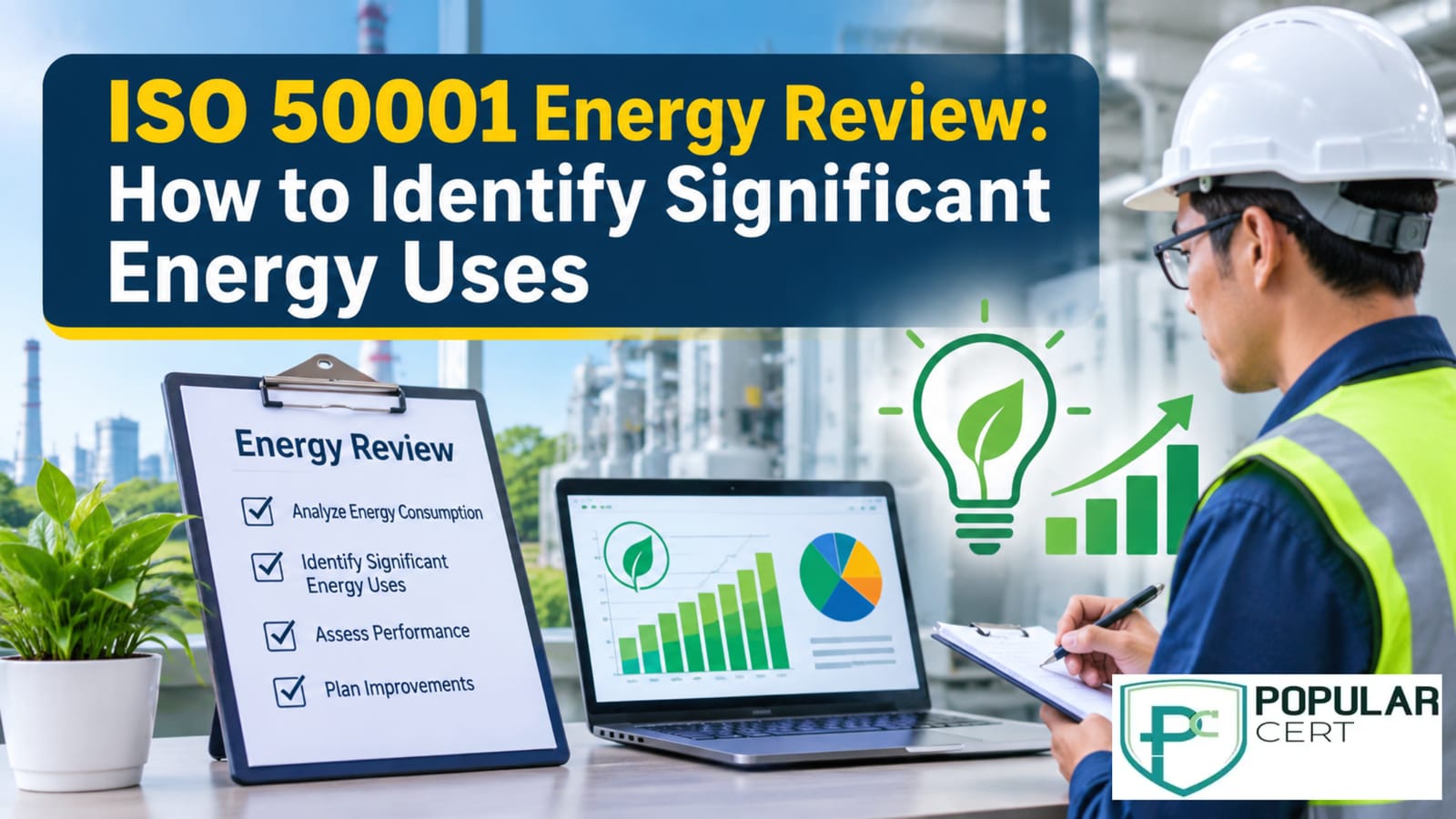
Under ISO 50001 Certification, an energy review is a key part of an Energy Management System (EnMS). It helps organizations analyse energy use, evaluate consumption, identify significant energy uses (SEUs), and prioritize improvement opportunities.
Identifying SEUs correctly allows businesses to focus their energy management efforts on the equipment, systems, and processes that have the greatest impact on energy performance.
What Is an Energy Review in ISO 50001?
An energy review is a systematic analysis of an organization's energy use, energy consumption, and energy efficiency.
It helps an organization understand:
Which energy sources are being used.
Where energy is consumed.
Which equipment and processes use the most energy.
What factors influence energy consumption.
Where energy performance can be improved.
According to ISO 50001:2018, Clause 6.3, organizations must conduct an energy review using data and other relevant information.
The review should be maintained and updated at defined intervals and when significant changes occur in facilities, equipment, systems, or processes.
What Are Significant Energy Uses (SEUs)?
Significant Energy Uses are energy uses that account for substantial energy consumption or offer considerable potential for energy performance improvement.
They can include individual machines, production processes, entire facilities, or supporting systems.
Common examples include:
Industrial boilers
Air compressors
HVAC systems
Refrigeration equipment
Production machinery
Industrial furnaces and ovens
Lighting systems
Pumping systems
Cooling towers
Steam distribution systems
For example, a manufacturing facility may identify its compressed air system as an SEU because it consumes a large amount of electricity. A boiler may also be classified as an SEU if it uses substantial fuel or has significant improvement potential.
Organizations determine their own criteria for identifying significant energy uses based on their operations and energy performance objectives.
Why Is Identifying SEUs Important?
Identifying significant energy uses helps organizations prioritize energy management activities rather than treating every energy-consuming system in the same way.
Key reasons include:
1. Better Energy Monitoring
Organizations can focus monitoring activities on equipment and processes that have a major influence on energy consumption.
2. Improved Energy Efficiency
Identifying inefficient systems helps businesses recognize opportunities to reduce unnecessary energy use.
3. Cost Control
Understanding major energy-consuming operations can help organizations identify opportunities to manage energy-related operating expenses.
4. Better Operational Control
SEU identification helps establish suitable operating and maintenance controls for important equipment and processes.
5. Support for Energy Objectives
Organizations can use SEU information to establish measurable energy performance objectives and improvement targets.
How to Conduct an Energy Review and Identify SEUs
Organizations can follow a structured process to complete an energy review and determine significant energy uses.
Step 1: Identify Energy Sources
Start by identifying all energy sources entering the organization's operational boundaries.
These may include:
Electricity
Natural gas
Diesel
Petrol
LPG
Fuel oil
Steam
Purchased heat
Renewable energy
Record the energy sources used at each facility and identify where they are applied.
Step 2: Identify Energy Uses
Identify the equipment, systems, facilities, and processes that consume energy.
For example, a manufacturing organization may use electricity for motors, compressors, conveyors, lighting, and production equipment. Fuel may be used in boilers, furnaces, and backup generators.
Prepare an energy-use inventory to understand how energy is distributed across operations.
Step 3: Collect Energy Consumption Data
Collect reliable information about energy consumption using available records and measurement systems.
Useful sources include:
Utility bills
Fuel purchase records
Energy meter readings
Sub-metering data
Equipment operating hours
Production records
Maintenance reports
Building management system data
Use a suitable historical data period that reflects the organization's operating conditions and energy consumption patterns.
Step 4: Analyse Energy Consumption
Evaluate how much energy each identified use consumes.
Organizations can prepare an energy balance to understand the distribution of energy across different systems and processes.
For example:
Energy Use
Monthly Consumption
Share of Total Energy
Production machinery
42,000 kWh
42%
HVAC systems
25,000 kWh
25%
Air compressors
18,000 kWh
18%
Lighting
10,000 kWh
10%
Office equipment
5,000 kWh
5%
Total
100,000 kWh
100%
This example shows that production machinery accounts for the largest share of electricity consumption. However, consumption alone should not be the only consideration when selecting SEUs.
Step 5: Establish SEU Selection Criteria
ISO 50001 requires organizations to establish criteria for determining which energy uses are significant.
Selection criteria should consider both substantial energy consumption and considerable potential for energy performance improvement.
Possible criteria include:
Percentage of total energy consumption
Energy cost
Equipment efficiency
Operating hours
Energy performance trends
Potential energy savings
Relevant operational variables
Opportunities for improvement
For example, an organization may decide that equipment accounting for a substantial share of total energy consumption should be assessed as a potential SEU. It may also identify a smaller system as significant if it offers considerable improvement potential.
There is no universal percentage threshold that every organization must use. The criteria should be documented, justified, and consistently applied.
Step 6: Identify Relevant Variables
Relevant variables are factors that significantly affect energy performance.
Examples include:
Production volume
Operating hours
Weather conditions
Occupancy levels
Product type
Machine load
Production speed
Raw material characteristics
For example, electricity consumption in a factory may increase when production volume rises. The organization should consider production volume when evaluating the energy performance of the relevant production equipment.
Step 7: Determine Current Energy Performance
Evaluate the current energy performance of each identified SEU.
Organizations can use Energy Performance Indicators (EnPIs) to measure performance.
Examples include:
kWh per unit produced
Fuel consumption per production batch
Energy consumption per operating hour
Electricity use per square metre
Steam consumption per tonne of product
These indicators help organizations compare performance over time while considering relevant operating conditions.
Step 8: Identify Energy Improvement Opportunities
After identifying SEUs, evaluate how their energy performance can be improved.
Possible opportunities include:
Replacing inefficient motors with energy-efficient models
Repairing compressed air leaks
Improving boiler efficiency
Optimizing HVAC operating schedules
Installing efficient lighting
Improving insulation
Reducing unnecessary equipment operating hours
Recovering and reusing waste heat
Prioritize opportunities based on their expected energy performance improvement, technical feasibility, and organizational priorities.
Example of SEU Identification in a Manufacturing Facility
Consider a manufacturing company that uses electricity, natural gas, and diesel across its operations.
After reviewing energy records, the organization identifies the following major energy uses:
Equipment or System
Energy Source
Potential SEU Reason
Production machinery
Electricity
High energy consumption
Industrial boiler
Natural gas
Significant fuel consumption
Air compressor
Electricity
High operating hours and leakage losses
HVAC system
Electricity
Seasonal consumption and improvement potential
Backup generator
Diesel
Limited operating hours but relevant fuel and operational considerations
The organization evaluates each energy use against its documented selection criteria.
Production machinery, the boiler, and the air compressor may be selected as SEUs because of their consumption levels or improvement potential. The HVAC system may also qualify based on its energy performance opportunities.
This assessment should be supported by actual energy data rather than assumptions.
What Should Be Recorded in an Energy Review?
Organizations should maintain documented information that demonstrates how the energy review was conducted and how SEUs were selected.
Common records include:
List of current energy sources
Energy-use inventory
Historical energy consumption data
Energy consumption analysis
SEU selection criteria
List of identified SEUs
Relevant variables for each SEU
Current energy performance information
Energy Performance Indicators (EnPIs)
Energy improvement opportunities
Estimated future energy consumption
The energy review should be updated when relevant operational changes affect energy use or consumption.
Common Mistakes to Avoid When Identifying SEUs
Organizations sometimes face difficulties when conducting an energy review. The following mistakes should be avoided:
Using incomplete energy data: Missing meter readings or fuel records can affect the accuracy of the review.
Considering consumption alone: An energy use may also be significant because of its improvement potential.
Ignoring relevant variables: Production volume, operating hours, and weather conditions can influence energy performance.
Using unclear selection criteria: SEU identification should follow documented and consistent criteria.
Overlooking smaller equipment: Some smaller systems may offer considerable energy improvement opportunities.
Not updating the review: Changes in equipment, production processes, and facilities may affect which energy uses are significant.
How PopularCert Helps with ISO 50001 Implementation
At PopularCert, we support organizations in establishing and implementing ISO 50001 Energy Management Systems.
Our assistance includes:
Gap assessment: We review existing energy management practices and identify gaps against ISO 50001 requirements.
Energy review support: We help organizations assess energy sources, consumption patterns, and major energy uses.
SEU identification: We support the development of selection criteria and identification of significant energy uses.
Documentation support: We help prepare energy review records, energy policies, objectives, and supporting procedures.
Training and awareness: We help employees understand their responsibilities in managing energy performance.
Internal audit support: We help evaluate the implementation and effectiveness of the EnMS.
Management review preparation: We support management in reviewing energy performance and improvement opportunities.
Certification audit readiness: We help organizations prepare for assessment by an independent certification body.
Our approach is tailored to the organization's facilities, equipment, energy consumption patterns, and operational requirements.
Conclusion
An effective energy review is essential for identifying significant energy uses under ISO 50001. By analysing energy sources, collecting consumption data, establishing selection criteria, and evaluating improvement opportunities, organizations can focus on the systems that have the greatest influence on energy performance.
Identifying SEUs is not simply about finding the equipment that consumes the most energy. It also involves recognizing systems with considerable potential for improvement.
Regular reviews, accurate data, and employee involvement help organizations maintain an effective Energy Management System and support continual energy performance improvement.
Frequently Asked Questions
1. What is an energy review in ISO 50001?
An energy review is a systematic analysis of an organization's energy use, consumption, and efficiency. It helps identify significant energy uses and opportunities for improving energy performance.
2. What are Significant Energy Uses (SEUs)?
SEUs are energy uses that account for substantial energy consumption or offer considerable potential for energy performance improvement. Examples include boilers, compressors, production machinery, and HVAC systems.
3. Is there a fixed percentage for identifying SEUs?
No. ISO 50001 does not prescribe a universal percentage threshold. Each organization must establish and document suitable selection criteria based on its energy consumption and improvement potential.
4. How often should an energy review be updated?
The energy review should be updated at defined intervals and when major changes occur in facilities, equipment, systems, or processes that affect energy use and consumption.
5. What is the difference between an SEU and an EnPI?
An SEU is an energy use identified as significant by the organization. An Energy Performance Indicator (EnPI) is a measurable value used to monitor and evaluate energy performance.