Introduction
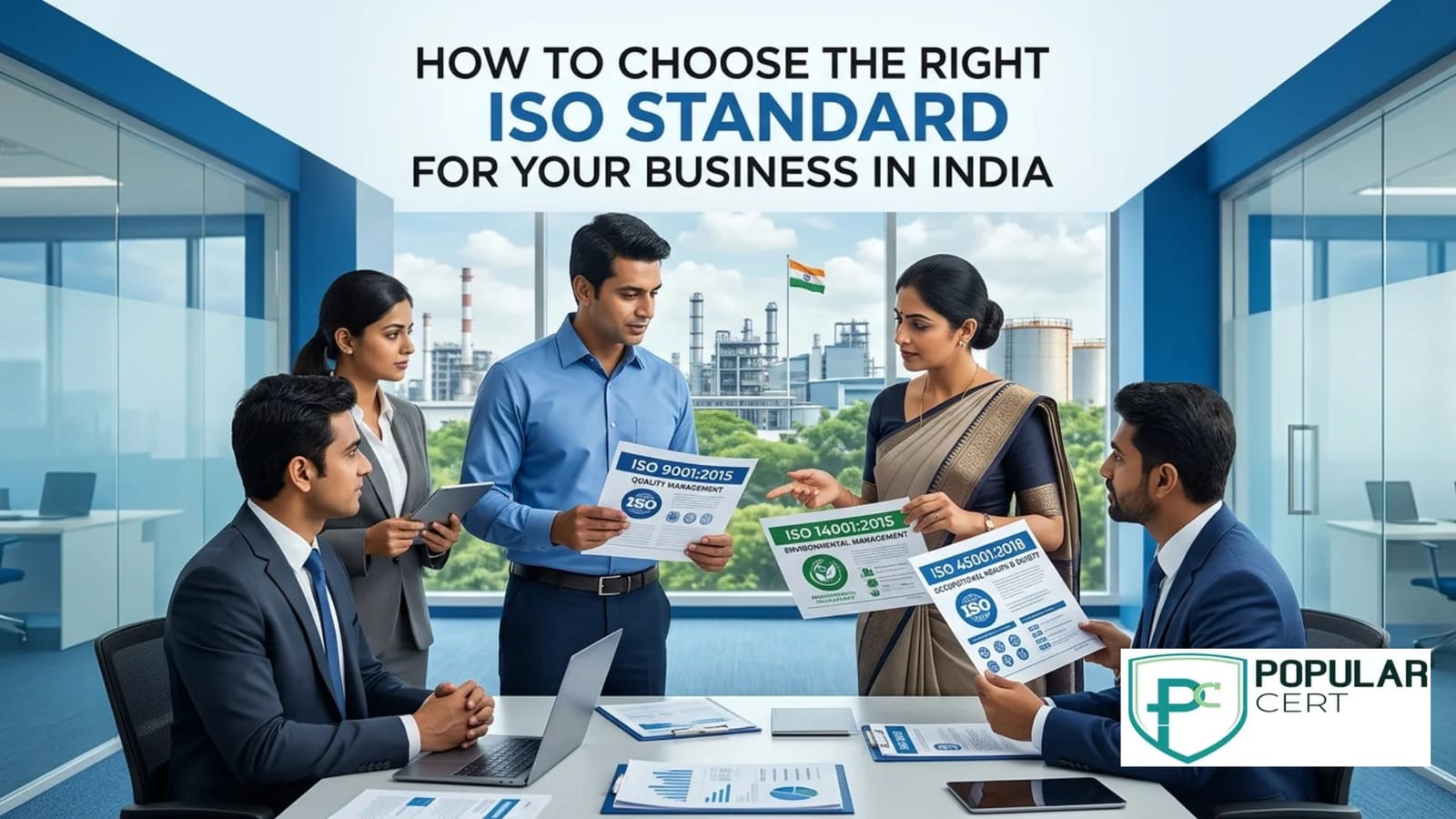
Choosing the right ISO standard in India is an important decision for businesses in India. ISO standards help organizations improve quality, manage risks, protect information, maintain workplace safety and meet customer expectations.
However, not every business needs the same certification. A manufacturing company may focus on product quality and environmental performance, while an IT company may need information security management. Food businesses may require stronger food safety controls.
The right choice depends on your industry, business activities, customer requirements and improvement goals. This guide explains how to select a suitable ISO standard for your business in India.
Why Is Choosing the Right ISO Standard Important?
ISO standards provide structured management systems that help businesses control their processes and improve performance.
Selecting the appropriate standard can help your organization:
Improve product and service quality.
Meet customer and industry expectations.
Manage workplace and operational risks.
Strengthen information security.
Improve environmental performance.
Prepare for supplier evaluations and business tenders.
Build confidence among customers and business partners.
Choosing a standard that does not match your business activities may create unnecessary documentation and implementation work. Therefore, businesses should identify their actual requirements before starting certification.
Popular ISO Standards for Businesses in India
Different ISO standards address different business needs. The following are some commonly considered standards.
ISO Standard
Main Focus
Suitable Businesses
ISO 9001
Quality Management
Manufacturing, IT, construction, trading and service companies
ISO 14001
Environmental Management
Manufacturing, chemical, construction and industrial businesses
ISO 45001
Occupational Health and Safety
Factories, construction, engineering and logistics companies
ISO 22000
Food Safety Management
Food manufacturers, processors, restaurants and food suppliers
ISO/IEC 27001
Information Security
IT companies, software firms, financial services and data service providers
ISO 50001
Energy Management
Energy-intensive factories, industrial plants and large facilities
ISO 13485
Medical Device Quality Management
Medical device manufacturers and related suppliers
ISO 22301
Business Continuity Management
IT, banking, financial services and organizations with critical operations
ISO 37001
Anti-Bribery Management
Companies working with government contracts, suppliers and international partners
The best standard is the one that addresses a real requirement or risk within your organization.
How to Choose the Right ISO Standard for Your Business
Before selecting a certification, consider the following factors.
1. Identify Your Industry and Business Activities
Start by understanding what your company does. Different industries face different operational and regulatory requirements.
For example:
Manufacturing companies may benefit from ISO 9001 and ISO 14001.
Food processing companies may consider ISO 22000.
IT and software companies may consider ISO/IEC 27001.
Construction companies may consider ISO 9001 and ISO 45001.
Medical device manufacturers may require ISO 13485.
Logistics companies may consider ISO 9001, ISO 45001 or ISO 39001, depending on their activities.
Your business activities should guide your selection rather than choosing a standard simply because it is popular.
2. Understand Your Customer Requirements
Customers, suppliers and business partners may specify particular ISO certifications when selecting vendors.
For example, a company supplying products to a large manufacturer may be asked to demonstrate a quality management system. An IT service provider handling sensitive customer information may be expected to maintain an information security management system.
Review customer contracts, supplier requirements and tender conditions before deciding which standard to implement.
3. Identify Your Main Business Risks
Every organization faces different risks. Identifying them helps determine which management system would provide the most value.
Business Risk
Relevant ISO Standard
Product defects and inconsistent services
ISO 9001
Pollution and environmental impact
ISO 14001
Workplace accidents and occupational hazards
ISO 45001
Food contamination and safety issues
ISO 22000
Data breaches and information security threats
ISO/IEC 27001
Energy waste and high energy consumption
ISO 50001
Business interruptions
ISO 22301
Choose a standard that addresses the risks most relevant to your operations.
4. Check Industry and Regulatory Requirements in India
Indian businesses must follow applicable laws, regulations and industry requirements. ISO certification can support management and compliance activities, but it does not replace statutory licences, registrations or approvals.
Depending on your sector, you may need to consider:
FSSAI requirements: Relevant to food businesses, including licensing and food safety obligations.
Environmental regulations: Requirements under applicable pollution control, waste management and environmental laws.
Factory and workplace safety requirements: Applicable occupational safety and labour regulations.
Data protection requirements: The Digital Personal Data Protection Act, 2023 and applicable rules and obligations.
Medical device regulations: Requirements administered by the Central Drugs Standard Control Organisation (CDSCO), where applicable.
Review the legal requirements that apply to your business before selecting an ISO standard.
5. Consider Your Business Size and Resources
The size of your company does not determine whether it can implement an ISO management system. Small, medium and large organizations can adopt relevant standards.
However, you should consider:
Number of employees and departments.
Complexity of business operations.
Available technical resources.
Existing policies and procedures.
Management commitment.
Time required for implementation and audits.
Choose a standard that your organization can implement and maintain effectively.
6. Consider Future Business Goals
Your choice should also support your long-term business plans.
For example, a manufacturing company planning to work with international customers may focus on quality and environmental management. An IT company expanding its services to overseas clients may prioritize information security.
Think about upcoming tenders, new markets, customer expectations and planned business expansion before finalizing your selection.
Which ISO Certification Is Suitable for Different Industries in India?
The following examples can help businesses identify suitable starting points.
Industry
ISO Standards to Consider
Manufacturing
ISO 9001, ISO 14001, ISO 45001
IT and Software
ISO 9001, ISO/IEC 27001, ISO 22301
Food Processing
ISO 22000, ISO 9001, ISO 14001
Construction
ISO 9001, ISO 14001, ISO 45001
Healthcare
ISO 9001, ISO 45001, ISO 13485 where applicable
Logistics and Transportation
ISO 9001, ISO 45001, ISO 39001
Pharmaceuticals
ISO 9001, ISO 14001 and relevant sector-specific requirements
Educational Institutions
ISO 21001, ISO 9001
Energy and Utilities
ISO 50001, ISO 14001, ISO 45001
These are examples, not mandatory combinations. The appropriate standards depend on the organization's actual activities and customer or regulatory requirements.
Can a Business Get Multiple ISO Certifications?
Yes. A business can implement more than one ISO management system when it has different quality, environmental, safety, security or operational requirements.
For example, a manufacturing company may choose:
ISO 9001 for quality management.
ISO 14001 for environmental management.
ISO 45001 for occupational health and safety.
These standards share a common management system structure, making it possible to integrate relevant processes such as document control, internal audits, management reviews and corrective actions.
An integrated management system can reduce duplicated work and make it easier to manage multiple certifications.
However, businesses should select additional standards only when they serve a clear operational, customer or compliance purpose.
Steps to Implement the Selected ISO Standard
After selecting the right standard, your organization can follow a structured implementation process.
Gap Assessment: Review existing business practices and identify areas that do not meet the selected standard.
Documentation: Prepare policies, procedures, objectives and records required by the management system.
Employee Training: Explain the standard and employees' responsibilities.
Implementation: Apply the documented procedures across relevant departments.
Internal Audit: Check whether the management system is properly implemented and identify nonconformities.
Management Review: Evaluate system performance and decide on improvements.
Certification Audit: Arrange an independent audit through a suitable certification body.
The time required depends on the organization's size, complexity and existing management practices.
How PopularCert Helps Businesses Choose the Right ISO Standard
At PopularCert, we help businesses in India understand their certification requirements and select standards that match their operations.
Our support includes:
Reviewing business activities and customer requirements.
Identifying suitable ISO standards.
Conducting gap assessments.
Preparing management system documentation.
Supporting employee training and implementation.
Assisting with internal audits and management reviews.
Preparing businesses for independent certification audits.
We focus on practical implementation so that businesses can maintain their management systems beyond the certification audit.
PopularCert provides consultancy and implementation support. The final certification decision is made by an independent certification body.
Conclusion
Choosing the right ISO standard starts with understanding your business activities, customer expectations, operational risks and future goals. ISO 9001, ISO 14001, ISO 45001, ISO 22000 and ISO/IEC 27001 address different management needs, so businesses should select standards based on their actual requirements.
Indian organizations should also review applicable legal and industry obligations before starting implementation. With the right standard and a practical implementation plan, businesses can improve operations, strengthen customer confidence and build a more consistent management system.
Frequently Asked Questions
1. Which ISO certification is best for businesses in India?
ISO 9001 is a common starting point for businesses seeking to improve quality management. However, the right certification depends on the organization's industry, activities and requirements.
2. Can small businesses in India get ISO certification?
Yes. Small businesses can obtain ISO certification if they establish and implement a management system that meets the relevant standard's requirements.
3. Can one company get multiple ISO certifications?
Yes. A company can implement multiple standards, such as ISO 9001, ISO 14001 and ISO 45001, and may combine common management system processes.
4. Is ISO certification mandatory for every business in India?
No. ISO certification is generally voluntary. However, customers, contracts, tenders or specific industry requirements may make particular certifications necessary.
5. How do I know which ISO standard my company needs?
Review your business activities, customer expectations, operational risks, industry requirements and future goals. A gap assessment with an experienced ISO consultant can help identify suitable standards.