
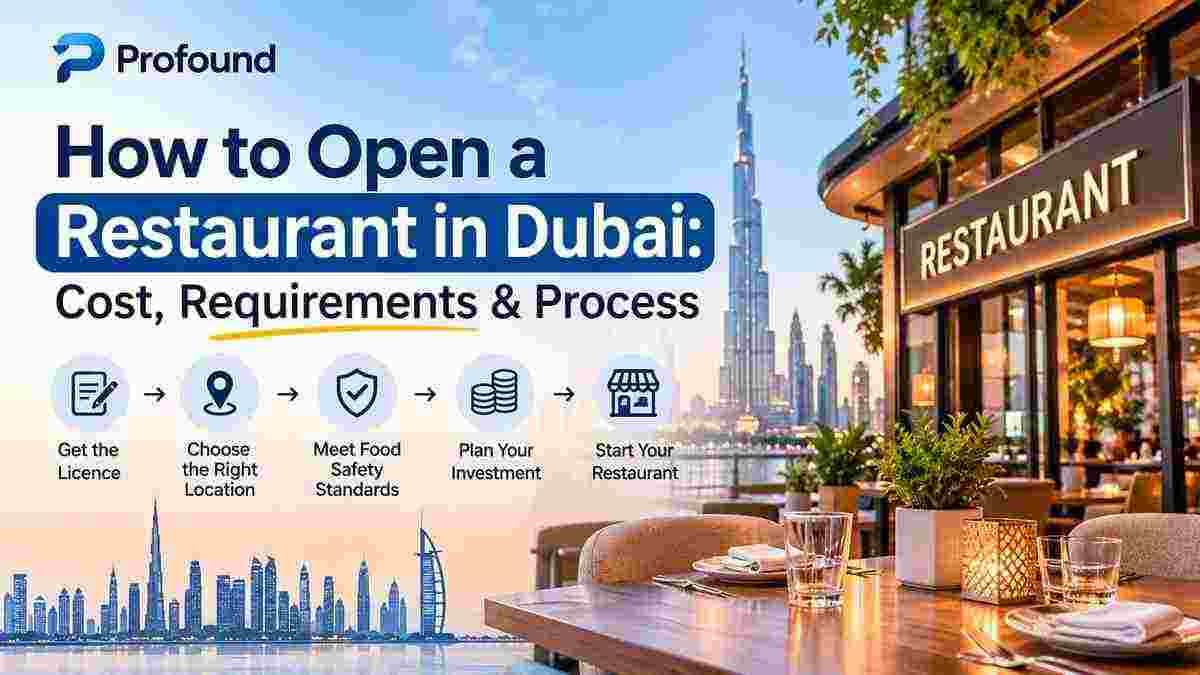
Starting a restaurant in Dubai can be an exciting business opportunity for entrepreneurs interested in the food and hospitality industry. The city offers a diverse customer base, international food preferences and opportunities for different restaurant concepts.
However, turning a restaurant idea into an operating business requires careful planning. Investors must consider business registration, commercial premises, licensing, food safety, staffing and financial management.
If you are exploring how to open a restaurant in Dubai, understanding the following steps can help you prepare for the process and make better business decisions.
1. Start With a Clear Restaurant Business Idea
Before investing money, decide what type of restaurant you want to establish.
Dubai's dining market includes everything from neighbourhood cafés and casual restaurants to premium dining establishments and specialised food outlets.
Your concept should answer three important questions:
Who are your intended customers?
What makes your restaurant different?
Can your target customers afford your proposed menu prices?
For example, a speciality café may focus on coffee quality and takeaway convenience, while a family restaurant may prioritise seating capacity, menu variety and accessibility.
Researching your target audience and competitors will help you develop a realistic business concept.
2. Create a Detailed Financial Plan
A restaurant requires investment in several areas before it can generate revenue.
Your financial plan should include both initial establishment expenses and ongoing operating costs.
Important investment categories include:
Business registration: Company formation, trade licence and related administrative expenses.
Property expenses: Commercial rent, security deposits and tenancy-related costs.
Interior development: Restaurant design, furniture, lighting and construction.
Kitchen equipment: Refrigerators, cooking appliances, preparation tables and ventilation systems.
Staffing: Recruitment, salaries, employment-related expenses and training.
Daily operations: Food inventory, utilities, cleaning supplies and maintenance.
Marketing: Branding, photography, website development and promotional campaigns.
Keep additional working capital available to manage unexpected costs and support the business during its early months.
3. Find a Location That Matches Your Restaurant Concept
The location you select can influence customer traffic, rental expenses and overall operating costs.
A restaurant serving office employees may benefit from a commercial district, whereas a family-oriented restaurant may find residential communities more suitable.
When evaluating commercial properties, consider:
Visibility and customer accessibility.
Nearby residential or commercial developments.
Parking availability.
Rental conditions.
Kitchen infrastructure.
Ventilation and drainage.
Electricity and water capacity.
Do not finalise a property simply because it has an attractive rental price. Check whether it is suitable for the proposed restaurant activity and whether the necessary approvals can be obtained.
4. Understand Mainland and Free Zone Options
Choosing the appropriate business jurisdiction is another important decision.
Dubai offers mainland and free zone business structures, each with its own regulatory framework.
A mainland company is commonly considered for restaurants operating physical premises and serving customers directly in the local market.
Free zone structures may suit certain specialised business activities, subject to the relevant authority's regulations and permitted operating arrangements.
Before choosing, evaluate ownership requirements, licensed activities, customer access and long-term expansion plans.
The right structure should support your actual business model rather than simply offering the lowest initial registration cost.
5. Complete the Restaurant Licensing Process
A restaurant needs the appropriate business licence and any additional approvals applicable to its activities and premises.
The process may involve company registration, trade name approval, initial approval, tenancy documentation and other regulatory requirements.
Food establishment requirements should also be considered separately.
Depending on the proposed restaurant, relevant procedures may involve:
Restaurant activity approval.
Kitchen layout and design review.
Food storage and preparation arrangements.
Hygiene and sanitation standards.
Ventilation and waste management.
Relevant inspections and food safety documentation.
Entrepreneurs should confirm the latest requirements with the relevant Dubai authorities before beginning construction or opening the restaurant.
6. Plan Kitchen Infrastructure and Food Safety
A properly organised kitchen helps maintain food quality and operational efficiency.
The layout should allow employees to move logically between food storage, preparation, cooking, cleaning and waste disposal areas.
Choose equipment according to your actual menu requirements. Purchasing unnecessary appliances can increase the initial investment without improving productivity.
Food safety should remain a priority throughout the operation.
Establish clear procedures for food handling, temperature monitoring, cleaning, storage and employee hygiene.
These practices support consistent food quality and help the restaurant meet applicable requirements.
7. Recruit the Right Team
Employees have a direct influence on the restaurant's service quality and customer experience.
Depending on the business model, your team may include:
Head chefs and kitchen staff.
Restaurant supervisors.
Service employees.
Cashiers.
Cleaning and maintenance personnel.
Operations managers.
Recruit employees with relevant experience and provide training before the restaurant opens.
Clearly define job responsibilities, working procedures and customer service expectations.
An organised team can help reduce operational mistakes and maintain consistent service during busy periods.
8. Build a Marketing Strategy Before Launch
Customers need to discover your restaurant before they can become regular visitors.
Begin developing your brand identity while the establishment is being prepared.
Useful marketing activities include creating a professional website, establishing social media profiles, publishing menu photography and maintaining accurate business information online.
You can also consider local promotional campaigns, partnerships with relevant food communities and customer referral initiatives.
Focus on communicating what makes your restaurant worth visiting instead of relying entirely on discounts.
9. Manage Restaurant Operations After Opening
Opening the restaurant is only the beginning of the business journey.
Once operations start, regularly review your financial and operational performance.
Monitor important indicators such as:
Monthly sales and revenue.
Food and beverage costs.
Employee expenses.
Inventory wastage.
Customer reviews.
Repeat customer activity.
Menu performance.
These indicators can help you identify problems early and make improvements.
For example, if certain menu items have high preparation costs but limited customer demand, reviewing their pricing or ingredients may improve profitability.
How Professional Business Setup Support Can Help
Restaurant establishment involves several administrative and regulatory activities that need to be coordinated carefully.
Entrepreneurs may need assistance understanding company formation, licensing procedures, documentation and the appropriate business structure.
Profound provides business setup assistance in Dubai, helping entrepreneurs navigate company formation, licensing and related administrative requirements.
If you are researching the complete process, you can explore this detailed resource: How to Open a Restaurant in Dubai.
It provides further information about the important considerations involved in establishing a restaurant, including investment planning, licensing and setup procedures.
You can also visit Profound's official website to learn more about its business setup services.
Conclusion
Opening a restaurant in Dubai requires more than a promising food concept. Entrepreneurs must combine market research, financial planning, suitable property selection, regulatory preparation and effective operational management.
Taking time to understand these areas before investing can help reduce avoidable complications and create a stronger foundation for the business.
Whether you are planning a small café, a casual dining restaurant or a specialised food establishment, careful preparation is an important first step towards building a sustainable business.
Disclaimer: Business licensing, food safety approvals, documentation and establishment costs may vary depending on the restaurant activity, premises and applicable authorities. Verify current requirements before proceeding.