Introduction
Mobile gaming has become one of the most popular forms of digital entertainment. Millions of people use smartphones and tablets to enjoy games, connect with other players, and explore interactive experiences. From simple casual games to advanced multiplayer adventures, mobile games have changed how people experience entertainment.
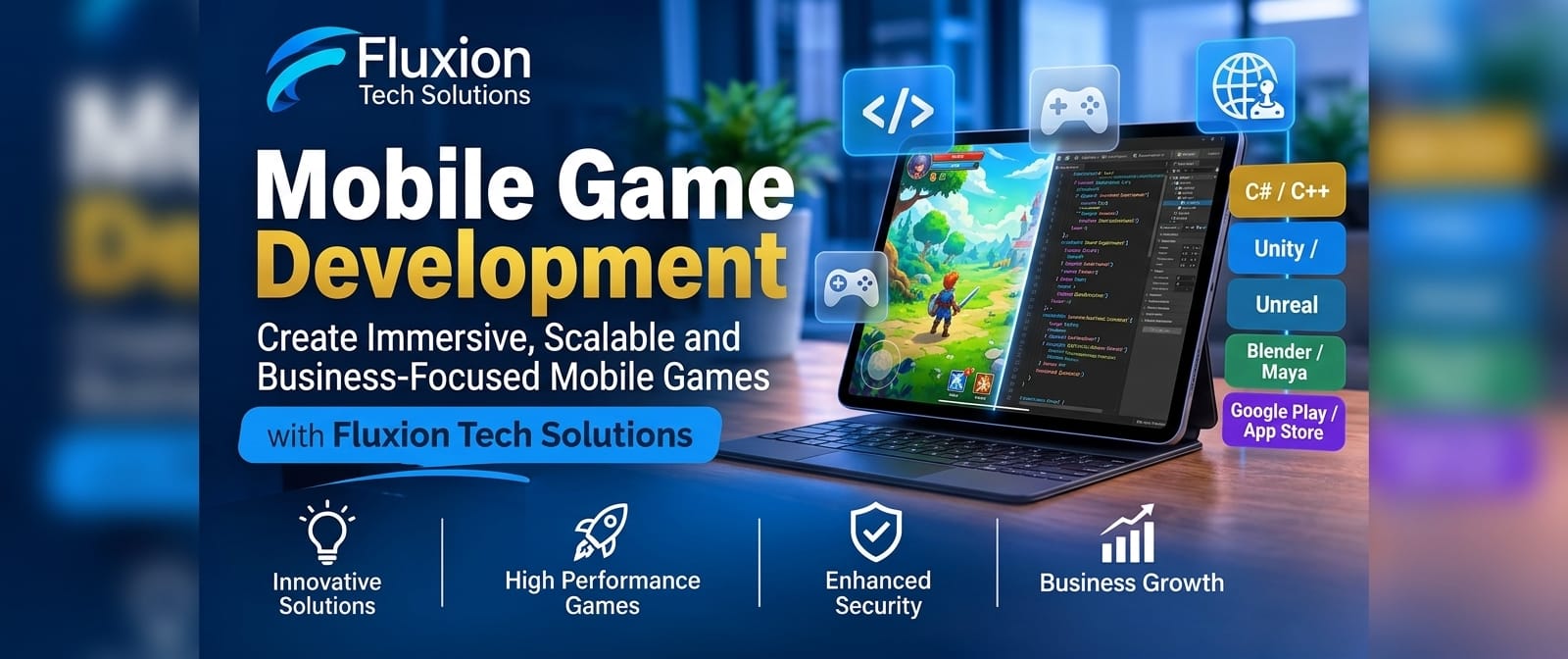
Mobile Game Development involves designing, building, testing, and launching games for mobile devices. It combines creativity, programming, graphics, sound, and user experience to create engaging digital products.
For businesses and game creators, choosing the right development approach is important for building successful gaming applications. Fluxion Tech Solutions recognizes the growing role of mobile technology and the importance of developing innovative digital experiences that meet modern user expectations.
What Is Mobile Game Development?
Mobile Game Development is the process of creating games specifically for smartphones and tablets. These games can run on operating systems such as Android and iOS and may include different genres, including action, puzzles, strategy, simulation, sports, and adventure.
The development process involves several important elements:
Game concept and story planning.
Character and environment design.
Programming and game mechanics.
Sound effects and background music.
User interface and navigation.
Testing and performance optimization.
Publishing and ongoing updates.
A successful mobile game combines attractive visuals, responsive controls, smooth performance, and enjoyable gameplay.
Why Mobile Gaming Is Growing
Mobile gaming continues to attract users because smartphones are widely available and provide convenient access to entertainment.
1. Easy Accessibility
Players can access mobile games almost anywhere using their smartphones. They do not always need expensive gaming equipment or dedicated consoles.
2. Different Gaming Experiences
Mobile platforms support a wide variety of game genres. Users can enjoy quick puzzle challenges, competitive multiplayer games, realistic simulations, and story-driven adventures.
3. Social Connectivity
Many games include multiplayer features, leaderboards, chat systems, and team-based challenges. These features help players connect and compete with others.
4. Continuous Technology Improvements
Modern smartphones offer improved processors, graphics capabilities, displays, and connectivity. These improvements create opportunities for more detailed and interactive gaming experiences.
Important Technologies Used in Mobile Game Development
Developers use different technologies and tools depending on the type and complexity of a game.
Unity
Unity is a widely used game development engine that supports 2D and 3D game creation. It provides development tools, asset management, physics features, and support for multiple platforms.
Unreal Engine
Unreal Engine is known for its advanced graphics capabilities and tools for creating detailed 3D environments. It is often used for visually demanding gaming projects.
Godot
Godot is an open-source game engine that supports both 2D and 3D development. Its flexible tools make it an option for independent developers and smaller teams.
Programming Languages
Programming languages play an important role in game functionality. C#, C++, and other languages may be used depending on the selected engine and development requirements.
The best technology depends on the game's design, performance expectations, budget, and target devices.
Key Features of a Successful Mobile Game
A successful game needs more than attractive graphics. It should provide enjoyable gameplay and a smooth experience.
Engaging Gameplay
Game mechanics should be easy to understand while offering enough challenges to keep players interested.
Attractive Graphics
Visual elements, animations, characters, and environments help establish the game's identity and make the experience more immersive.
Responsive Controls
Players should be able to interact with the game easily. Controls need to respond quickly and work comfortably on different screen sizes.
Sound and Music
Background music, sound effects, and character audio can make gameplay more engaging and help create the right atmosphere.
Multiplayer Functionality
Depending on the game concept, multiplayer features can allow users to compete or cooperate with other players.
Progress and Rewards
Levels, achievements, rewards, and unlockable content can encourage users to continue playing.
The Mobile Game Development Process
Creating a mobile game requires a structured process. Each stage contributes to the quality and success of the final product.
1. Game Concept and Planning
The first stage involves developing the main idea. The team identifies the target audience, game genre, story, gameplay mechanics, and key features.
A clear plan helps define the project's direction and development requirements.
2. Game Design
Designers create the game's visual style, characters, environments, levels, and interface. They also plan how players will interact with different game elements.
3. Development and Programming
Developers build the game's functionality using the selected game engine and programming tools. This stage includes movement, interactions, scoring systems, animations, and other gameplay mechanics.
4. Graphics and Audio Integration
Visual assets, animations, music, and sound effects are added to create a complete gaming experience.
5. Testing and Optimization
Testing helps identify bugs, control issues, performance problems, and compatibility concerns. Games should be tested on suitable devices to ensure smooth operation.
6. Launch and Maintenance
After development and testing, the game can be prepared for release through relevant app stores. Updates may introduce new levels, improve performance, fix bugs, and respond to user feedback.
Challenges in Mobile Game Development
Although mobile gaming offers many opportunities, developers must address several challenges.
Device Compatibility: Smartphones have different screen sizes, hardware capabilities, and operating-system versions. Games should be tested across relevant devices.
Performance Optimization: Developers need to manage graphics, memory, battery usage, and loading times to maintain a smooth experience.
Security: Games that use accounts, online services, or in-app purchases need appropriate security measures to protect user information and transactions.
User Retention: Keeping players interested requires enjoyable gameplay, balanced difficulty, useful updates, and thoughtful design.
Competition: The mobile gaming market contains many games. A unique concept and strong user experience can help a game stand out.
Monetization Strategies for Mobile Games
Game monetization allows developers and businesses to generate revenue from their products.
In-App Purchases
Players can purchase virtual items, additional content, upgrades, or other digital products within a game.
Advertisements
Some games display advertisements to generate revenue. Ad placement should be carefully planned so it does not unnecessarily interrupt gameplay.
Premium Games
Premium games require users to pay before downloading or accessing the full experience.
Subscription Models
Some games offer recurring subscriptions that provide additional content, exclusive features, or other benefits.
The right monetization model depends on the game's audience, genre, business goals, and overall experience.
Why Choose Fluxion Tech Solutions?
Choosing the right technology partner is an important part of planning a digital product. A development project requires clear communication, technical planning, and attention to user needs.
Fluxion Tech Solutions focuses on technology solutions designed around business requirements and modern digital experiences.
When planning a mobile game, important considerations include:
Understanding the target audience and game concept.
Selecting suitable development technologies.
Designing attractive and user-friendly interfaces.
Building reliable gameplay functionality.
Testing performance across relevant devices.
Planning future updates and improvements.
A thoughtful development strategy can help turn a creative gaming idea into a practical digital product.
Future Trends in Mobile Game Development
The mobile gaming industry continues to evolve as technology and player expectations change.
Cloud gaming may provide new ways to access demanding games through supported services. Augmented reality can introduce interactive experiences that combine digital content with real-world environments.
Artificial intelligence can also support game design through smarter non-player characters, adaptive gameplay, and more personalized experiences.
Cross-platform features may allow players to access games across different devices, depending on the game's architecture and platform support.
These developments create opportunities for developers to explore new ideas and deliver more engaging gaming experiences.
Conclusion
Mobile gaming has become an important part of modern digital entertainment. From casual puzzles to advanced multiplayer experiences, games offer opportunities for creativity, innovation, and business growth.
Mobile Game Development requires the right combination of technology, design, programming, testing, and ongoing improvement. By focusing on performance, user experience, and engaging gameplay, developers can create games that appeal to modern audiences.
Fluxion Tech Solutions understands the importance of modern technology solutions and the role that well-planned digital products can play in today's competitive environment.
Frequently Asked Questions (FAQs)
1. What is Mobile Game Development?
It is the process of designing, programming, testing, and launching games for smartphones and tablets.
2. Which tools are used for mobile game development?
Popular tools include Unity, Unreal Engine, and Godot. The choice depends on the game's requirements and development goals.
3. Can mobile games run on both Android and iOS?
Yes. Developers can create games for both platforms using suitable engines and development approaches, although platform-specific testing and configuration may be necessary.
4. How long does it take to develop a mobile game?
The timeline depends on the game's complexity, graphics, features, multiplayer requirements, and testing needs. Simple games generally require less development time than large 3D games.
5. Is mobile game development expensive?
Costs vary according to the project scope, development team, design requirements, technology, and ongoing maintenance.
6. How do mobile games generate revenue?
Common monetization methods include in-app purchases, advertisements, premium downloads, and subscriptions.
7. Why is testing important in mobile game development?
Testing helps identify bugs, improve performance, check device compatibility, and provide a smoother gaming experience.
8. What makes a mobile game successful?
Engaging gameplay, responsive controls, attractive visuals, good performance, and regular improvements can contribute to a positive player experience.