Industrial facilities often generate dust during manufacturing, cutting, grinding, mixing, and material handling. If not controlled, airborne dust can affect air quality, worker safety, equipment performance, and overall productivity. A cartridge dust collector helps industries capture these particles before they spread throughout the workplace.
Understanding how a cartridge dust collector works can help businesses choose the right dust filtration solution for their operations. These systems use specially designed filter cartridges to remove dust from industrial air, supporting cleaner working environments and better production efficiency.
What Is an Industrial Cartridge Dust Collector?
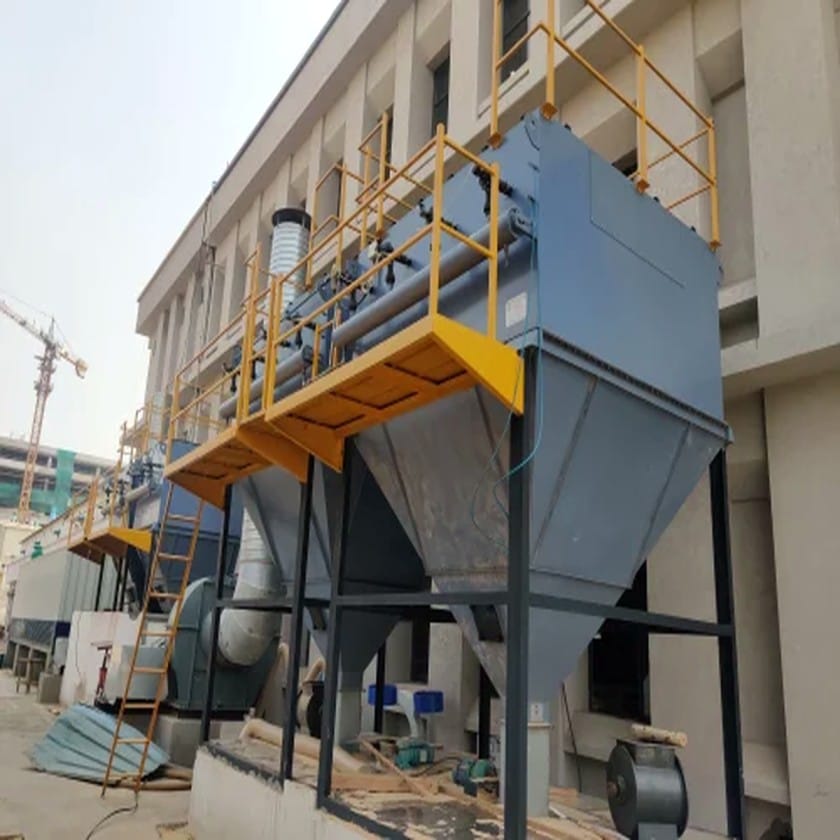
An industrial cartridge dust collector is an air filtration system designed to capture dust, smoke, and other airborne particles generated during industrial processes. It uses pleated filter cartridges that provide a large filtration surface within a compact space.
Unlike traditional bag filters, cartridge-based systems offer a high filtration area and can capture fine dust particles effectively. They are commonly used in industries such as metal processing, woodworking, automotive manufacturing, pharmaceuticals, and food processing.
How Does a Cartridge Dust Collection System Work?
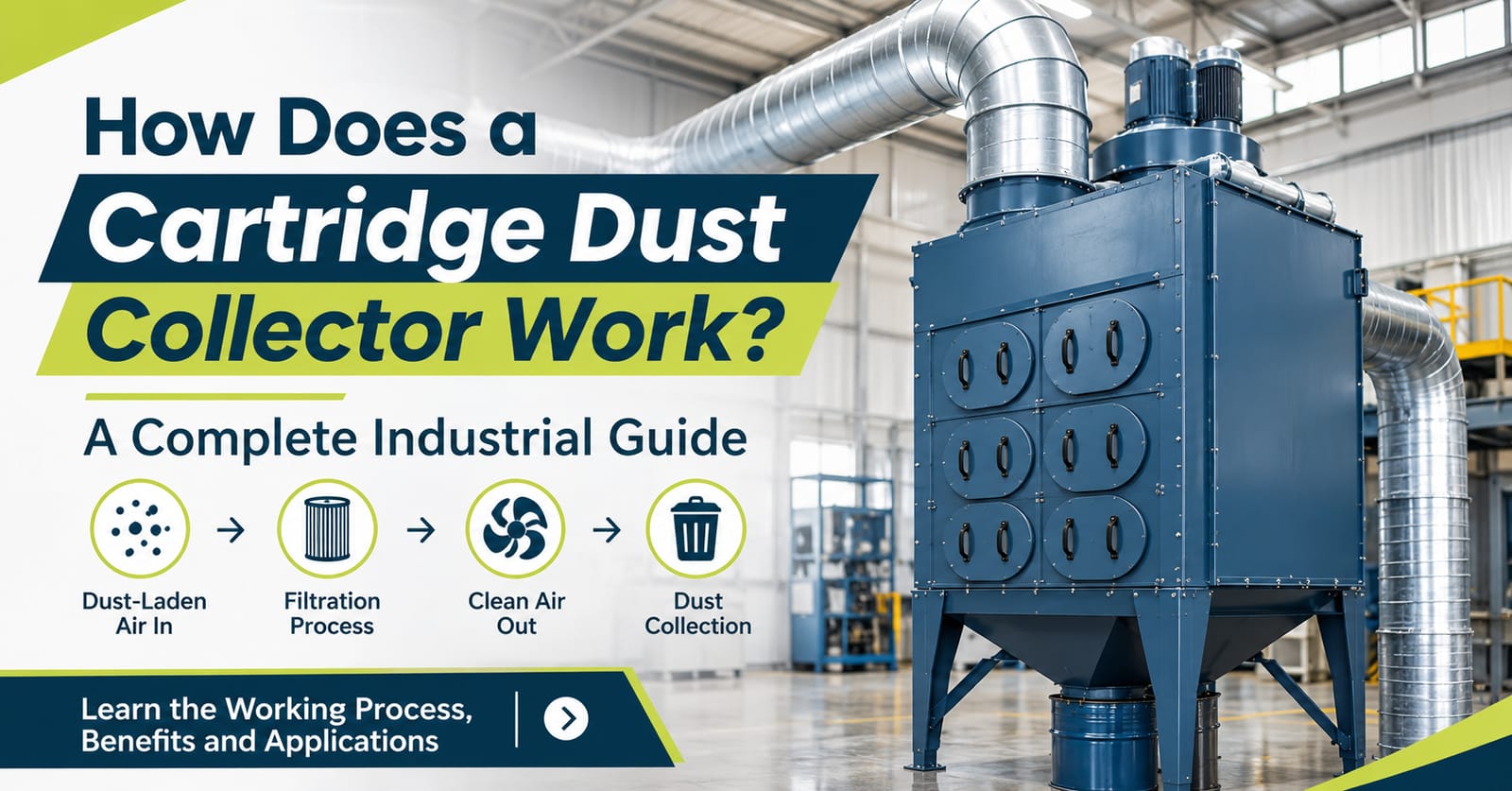
A cartridge dust collection system works by drawing dust-laden air into the collector, filtering unwanted particles, and releasing cleaner air back into the environment or through an exhaust system.
The process generally involves four main stages:
1. Dust-Laden Air Intake
Dusty air enters the collector through an inlet duct or extraction hood. The system directs the airflow into the filtration chamber, where larger particles may settle before reaching the filters.
2. Filtration Through Cartridge Filters
Inside the unit, air passes through pleated filter cartridges. The filter media captures dust particles on its surface while allowing cleaner air to pass through.
A cartridge filter dust collector is particularly useful for applications that generate fine and dry dust. The pleated design provides a large filtration area without requiring excessive equipment space.
3. Pulse Jet Cleaning System
As dust accumulates on the filter surface, airflow resistance increases. To maintain filtration efficiency, compressed air is released in short bursts through a pulse jet cleaning system.
This process removes accumulated dust from the cartridges. The dislodged particles fall into a collection hopper for safe disposal.
4. Clean Air Discharge
After passing through the filter media, cleaner air moves towards the clean-air chamber. Depending on the system design and application, it can be exhausted outside or returned to the workplace after suitable filtration and safety checks.
Key Components of an Industrial Cartridge Filter System
An industrial cartridge filter system consists of several components that work together to provide effective dust control.
The main components include:
Filter cartridges: Capture airborne dust and fine particles.
Pulse jet cleaning system: Removes accumulated dust from filter surfaces.
Dust collection hopper: Collects separated dust for disposal.
Fan and motor: Maintain the required airflow through the system.
Control panel: Helps monitor and manage system operations.
Proper selection and maintenance of these components help maintain consistent filtration performance.
Benefits of Cartridge Dust Collection Systems
Cartridge-based filtration offers several advantages for industrial applications.
High filtration efficiency: Captures fine airborne dust when correctly selected for the application.
Compact design: Requires relatively less installation space.
Easy maintenance: Cartridge replacement and pulse cleaning simplify routine servicing.
Improved workplace air quality: Helps control airborne dust at its source.
Operational efficiency: Proper system design supports reliable industrial performance.
How to Choose the Right Cartridge Dust Collector Manufacturer?
Selecting an experienced cartridge dust collector manufacturer is important for achieving reliable dust control. Every industry has different dust characteristics, airflow requirements, and operating conditions.
Before selecting a system, consider dust particle size, air volume, temperature, moisture content, filtration media, and available installation space. Also evaluate the manufacturer's engineering capabilities, maintenance support, and experience with similar industrial applications.
Conclusion
A well-designed cartridge filtration system plays an important role in maintaining cleaner industrial environments. From capturing airborne particles to automatically cleaning filter surfaces, these systems support efficient dust management across different industries.
Choosing the right filtration technology can also help reduce operating costs and improve long-term performance. The goal is simple: save power without losing performance through properly engineered dust collection solutions.
Looking for an effective industrial air filtration solution? Connect with an experienced industrial dust collection specialist to explore a system designed around your operational requirements.