Introduction
Fragrance plays an important role in shaping how people experience an indoor environment. A carefully selected scent can make a home feel more welcoming, create a relaxing atmosphere and leave hotel guests with a memorable impression. As homeowners and hospitality businesses increasingly focus on comfort and customer experience, professional scenting has become an important part of modern interior environments.
Combining advanced diffusion technology with carefully selected fragrance oils offers a practical way to create a consistent and pleasant atmosphere. The right equipment, fragrance profile, room coverage and maintenance routine all influence the final result. Understanding these factors helps homeowners and hotel operators make informed decisions about improving their indoor spaces through scent.
1. Why Does Fragrance Matter in Modern Homes and Hotels?
Fragrance contributes to the overall character of an indoor space. Alongside lighting, furniture, colours and temperature, scent helps create an environment that reflects the purpose and personality of a room.
In residential settings, suitable fragrances can make living rooms feel inviting, bedrooms more relaxing and entrances more welcoming. Fresh, subtle scents may work well in shared areas, while softer fragrance profiles can be appropriate for personal spaces.
Hotels use fragrance to support a consistent guest experience. A pleasant scent in a reception area, corridor or lounge can contribute to the property's atmosphere. When selected carefully, a recognisable fragrance profile can also become part of a hotel's identity.
However, fragrance should complement the environment rather than dominate it. The objective is to create a comfortable atmosphere that visitors notice positively without finding it overwhelming.
2. What Makes a Diffuser Suitable for Luxury Spaces?
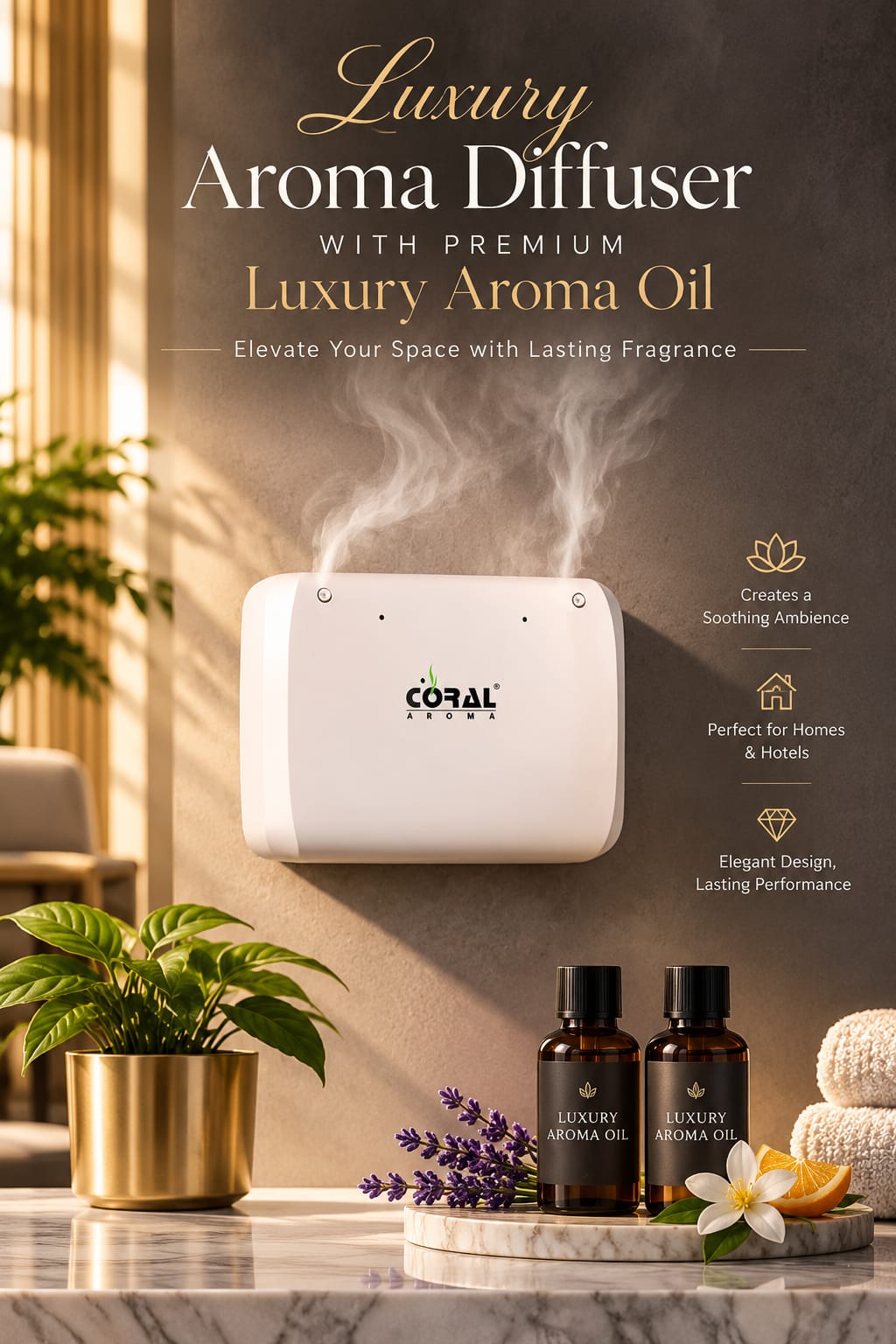
A luxury aroma diffuser is generally selected for its combination of design, performance, coverage and ease of operation. Unlike basic fragrance solutions, advanced diffusers may offer features that help maintain a more controlled and consistent scent experience.
Important factors to consider include:
Diffusion technology: Cold-air or nebulising systems disperse fragrance without requiring water or heat, depending on the model.
Coverage capacity: The equipment should be suitable for the room's dimensions and ventilation conditions.
Adjustable intensity: Multiple output settings allow users to control fragrance strength according to the environment.
Programmable operation: Timers and scheduling features can help maintain fragrance during selected hours.
Design and appearance: A compact, modern or discreet design can complement contemporary interiors.
Maintenance requirements: Accessible components and straightforward cleaning make regular upkeep easier.
For homes, a compact unit may be sufficient for a bedroom or living area. Hotels and larger properties may require commercial-grade equipment capable of serving reception areas, lounges and other shared spaces.
3. How Do Premium Fragrance Oils Influence Indoor Ambience?
The fragrance itself is just as important as the equipment used to disperse it. Different scent families create different impressions, making fragrance selection an essential part of indoor scent planning.
A luxury aroma oil can be selected according to the atmosphere a property wants to establish. For example, floral notes may create a soft and welcoming impression, while woody and amber profiles can contribute to a warm, sophisticated environment. Citrus and fresh herbal notes may be suitable for spaces where a clean, refreshing character is preferred.
Common fragrance categories include:
Floral: Rose, jasmine and other floral notes for elegant and welcoming environments.
Woody: Sandalwood and cedar-inspired profiles for warm, refined interiors.
Citrus: Lemon, bergamot and orange notes for a fresh atmosphere.
Fresh and herbal: Green, minty or botanical profiles for a light indoor impression.
Amber and oriental: Richer fragrance compositions for spaces seeking a distinctive character.
The best choice depends on room function, visitor preferences and the desired intensity. Fragrance should also be tested in the actual environment because room size, airflow and surrounding materials can influence how a scent is perceived.
4. Choosing the Right Fragrance for Different Areas
A single fragrance may not be suitable for every room or hotel facility. Each space has a different purpose, and scent selection should reflect how people use it.
Modern homes
Living rooms: balanced floral, woody or fresh fragrances can create a welcoming atmosphere.
Bedrooms: gentle and subtle profiles may be more appropriate for relaxation.
Entrances: fresh or lightly floral scents can create a pleasant first impression.
Home offices: clean, understated fragrances may help establish a comfortable working environment.
Hotels and hospitality spaces
Reception areas: distinctive but balanced fragrances can support the property's identity.
Guest rooms: subtle scents are generally preferable to strong fragrance output.
Restaurants and cafés: fragrance should not interfere with food aromas.
Corridors and lounges: consistent, moderate scent levels can help maintain a unified atmosphere.
Hotels should also consider guest sensitivities and provide suitable fragrance-free arrangements where required.
5. How Can Hotels Create a Consistent Signature Scent?
A signature scent is a recognisable fragrance profile associated with a particular property. Hotels can use scent as one element of their wider brand experience, alongside service, interior design and visual identity.
Creating a consistent scent strategy involves selecting a fragrance that reflects the property's positioning, testing it in different areas and establishing suitable diffusion schedules.
For example, a luxury hotel may prefer a refined woody or floral profile, while a coastal property may choose lighter citrus or fresh notes. The fragrance should remain appropriate for the hotel's location, target guests and overall design.
Consistency is particularly important. Using compatible fragrance profiles across selected shared spaces can create a connected experience without making every area smell identical. Output levels should be adjusted to suit each room rather than applying one setting throughout the property.
6. What Should UAE Homeowners and Hotels Consider?
Indoor scenting in the UAE requires attention to local environmental conditions. High outdoor temperatures, frequent air-conditioning use, changing ventilation patterns and differences in building layouts can influence fragrance performance.
In Dubai, Abu Dhabi, Sharjah and other UAE locations, homeowners and hotel operators should consider the following:
Air-conditioning and ventilation: Strong airflow can affect how fragrance travels and how long it remains noticeable.
Room dimensions: Large villas, hotel lobbies and open-plan spaces may require equipment with suitable coverage.
Temperature conditions: Equipment and fragrance oils should be stored and operated according to manufacturer recommendations.
Fragrance intensity: Begin with a moderate setting and adjust it based on the room's size and feedback.
Local preferences: Select fragrance profiles that suit the property's atmosphere and intended audience.
A suitable scenting plan should account for the actual indoor environment rather than relying only on the diffuser's advertised coverage.
7. Maintenance and Long-Term Performance
Regular maintenance helps keep fragrance equipment operating reliably. Dust, residue and neglected components can affect performance over time, so users should follow the manufacturer's cleaning and servicing instructions.
A practical maintenance routine should include:
Check the fragrance level regularly and refill or replace it when necessary.
Clean the unit and relevant components according to the manufacturer's guidance.
Inspect connections, nozzles and other accessible parts for residue or blockages.
Review timers and intensity settings to ensure they match the room's current requirements.
Use compatible fragrance oils recommended for the equipment.
Arrange professional servicing when required by the manufacturer.
For hotels and larger properties, documenting maintenance schedules can help facility teams monitor equipment and maintain consistent operation.
8. How to Choose the Right Scenting Solution
Before purchasing equipment, identify the space that needs fragrance, its approximate dimensions and the atmosphere you want to create. Compare diffusion technology, coverage, control settings, noise levels, maintenance requirements and warranty support.
Also consider fragrance compatibility, refill availability and the ability to adjust output. A well-matched luxury aroma diffuser should suit the room's requirements rather than simply offering the highest advertised capacity.
Similarly, selecting a luxury aroma oil should involve evaluating its fragrance profile, suitability for the equipment and appropriateness for the intended space. Testing a fragrance before using it throughout a property can help prevent an unsuitable choice.
Frequently Asked Questions
1. How do aroma diffusers improve the atmosphere of a home?
Aroma diffusers disperse fragrance into indoor spaces, helping create a welcoming, refreshing or relaxing atmosphere. The result depends on the fragrance, room size, ventilation and diffusion settings.
2. Are professional aroma diffusers suitable for hotels?
Yes. Professional diffusers can be suitable for hotel reception areas, lounges, corridors and selected guest spaces when their coverage and output settings match the environment.
3. Which fragrance types are suitable for luxury hotels?
Woody, floral, citrus and amber-inspired profiles are common options. The best choice depends on the hotel's identity, interior design, guest preferences and the purpose of each area.
4. How often should an aroma diffuser be cleaned?
Cleaning frequency depends on the diffuser model and how frequently it is used. Users should follow the manufacturer's maintenance instructions and clean components as recommended.
5. Can one diffuser cover an entire hotel or large villa?
Not necessarily. Coverage depends on the equipment's capacity, room layout, partitions, ceiling height and ventilation. Larger properties may need multiple units or a professionally planned scenting system.
Conclusion
Fragrance can make a meaningful contribution to the atmosphere of modern homes and hotels when it is planned carefully. The right combination of diffusion technology, suitable fragrance profiles, room coverage and regular maintenance helps create a comfortable and consistent indoor experience.
For homeowners, this means choosing a scenting solution that complements everyday living. For hotels, it means developing a thoughtful fragrance strategy that supports the property's identity and guest experience. By considering local conditions, space requirements and fragrance preferences, both residential and hospitality environments can benefit from a more welcoming and memorable atmosphere.