
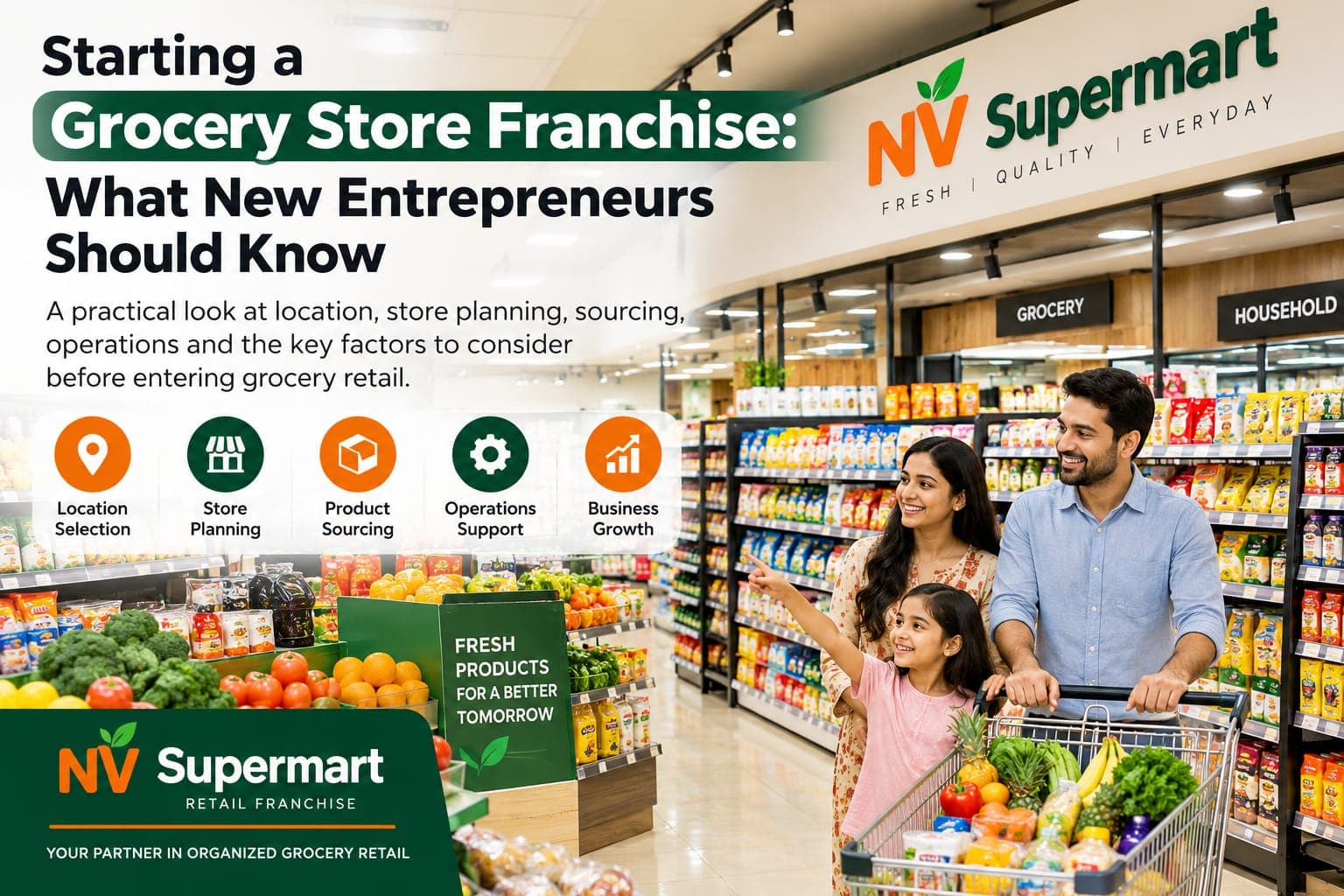
Opening a grocery store may look simple from the outside. Customers walk in, pick up their everyday products and leave. But behind that simple experience are many decisions about suppliers, inventory, pricing, store layout, customer service and daily operations.
For someone planning to enter organized retail, a grocery store franchise can be one way to approach the business with a structured model rather than building every process independently.
Why Grocery Retail Continues to Attract Entrepreneurs
Grocery products are part of everyday household consumption. Food items, packaged products, beverages, cleaning supplies and personal care products are purchased regularly.
At the same time, shopping habits are changing. Customers increasingly appreciate stores where products are easy to find, the environment is organized and multiple categories are available in one place.
This creates opportunities for entrepreneurs who understand their local market and can operate a store efficiently.
Start With the Location
Before thinking about branding or interiors, an entrepreneur should understand the location.
A grocery store serving a residential neighborhood may have very different requirements from one located in a busy commercial area. Nearby apartments, household density, competition, accessibility and rental costs can all influence the business.
A few useful questions to ask are:
Who are the potential customers?
How many grocery stores already operate nearby?
What products do local customers purchase regularly?
Is the location easy to access?
Is the available space appropriate for the planned store format?
Good location research can make the planning process much clearer.
What Does a Franchise Model Change?
With an independent grocery store, the entrepreneur generally has to develop suppliers, branding, store processes and operating systems independently.
A franchise can provide an existing framework.
Depending on the company, franchise support may include store planning, product sourcing, branding, marketing, training and operational guidance. The exact support varies, so entrepreneurs should always understand the commercial terms and responsibilities before proceeding.
Product Availability Is Important
Customers generally visit grocery stores for convenience. If commonly purchased products are unavailable, they may simply purchase them elsewhere.
This makes inventory management an important part of grocery retail.
The goal is not necessarily to stock every possible product. Instead, the store should understand local demand and maintain an appropriate product mix.
Regular stock review, supplier coordination and timely replenishment can help maintain availability without unnecessarily tying up working capital.
Understanding the Investment
The cost of opening a grocery store can vary according to the store format and location.
Entrepreneurs should consider more than just the franchise fee. Expenses may include:
Store interiors and fixtures
Initial inventory
Equipment and billing systems
Rent or security deposit
Branding and signage
Staff and operating expenses
Working capital
Marketing
A complete cost estimate gives a more realistic picture of the business requirement.
Exploring NV Supermart
NV Supermart Retail Franchise provides an organized grocery retail model for entrepreneurs looking to establish grocery and supermarket businesses in India.
According to its current website, the company provides support covering areas such as store planning, setup, product sourcing, training, inventory, marketing and operations. NV Supermart
Entrepreneurs considering a grocery store franchise can review the available store formats, investment requirements and support structure before deciding whether the model fits their location and business objectives.
Don't Ignore Day-to-Day Operations
Opening the store is only the beginning.
A grocery business requires regular attention to stock levels, product placement, customer service, billing, expenses and supplier coordination.
A well-designed store can attract customers, but consistent operations are what help maintain the shopping experience over time.
This is why entrepreneurs should evaluate not only the franchise brand but also the operational support and systems available to them.
Final Thoughts
A grocery store franchise can provide entrepreneurs with a structured entry into organized grocery retail. However, the decision should be based on practical factors rather than simply choosing a popular brand.
Location, investment, product sourcing, store format, customer demand and ongoing support all deserve careful consideration.
For a new entrepreneur, taking time to understand these factors before opening the store can make the planning process more realistic and help build a stronger foundation for the retail business.