The diamond industry has undergone significant changes since conflict diamonds became an international concern in the 1990s. The issue raised difficult questions about where diamonds came from, how they were traded and whether their profits were linked to armed conflicts. Today, De Beers Blood Diamonds is a subject that needs to be understood through both historical developments and the company's current sourcing practices.
De Beers Group states that it does not source conflict diamonds. To support this position, the company follows international certification requirements and has introduced additional measures covering suppliers, workers and the wider diamond supply chain.
Understanding the Kimberley Process
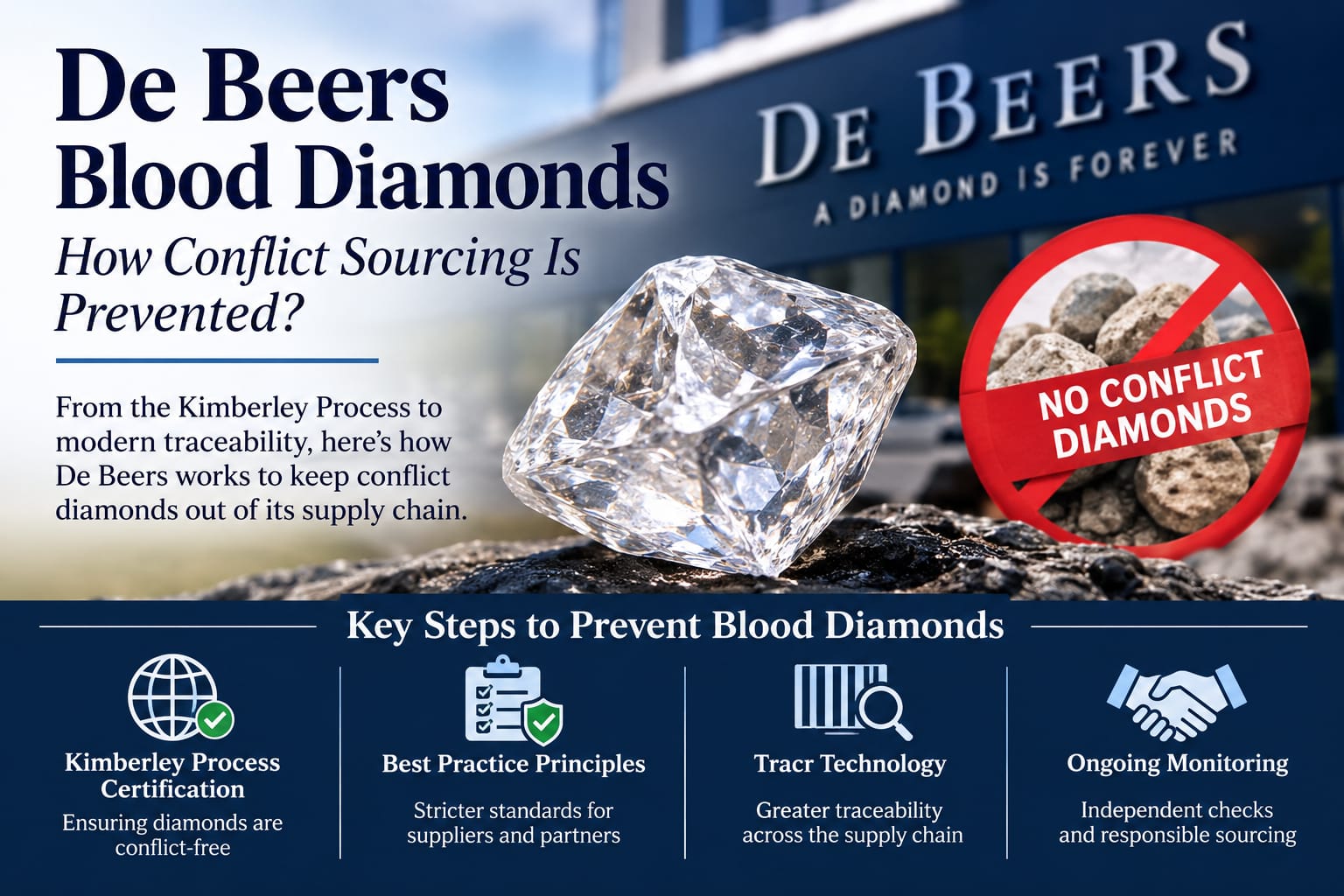
One of the most important developments in the diamond industry was the introduction of the Kimberley Process Certification Scheme in 2003. It was established to prevent rough diamonds used by rebel movements to finance conflicts from entering legitimate international trade.
Under this system, participating countries must issue certificates for international rough diamond shipments. These shipments must travel in tamper-resistant containers and carry the required documentation.
De Beers participates in the scheme and states that 100% of its diamonds are certified conflict-free under its requirements. However, the Kimberley Process has limitations because its definition of conflict diamonds is relatively narrow. It does not address every possible form of human-rights abuse.
How De Beers Monitors Its Diamond Supply Chain
Certification is one part of responsible sourcing. Another important step involves monitoring the businesses and individuals involved in the diamond supply chain.
In 2005, they introduced its Best Practice Principles (BPP) Assurance Programme. These standards cover areas such as human rights, labour practices, business integrity, health and safety, and environmental responsibility.
The programme applies to De Beers' own operations, Sightholders and relevant contractors. Participating businesses must complete annual self-assessments, while independent third-party checks are used to evaluate compliance. Where problems are identified, corrective action must be taken and verified before the issues are closed.
These requirements are intended to make responsible sourcing an ongoing process rather than simply a certification exercise.
Using Technology to Improve Diamond Traceability
Knowing where a diamond originates is another important part of preventing conflict-related sourcing risks.
De Beers developed Tracr, a blockchain-enabled diamond traceability platform. It records information about individual diamonds as they move through different stages of the supply chain.
In 2025, they reported that five million rough diamonds had been individually scanned on the platform. This development offers a way to improve the visibility of diamond origins and provide more information about their journey from source to market.
Technology cannot independently guarantee ethical sourcing, but reliable records can make it easier to identify inconsistencies and strengthen supply-chain accountability.
Why Responsible Sourcing Requires More Than Certification
The diamond industry's responsibilities extend beyond preventing diamonds from financing armed conflicts. Labour conditions, forced labour, child labour and other human-rights concerns also require attention.
De Beers' responsible and ethical sourcing policy refers to international frameworks, including OECD due-diligence guidance and the United Nations Guiding Principles on Business and Human Rights. These frameworks encourage companies to identify potential risks, take preventive action and address problems when they arise.
Independent organisations have also highlighted weaknesses in existing diamond certification systems. This makes continued monitoring, transparent reporting and independent verification important for maintaining confidence in the industry.
What This Means for De Beers Today
The approach to De Beers Blood Diamonds has to be considered in the context of both its historical background and its present-day controls. Kimberley Process certification, supplier requirements, independent assessments and digital traceability are among the measures the company uses to reduce the risk of conflict diamonds entering its supply chain.
These measures do not mean that every possible sourcing risk has disappeared. Their effectiveness depends on consistent implementation, meaningful oversight and a willingness to address problems when they are identified.
Ultimately, preventing conflict diamonds requires more than a statement of commitment. It requires continuous responsibility throughout the supply chain. De Beers' current policies reflect an effort to maintain that responsibility and prevent Blood Diamonds from becoming part of its present-day diamond trade.